Rabbinic Reflections on Vaclav Havel and Kim Jong-il

The death of the North Korean dictator, Kim Jong-il raises some interesting moral and religious questions as to how we—as individuals—and as a nation ought to respond. It is most unfortunate that this rogue seems to be the talk of the hour, while scant attention has been given to one of humanity’s truly great heroes of the 20th century, the Czechoslovakian President and champion of democracy, Vaclav Havel, whose Velvet Revolution stood of the might of the Soviet Communist machine; his legacy is the democracy he created for the two countries of Czech and Slovakia. Jewish tradition teaches that the death of the righteous is a like the destruction of the Temple (BT Rosh Hashanah 18b).

What a dramatic contrast . . .

Jewish tradition teaches us that “The death of the wicked benefits themselves and the world” (BT Sanhedrin 72a), but some scriptural texts seem to adopt a different attitude, “Do not rejoice when your enemies fall, and do not let your heart be glad when they stumble (Prov. 24:17). Now compare this passage with another biblical verse where King David is believed to have said, “Do I not hate, LORD, those who hate you? Those who rise against you, do I not loathe?With fierce hatred I hate them, enemies I count as my own” (Psalms 139:22).

For Christians, the question becomes even more acute: One might easily ask, “How does one reconcile the famous prescription of Jesus found in NT Matthew 5:43-48:

  • [Y]ou shall love your enemies, and pray for those who persecute you, that you may be children of your Heavenly Father, for He makes his sun rise on the bad and the good, and causes rain to fall on the just and the unjust. For if you love those who love you, what recompense will you have? Don’t the tax collectors do the same?[1]And if you greet your brothers only, what is unusual about that? Don’t the pagans do the same? So be perfect, just as your Heavenly Father is perfect.

These sundry passages seem to be in conflict with one another. One could argue that since the Bible was written by different individuals over time, it is only natural that some writers might have strong opinions about the death of the wicked.[2] This is certainly a plausible way of looking at our texts. On the other hand, a more organic approach is certainly not only conceivable, but I would argue represents a clearer way of harmonizing the above cited texts.

With respect to Psalm 139:22, let’s be blunt: for many people, the verse certainly offends the liberal propensities and moral values of our times. Obviously, this is not a warm and fuzzy type of passage we might expect to encounter in the Psalms, but do not underestimate its contemporary message. Besides, there are numerous other passages in both Testaments that reflect the same animus toward “God’s enemies.” [3]

More specifically, would it be too farfetched to suggest that when Jesus said, “Love your enemies,” he was merely referring to the garden variety of people who behave more like a nuisance in our lives, or people who simply don’t like us, rather than individuals who pose a certain existential threat to whole societies or even civilization itself? Put in different words, would Jesus consider the likes of a Hitler, Stalin, Kim Jong-il, and Osama bin Ladin as “enemies of God” because of their genocidal behavior?  Are such villains of history beyond even the periphery of forgiveness?

Most Americans probably don’t remember how Kim Jong-il’s policies directly created the mass starvation of the 1990s, where famine devastated North Korea, killing anywhere between 2.5 million and possibly 3.7 million victims. Imagine people living off of approximately 1 cup of food, the equivalent to 25% of the 25 percent of the internationally-recommended minimum calorie intake.[4] Beyond the incalculable damage this man has committed against his own people, Kim Jong-il has done to proliferate nuclear technology to the most unstable region of the world—the Middle East. If the day should arrive when Iran and its consort of terrorist groups gain access to any of these nuclear weapons, humanity may soon find itself standing at the precipice of non-existence. ‘

In practical terms, how should leaders of the free world remember Kim Jong-il?

There are two ways of responding; one approach is championed by diplomats; the other method comes from real people who have faced evil in their lives.

For an example of the former, take the former Secretary of State, Madeline Albright; in an interview with Larry King, where she admires certain qualities Ki Jong-il displayed in their meeting:

  • He said that he would really have loved to have been a movie director.  He knew a lot about American movies and had suggestions for Oscar nominations and, you know, he also liked American sports, he liked Michael Jordan.  It was possible to talk with him.  He’s not a nut.  I think that’s the main kind of point.  I think that it’s important actually not to make fun.  He wanted me to e-mail with him.  I think the thing that’s interesting, Larry, is I do not believe that he’s crazy.  I know a lot of people have said that.  I don’t think so.” One must wonder: Had she been the Secretary of State during WWII, would she have had the gull to say something similar about Hitler too?

And then there is Andrea Mitchell, NBC News, Washington, who said with enthusiastic glee, “I actually met Kim Jong-il.” I would like to ask Ms. Mitchell, “Did you manage to get his autograph, too?”

When you consider the amount of human suffering and evil this one man has contributed to the world, it is amazing to hear any American diplomat sing his praises as though Kim Jong-il was some Hollywood “bad boy” celebrity.

As I was reading the media’s reaction to the death of Kim Jong-il, I decided to compare the media’s reaction with the kind of reactions seen when the world first discovered about the death of Adolf Hitler, on June 1st, 1945. If nothing else, it is offers a remarkable contrast to how our society has changed over the last 67 years.

  • Lt. William J. Cullerton of Chicago, a fighter pilot who was left for dead a few weeks after a German SS man fired a .35-slug through his stomach, said, “I thought I’d had it, now they say Hitler is dead. Maybe he is. If he is, I don’t believe he died heroically. Mussolini died at least like a dictator, but somehow I can’t figure Hitler dying in action . . .”
  • Sgt. Allan Pettit of Verndale, Minnesota, said, “Why waste words on Hitler?” he said. “And how do you know for sure? Anyway, he picked a damn good Nazi to take his place . . .”
  • Another soldier said, “I wish I was the guy who killed him . . . I’d kill him a little slower. Awful slow . . .” One infantry captain said, “Yeah, I guess he’s dead, but so are a lot of other good guys. And you just remember that.

What a contrast . . .

The real issue that bothers me is the feeling of moral relativism that has become a part of our modern culture. Lines of demarcation differentiating between good and evil has become passé; in its place we are now seeing a new lexicon of political correctness that no longer refers to evil leaders as “evil,” but “opinionated,” or some other vacuous metaphors that trivialize evil in the world. Continue Reading

The Journey of a Thousand Miles Begins with the First Step . . .

The Chinese say, “The journey of a thousand miles begins with the first step.” Tonight we begin our spiritual journey with a celebration of Yom Kippur—a holiday that is wholly devoted to the cultivation of forgiveness and spiritual renewal—both as individuals and as a community.

“I have forgiven you as you have spoken” Fewer subjects personally challenge our moral sensibilities like forgiveness—both as individuals and as a society.

As we commemorate the 10th anniversary of 9/11, it is important for us to revisit some of the important questions about the nature and dynamics of forgiveness.

But what are the limitations of forgiveness? What are its possibilities? Should a person forgive unconditionally? Should the terrorists be forgiven for their crime of murder? In Jewish tradition, it is often customary to broach an important topic with a story. Afterwards we shall examine the important implications of the story to our original questions.

You are a Jewish prisoner in a Nazi concentration camp. You are sent to work in a hospital. A nurse brings you to a German soldier named Karl, who is mortally wounded. The dying soldier confesses that he has committed terrible atrocities against your people and asks you to forgive him. What would you do?

Actually, this was the question faced by renowned Nazi hunter Simon Wiesenthal and is the focus of his autobiographical novel, The Sunflower. Wiesenthal took the soldier’s hand listened to his story.

The patient recounted a horrible act in which he had participated. All of the Jews, mothers with infants and children, young and old, were rounded up and crowded into a large yellow house. The commanding officer ordered the house to be set afire.

When the Jews started running from the burning building and jumping out windows, the commander ordered the troops to fire. After telling the story, the patient asked Wiesenthal if he would forgive him for his role in the massacre.

Ultimately, young Wiesenthal walks away in silence. He can’t forgive the man. But his own soul is scorched with the agony of his decision to walk away.  Liberated from the camps, Wiesenthal seeks out the dead soldier’s mother to ease his mind. He finds a broken woman, left with nothing but the good memory of her son.

Wiesenthal decided not to tell her of her son’s confessed atrocities, his silence brings him peace of mind. He couldn’t forgive the soldier for the murder of others; he can spare an old woman suffering.

WHO HAS THE RIGHT TO FORGIVE?

Wiesenthal later wrote, “Forgetting is something that time alone takes care of, but forgiveness is a choice, and only the person who suffers is qualified to forgive”  As the years went by, his conscience still haunted him: Did I do the right thing in refusing to forgive the SS soldier? What do you think? Are there some crimes that simply cannot be forgiven?

When Wiesenthal first printed his book, there was a remarkable range of responses. Most Jewish respondents felt that Wiesenthal was right in not forgiving the dying Nazi. How could a mass-murderer be forgiven?

DID KARL FINALLY REPENT?

Did Karl truly repent? Possibly. However, in Karl’s case, we cannot confuse the beginning of a journey with its ending. Only God knows, but it is possible that he took a significant meaningful first step toward some form of redemption . . .  The rest of his journey can only continue in the World of Eternity. Therefore, it seems only apropos for the souls of the victims to deal with the souls of their perpetrators on their own terms.  But regardless how one views the story, this much is known: Could either young Simon or Karl have ever imagined that their mysterious encounter would challenge the moral sensibilities of countless millions of people across time? I believe there is a profound spiritual significance that is behind this synchronicity–one which ought to give our souls a pause to reflect upon . . .

THE DIFFERENCE BETWEEN JUDAISM AND CHRISTIANITY

Wiesenthal’s book highlighted for me one of the most important distinctions between Judaism and most but not all forms of traditional Christianity.[1] Many Christian thinkers and theologians argued the opposite. Forgiveness should and ought to be unconditional. Just as God is gracious in forgiving sinners, so must we be as well.  Not long after 9/11, Pope John Paul II expressed the following prayer:  “We pray for the victims today, may they rest in peace, and may God show mercy and forgiveness for the authors of this horrible terror attack . . .”

This position is not altogether new. Shortly after Timothy McVeigh was found guilty of murdering 168 people in the Oklahoma City bombing, a minister invited Americans to forgive him In a second case, Michael Carneil, a freshman at Heath High School in West Paducah, Kentucky, gunned down three students attending a prayer group on campus. A few days later the students erected a banner saying, “We forgive you, Michael.”

A personal note: Within a day of the 9/11 attack, I will never forget the words of the local Presbyterian minister who said, “We should understand and forgive the terrorists for bombing the World Trade Center which left over 3000 dead, since they were only reacting to our foreign policies . . .” Some local ministers said, “We need to love the bombers in the spirit of compassion and forgiveness . . .”  There seemed to also be a consensus of religious leaders across the world see who felt that we must solve the problem of evil by listening, offering compassion and bestowing forgiveness. As one might have expected, they were more concerned about the terrorists than they were about their innocent victims.

IMAGINING MAIMONIDES’ RESPONSE TO 9/11

Maimonides in his Laws of Repentance writes that repentance requires five elements: recognition of one’s sins as sins (hakarát ha‑chét’), remorse (charatá), desisting from sin (azivát ha‑chét’), restitution where possible (peira’ón), confession (vidúi) and–only then–forgiveness (michila).

From Maimonides’ criteria, we can deduce several important points: Forgiveness can only be given by the victims; those clamoring for forgiveness were not the ones who were wronged—it is the victims of these terrorist attacks who were wronged. Therefore, it is totally inappropriate for anyone to offer forgiveness on behalf of someone else. Fortunately, not all Christians believe like the Pope, the Protestants and countless New Age cults. Some of the scholars and theologians I will briefly mention offer a very Judaic understanding of forgiveness and even may serve to amplify our understanding of Maimonides’ Laws of Repentance.

One of the great Lutheran heroes of WWII was the German theologian Dietrich Bonhoeffer (1906-1945); he will always be best remembered for participating in a plot to assassinate Hitler; in the end, he was hung by the Nazis. Aside from being a great symbol of conscience, he went against the classical Christian understanding of forgiveness and warned all Christians about the dangers of “cheap forgiveness” because it enables evil. Had Bonhoeffer lived to see 9/11, he would have condemned the desire to forgive Al Qaeda terrorists as misguided and morally outrageous.

Bonhoeffer is not the only one thinker to challenge the morally vacuous theology of carte blanche forgiveness.  One contemporary Korean Christian theologian, Andrew Park, develops a similar approach. He argues that every broken or shattered relationship requires that the offender heal the shame of the victim; this applies no less if the person is a victim of emotional abuse, sexual victimization, violence, or any number of other ways.

Park argues convincingly that forgiveness is a two-step process; whenever you harm someone in word or deed, you are unleashing anguish and misery to that person, resulting in a scarring of the soul. The offender cannot find healing in his own soul until he takes the necessary steps to heal his victims. Both the Catholic and Protestant Church have done a serious injustice by ignoring the victims, putting the onus on them to find their own way to wholeness and inner peace.

Thus, the person who was once a drug pusher who now commits his life to keeping young kids off the streets, or the father who had in the past neglected his children, now becomes a model father who is truly involved in their lives, or the spouse who cheats, who later becomes an ideal mate and life-partner—all these examples personify the concept of han. Or as the Talmud would say, Yom Kippur has the power to transform sins into good deeds—provided someone truly repents.

I believe that Park’s observation fits perfectly with the Maimonidean paradigm that we have mentioned.

The process of addressing the victim’s pain is what Korean society refers to as han; han is the relational consequence of sin—and shame of their victims. To reconcile yourself with God and with other humans, you must take the steps to heal the pain you have caused.

The bottom line is simple: The evil we see in the world is a sad reflection of the apathy and tolerance we have for evil. Religious leaders have to stop making excuses for the diabolical exploitation of religion. For the most part, Muslim leaders especially, have done a terribly poor job speaking out against the hijacking of their faith; we have a duty to hold their leaders accountable and insist that they take a more active role in condemning the jihadistic theology that inspires young people to commit such acts of violence in the world. Yes, there are some outspoken Muslim leaders who share this sentiment, but they pale when compared to the lunatics that speak in the name of  the Islamic  faith. The media can play an important role in assisting these men find a broader audience, but the media seems to be only interested in only maintaining the status quo. Continue Reading

The Soap Merchant’s Tale

Once there was a rabbi and soap merchant who were debating the pros and cons of religion. The soap merchant said, “Frankly I really don’t see the good of religion. Observe how corrupt the world is because of religion!”  The rabbi listened and said nothing. As they were walking together, they came across a youngster that was playing in a mud puddle. The rabbi said, “My goodness, I really don’t see the value of soap, why doesn’t soap keep the mud off of him? Just look how filthy that child is!”  The soap merchant said, “But rabbi, owning soap is not going to make you clean; you must use the soap daily in order for it to be effective!”

The rabbi, replied, “So too is it with religion. It’s not good enough to simply have or own a religion—you must use it daily in order for it to be effective.”

But how effective is religion today? Is religion really good for people? Or is religion debilitating? What value is faith?

Jonathan Swift once said, “We have just enough religion to make us hate, but not enough religion to make us love one another.”

C.C. Colton put it in even more forceful terms, “Men will wrangle for religion; write for it, fight for it, die for it; anything but live by it.”

When I was 15 years, I used to love reading philosophy. One of the most memorable books I recall reading at that young age was a book entitled, “Why I am Not A Christian” by Bertrand Russell. Russell regarded religion as,  “ . . . a disease born of fear, and a source of untold human misery to the human race” (p. 24).

Bear in mind that Russell did not live to see the rise of Islamic fascism, but he did understand how Christian fanaticism caused centuries of untold suffering, Russell was correct, just read Fox’s Box of Martyrs.

One of my old Hassidic colleague told me about his father, who was once asked, “Why are religious Jews so dishonest in business?” He quipped, “If this is what a person is like with having the benefit of Torah, just imagine what a person would be like without the benefit of religion?” Mind you, this story occurred long before Al Gore invented the Internet!

Well, while I admire the rabbi’s wit, his answer really fails to address the real question: Why are there so many stories breaking out daily in the news about crimes one would ordinarily never associate with religious people?

On the one hand, we should not cast blame just on one group of people. Conversely, if Jews are indeed God’s “Chosen People,” then how does one explain the scandals affecting the Orthodox community—whether it be money-laundering, fraud, grand-theft, pedophilia, drug-dealing, the failure to provide proper kosher meat to the public, arson, and even murder—one must come to the inevitable conclusion that the yeshiva world has failed miserably in teaching its students how to behave morally and decently toward one another. The stories appear throughout the daily news all over the world. I shudder to think this is a new phenomenon or not; perhaps because of the Internet, we are now more aware of the problems than ever before.

Rabbinic tradition offers a valuable teaching of wisdom that I believe speaks to our problem. Once upon a time a 3rd century sage named R. Reuben, stayed in Tiberias where he met a certain philosopher.

Philosopher: What is the most hateful person in the world?

Rabbi Reuben: The man who denies the One who created it.

Philosopher: How is it possible that God told Moses, ‘Honor your mother and father,’  ‘You shall not kill,’  ‘You shall not commit adultery,’ ‘You shall not bear false witness,’ ‘You shall not covet’ (Exod. 20:12-17)?”

Rabbi Reuben: “Know that a no person commits any of these infractions without first denying the First Principle (i.e., God), and a person does not turn to a life of transgression unless he already denied the One who gave the above proscription.” [1]

Thus, the real atheist is not the person who denies God in word per se, but rather it is the person who denies God by his deeds. As I mentioned earlier, I believe the principle reason this is so rampant is because even “Orthodox” Jews are experiencing “loss of soul,” and no longer seem to recognize how ethics and faith are closely interrelated. Soul loss occurs whenever a people or community no longer feel spiritually connected to the traditions and ethical teachings of their people.

If religion is man’s “ultimate concern” as Tillich observed, what is the “ultimate concern” of people who routinely rip people off in the name of religion? What is the reason they act in such an antisocial manner? Actually, I think I can answer that question in one word: survival. The Ultra-Orthodox have painted themselves into a corner because they have for the most part, rejected the idea that working at a livelihood is an important religious value. In Israel, the vast majority of Ultra-Orthodox subsist on government welfare checks, while having large families they cannot financially support. In Brooklyn, unless one has a family that works in the jewelry business, most of the Ultra-Orthodox Jews do not have a college education; many of them never graduated high-school! Their fear of the general culture and its seductive values is the principle reason they have constructed an ideological force-field around their communities. Outsiders are thus perceived as a threat to their spiritual lifestyle. And so with each passing generation, the problem of survival increases with even greater ferocity and dysfunctional behavior becomes their destiny.

Because they are so poorly equipped and prepared to enter adulthood with a capacity to earn a decent living, many of them have resorted to any kind of underhanded shtick to make ends meet. Their behavior resembles the drug-lords of ethnic communities that think selling drugs is an easy way to become prosperous—regardless of the ethical consequences to other people around them.  Rabbis, who can barely read English, have come up with novel ways to earn money by imposing new Halachic stringencies that people have wisely ignored for centuries. Why? Is it because of piety? Or the “piety” really a smokescreen that serves a purely economic purpose?

The dog-eat-dog world of halachic expediency is, oddly enough, grounded in a world governed by a Social Darwinian ethic rather than the ethics of Judaic tradition.

One of the important concepts introduced in the early 20th century is the notion of Social Darwinianism as popularized by the 19th century British social philosopher Herbert Spencer (1820-1903).  The Social Darwinian is the kind of person who sees life as a struggle for existence that likens societal behavior to the type of behavior seen in the animal kingdom. The social forces typically pit its weaker members against the stronger members in their struggle to survive; hence, “he who wants to live must fight, and he who does not want to fight in this world where eternal struggle is the law of life has no right to exist.”

But where did the Social Darwinians go wrong? For one thing, the human race belongs to a highly social species where human cooperation must also be seen as a part of natural selection. The reason why we have survived as a species is because we have learned to live together and offer mutual aid to those weaker than us, or for those members of society who depend upon our assistance for survival. That being said, survival is not necessarily for the sole benefit of the species; we have learned over countless generations of evolution that we as individuals do so much better by working cooperatively than we would otherwise.  The human race’s future depends upon us continuing this evolutionary heritage that our ancient for-bearers learned.

In practical terms, I think the solution affecting the Ultra-Orthodox world is definitely fixable. The rabbis need to start stressing the importance of self-sufficiency and the importance of hard work. Not everyone is meant to be a Talmud scholar and most of the yeshiva students who graduate would do themselves and their families a huge favor by seriously learning a career in computer technology, or attend a vocational class that will teach them a practical skill like welding, tailoring, or accounting.

Secondly, ethical behavior—especially in the area of business ethics—must be taught from elementary school through the most advanced classes in the rabbinical academies. There are countless teachings that stress the centrality of religious ethics, which ought to  serve as the fountainhead of all of our interpersonal values.

Thirdly, the Orthodox world must re-prioritize its spiritual values. Ethics must take on greater importance than the laws of hadash (grain not eaten between Passover and Shavuoth), or bugs in the broccoli. The real meaning of kashrut is not just limited to the kitchen or stomach; it operates within the epicenter of all interpersonal relationships. As they say in Yiddish, “You cannot have erlichkeit (refined character) without mentschlickeit (plain human decency) that inspires people to act considerately toward all of God’s creatures. Continue Reading

A Requiem for Leiby Kletzky

Poor Leiby Kletzky, angels weep for his soul.

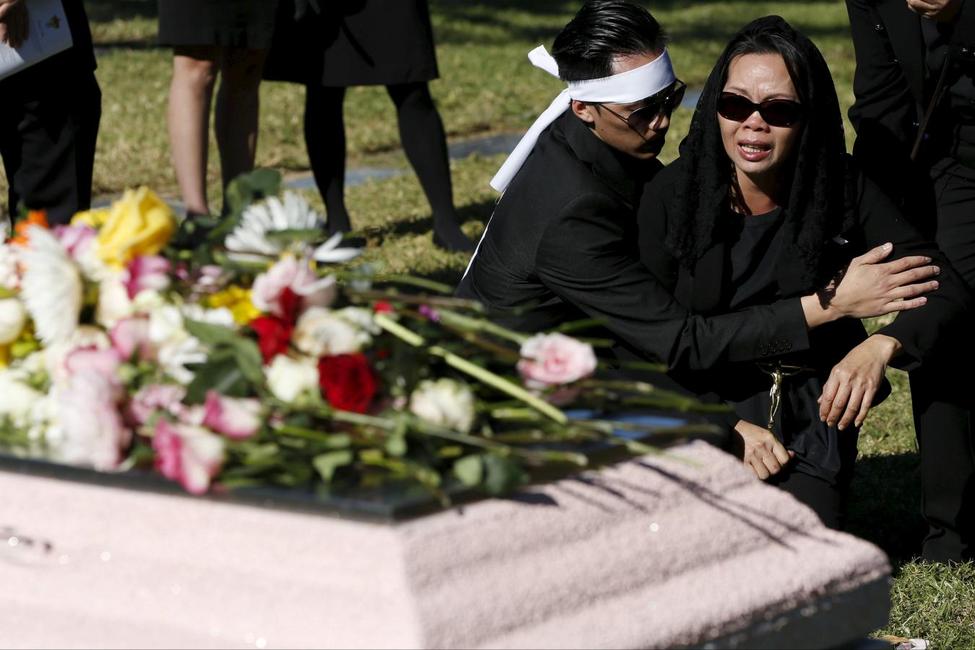
This young Hassidic boy was recently murdered a few days ago. Yesterday his casket was carried into a synagogue for his funeral service that was held in Brooklyn, which was attended by thousands of mourners.

It’s every parent’s worst nightmare come true. Leiby’s family feels a pain that penetrates the heart of God Himself in Heaven. But how does a community make sense of something that is so senseless and numbing? It is one thing to hear about an adult who is kidnapped and murdered, but when a young boy is the victim, we cannot express in words the sense of loss everyone feels. It doesn’t matter who you are, or what ethnic group you belong to, or what religious beliefs you may subscribe to.

Leiby’s death also strikes home because we know that it might have happened to any of us. This death might have under different circumstances been your child, your niece, your grandchild, your neighbor’s child. But what can anyone say? How does one explain this tragedy to one’s children?

Does Jewish tradition offer any kind of therapeutic response or wisdom? Are there any stories in the Bible that might offer some degree of solace and direction to a family that suffers?

THE PRISON OF SILENCE

Semites grieve much more openly than Europeans. If you have ever attended a Arab or Sephardic funeral, the shrilling sound of crying is unforgettable. Semites do not behave stoically like their European counterparts.

The death of children occurs in several biblical narratives, e.g., the death of Judah’s two sons, Er and Onan (Gen 38:1-10); the “supposed” death of Joseph (Gen 37:34); the death of David and BatSheva’s son (2 Sam. 12:18-24); the death of Absalom (2 Sam. 19:1), and the death of Job’s children (Job 1:19-22).

In the interest of brevity, we will focus on (1) the death of Aaron’s sons, Nadav and Abihu—both who die from an unexpected explosion as they were serving God (2) the death of Absalom, (3) the loss of  Job’s children.

With regard to the former, the biblical narrator says in but a couple of words the reaction of Aaron:  וַיִּדֹּם אַהֲרֹן (wayyidöm ´ahárön) “And Aaron was silent” (Lev. 10:3). Nowhere does the biblical narrator provide us with a sense of what Aaron must have been feeling. Did he blame himself? Was this God’s pay-back for when he made the Golden Calf?

While the law forbids a High Priest to mourn, on the surface, Aaron’s reaction is consistent with the office he has dedicated his life to. On the other hand, it is also feasible that Aaron simply cannot react—even though he wants to. The senseless death of two young men leaves him with no simplistic answers. To decipher Aaron’s response, we must read in between the lines and look for clues.

Among the Hebrew words for silence “dumah” stands out as a term associated with Aaron’s grief and loss. Dumah denotes: astonishment, numbness with grief, lifelessness, being stone-like, a feeling of being cut off, the sensation of terror, and lastly—the  silent yearning for hope.

DAVID’S RESPONSE

David’s reaction appears in one of the most famous passages of the Tanakh. After David emerges victorious in his battle with Absalom, his son, David asks one of his loyal servants whether Absalom was safe from harm, “But the king asked the Cushite, “Is young Absalom safe?” The Cushite replied, “May the enemies of my lord the king and all who rebel against you with evil intent be as that young man!”The king was shaken, and went up to the room over the city gate to weep. He said as he wept, “My son Absalom! My son, my son Absalom! If only I had died instead of you, Absalom, my son, my son!” (2 Sam 18:32-19:1).

Nothing else is said about David’s poignant reaction. He too, like Aaron, probably feels guilt-ridden that he could have prevented his son’s death, if only . . .  Like Aaron and David, most parents would gladly sacrifice their lives so that their children might live.

CONTRASTING  JOB AND AARON

Whereas Aaron’s silence is pierced with a divine visitation by God, Job is not as fortunate as Aaron. Job’s own silence and the silence of God, threatens to destroy him. Compounding his problem is the fact that his three friends condemn Job’s sinfulness as the root cause for his children’s untimely death. Job is fed up and angry, for although he offers the platitudes of faith (Job 1:21-22), he is mad as hell at God, at his community for not giving him proper support, and at himself for not preventing his children’s death.

Job’s own personal and psychological resurrection will not begin until he verbalizes his pain to both his God and his friends and only then will Job will find release from his suffering. Although Job praises Job’s opening complaint is unforgettable:


God damn the day I was born!

and the night that forced me from the womb

On that day–let there be darkness;

let it never have been created;

let it sink back into the void.

Let chaos overpower it;

let black clouds overwhelm it;

let the sun be plucked from the sky . . . .

Job 3:3-5 (Stephen Mitchell’s translation)[1]

Job can no longer act as if everything’s OK, because it’s not. Once he finally speaks about his pain, only then does he eventually find some meaning to his suffering.

Job teaches us about the importance of verbalizing pain. Suffering must find a voice that will allow a sufferer to speak openly about the pain. Silence in the face of monstrous evil is akin to death itself. There can be no healing unless people and communities verbalize and identify their pain.

BREAKING FREE FROM THE SILENT WORLD OF PAIN

For the Hassidic and Ultra-Orthodox world of Borough Park, Brooklyn, the community must come together and verbalize their pain and loss.

Questions like, “Are there any lessons at all that can be learned?” or  “How does any community prevent these kinds of tragedies from happening?” are only the opening salvo for a discussion that must be publicly discussed for all to see, hear, and understand. Talking about the problem can help prevent it. The conspiracy of silence affecting traditional religious communities must come to an end.

Here are some other practical suggestions that a community might consider implementing or at least discussing:

  • Do not assume that just because people live in an austere religious community that they are immune to the problems of pedophilia.  It affects all social classes, ethnic groupings, and religious communities.


  • Religious communities must take a much stronger stand against the pedophiles living amongst them. There is a tendency for community leaders to believe that such individuals can be helped and possibly cured of their psychological illness.


  • Rabbinical leaders should reemphasize the prohibition of yichud, no adult male should be alone with any child without (1) the door being open, (2) or preferably, another adult ought to be present during a lesson. A number of years ago, a well-known cantor in Upstate NY lost his job for fondling a bat mitzvah girl; I know of several other similar stories. Clergy would be wise to always have a parent present whenever teaching a child. As clergy, we must subscribe to the highest degree of professionalism.
  • Sex education in the religious schools and the yeshivot  would help young people recognize the dangers of pedophilia.  Such a change in the religious communities is necessary.
  • Parents must caution their children: DO NOT TALK TO STRANGERS and NEVER TAKE A RIDE FROM A STRANGER
  • Expose the pedophiles living among you. Give them no rest. Like the lepers of old, this group really needs to live far away from any kind society that has children living nearby.
  • Cars picking up children in schools ought to have special stickers indicating they have a right to pick up a child.

Over a year ago, I taught a course at St. Ambrose University in Davenport, IA on the Seven Deadly Sins. In one of the sessions, we looked and discussed new variants for the Seven Deadly Sins that were proposed by the Vatican, which included: (1) genetic modification, (2) human experimentation (3) polluting the environment (4) social injustice (5) causing poverty (6) financial gluttony (7) taking drugs.

It is striking the Vatican did not include abortion among the seven. But even more surprising is the fact the Vatican did not mention crimes against children—not just those who are unborn, but especially for those who are already born. Such a statement would have made a serious contribution and show a modicum of repentance for the pedophilia scandal that has decimated the Catholic Church and its communities. Orthodox religious communities have been doing cover-ups for decades–and I suspect this travesty has been going on for countless centuries. Thank God we are living in the age of the Internet, where pedophiles can no longer hide their deeds from the community. Continue Reading

Yom HaShoah — Esther Avruch’s Ordeal

  1. Esther Avruch

A Parable of Two Ships

Rabbinic wisdom speaks of a well known parable about two ships were sailing near the shore; one headed toward the open sea, while the other headed toward the harbor. Everyone was cheering the outgoing ship. But very few cheered for the incoming vessel. A sage observed, there is something paradoxical about all this. The outgoing ship should not be cheered, for nobody knows what lies ahead in wait for it. Nobody knows what stormy seas it may encounter; what dangers might lie ahead of the person as she continues her voyage.  But everyone ought to be cheering the incoming ship, for it has clearly reached the port safely. The ship concluded its journey in peace. Loved ones were now united; life begins anew once more. . . .

We are here to pay tribute to a most remarkable woman, Esther Avruch,  whose voyage through life was full of danger, loss, joy and triumph.  survived the horrors of the Holocaust and made a wonderful life.

Esther’s Life

Let me tell you a little bit about Esther’s life. She was born July 15, 1929, in Sochaczew, Poland, the daughter of Avrum-Scholum  and Miriam Fleischman.  She was the third youngest of ten children, Esther, and one of her sisters were the only family members to survive the Warsaw Ghetto and the Holocaust.

Like many children in Eastern Europe, religious families sent their children to Catholic schools to learn secular studies, while spending the rest of the day learning about Judaism. (My father also attended Catholic school with all of his siblings–despite the fact that they were Hasidic Jews; this was quite common in Eastern Europe because there were no public schools.) Esther learned at the one of the first Beth Ya’akob schools for Jewish girls. Esther could still remember the songs she learned in school. She dressed up like a Jewish princess whenever she attended services, which she always loved doing. Esther also learned to speak several languages that included, Yiddish, Polish, and Hebrew.

Every week, she used to clean her home for the Sabbath; she had a very happy childhood. Esther especially loved dressing up for the Sabbath in her finest clothes.

The Beginning of the War Years

As Hitler approached Poland, anti-Semites used to say, “Just wait till Hitler comes to Poland . . .” The situation grew worst in Sochaczew, and the family decided to leave for Warsaw, where they thought life would be safer.

In one of the buildings they were hiding, a German bomb exploded the building but miraculously nothing happened. This happened on September 3rd of 1939.

One of the worst experiences occurred on Yom Kippur when all the Jews were huddled at the synagogue, when the Nazis started bombing it.  Esther’s sister Raisel, was injured in the attack; they ran away to their home where they hid in the cellar.

For now, everything was ok—or so it seemed. There was no water, and little Esther had to shlep miles  to bring just a few buckets of water. Warsaw was conquered by the Nazis, and the family had no choice but to go back to their home town. After the Nazis took over, every Jewish home was burned to the ground; the Jews had to wear armbands with the Mogen David insignia on it. As if the Nazis were bad enough, many Poles proved that they could be  just as cruel, and would beat the Jews, and seize their food and water.

Miracles

After a while, Esther and her family were reunited with their father and brothers in Warsaw. Despite the theft of their food and water, Esther did her best to survive and survive she did. When typhus broke out, it was the wisdom of their mother, who protected her children. Anyone going to a hospital, simply never returned.

Starving for food and drink, simple Polish peasants, like a miracle from God, shared their food with the family. They were friends of Esther’s father’s business partners. They acted morally and with compassion. As the war continued, the Germans threatened to kill any Pole who would dare save a Jew. The pious Polish Christian family was gunned down, one by one, for daring to save the Jews.

Esther’s mother, Miriam, always shared with what little food with others who were starving as well.

Throughout the ordeal, Esther did her best to maintain contact with her brother Scharma, who was working at a Polish factory in Warsaw. During that time, she managed to smuggle bread to her brother. At one point, she was caught and beaten by the Nazis for helping the Jews.

Another kind Polish family got her a fake birth certificate, and she then assumed the name Marsia Rakowsa. Because the Nazis never suspected that Esther was Jewish because she had blond features. This act of kindness enabled Esther to survive the war. With this birth certificate, she was able to obtain a ration card, which also helped her escaped getting arrested. On more than one occasion, Esther had to face the German officers and tell them she was an orphan, after her parents were killed in a bombing raid. She attended Church services,  sung Christian songs and nobody suspected that she was Jewish.

Just prior to the what was to be the famous Warsaw Ghetto Uprising, she found out about the plan of the Jews to fight back, and that she needed to prepare herself a special bunker where she would remain safe.  Instead, she decided to take her chances on the Polish side rather than remain in the bunker.  Esther said to herself, “If I am to die, I would rather die in the open air, than die in a bunker.”

Esther’s intuition saved her once more, for after the Germans came in and crushed the revolt, there were no more survivors in any of the bunkers. If people were not killed immediately with their families, they were shipped to the Treblinka concentration camp. She recalls that while her brothers Scharma, Yitzchak, and Benjamin were in the trains, they jumped from the train as the Germans began shooting at them, killing Isaac in the process.  Scharma was knocked out for a while, only to be robbed and attacked by the Poles in a forest nearby. That was the last time she saw her brother Scharma.  Eventually, he was captured and killed by the Nazis.

Esther lived with the fear that somebody might recognize her; sometimes the anxiety was so great, she almost wanted to die.  On one moment, while she was kneeling at church, somebody tapped her on her shoulder who recognized her. Esther’s heart froze with fear, until she realized that it was a friend from her home village of Sochaczew. From that moment onward, Esther realized there were still other Jews who managed to stay hidden even after the uprising was over.

As the Germans began losing, the Polish underground became bolder and with the help of the Russians, Jewish partisans also joined the ranks. The war would soon be over.

After the War: Esther Met Saul

After the war, Esther met her husband Saul Avrich, in a Displaced Persons Camp in Traunstin, Germany, following World War II. They were married in 1947. He preceded her in death in 1982. They came to America in 1950, living in New York City for a time. They moved to the Quad-Cities in 1952. They were married for over 35 years and they loved each other very deeply.

Some years later the war was over, Esther gave birth to Susan and Steve Avrick (Judy), Wilmette, IL; five grandchildren, Jessica and Samantha Harris, and Emily, Olivia, and Ryan Avrick.

Grandchildren Remember

The grand children shared with me several wonderful memories of their beloved grandmother.

– Our grandmother loved bowling and had many bowling trophies
– she visited Florida often and loved engaging with others, meeting new people and taking walks
– she had an affinity for birds, especially cardinals — which will always remind us of her
– she crocheted blankets for us, which is now a hobby I have taken up and realize how much time and effort goes into making the cherished, memorable items she had created for us
– she always provided a warm, welcoming home for her friends and family
– she was extremely generous and always striving to make us comfortable and happy when we came to visit
– she always brought home gifts for her grandchildren

Her daughter Susan and her son Steven told me that she never tired expressing her love for them and their spouses, and grandchildren. Whether it was at a school play, a recital, or whatever, Esther made Jessica and Samantha Harris, and Emily, Olivia, and Ryan know how much she loved each of them. She had a necklace that had the birthstone of each of them. Whenever she traveled to Chicago, she took with her the hallahs, gefillte fish, chocolate cookies and other dainties to share with her mishpacha.

Like an artesian well, her cup of love constantly overflowed, and replenished itself anew.

A Community Remembers

As a beloved member of the Jewish community, Esther loved to participate at the Holocaust Memorial programs every year. In addition, she would go to many of the local schools where she shared her story with the young people—making an unforgettable impression. Esther  always took immense pride in her appearance and was the epitome of femininity. Despite the losses and suffering she endured, Esther celebrated life with a gusto, much like my own father. Continue Reading

The Baby in the Ark: A Krystallnacht Tale

 Arnold Isaac – Jan 4th, 2011

People can be more amazing than you might realize. Arni Isaac was a most remarkable man, yet very few people who knew of his  personal story and ordeal . . . As the survivors continue to die, it is so important that we preserve their memories. Our Sages say that memory is the key to redemption . . .  Many years ago, I came across a wonderful Hassidic teaching. God compares the Israelites to the stars of the heavens (Gen. 22:17). Why specifically to stars? To the naked eye, “a star appears like a tiny spec of light; however, the closer you approach the star in the Heavens, the larger it appears to the human eye. God looks at human beings much the same way. Someone who appears quite “ordinary,” may well seem very great in the eyes of Heaven.”

=================================

 Rabbinic folklore teaches us something unusual about the day of death. In some ways, the day on which a great man dies is better than the day on which he was born; because none knows, on the day of his birth, what his deeds will be, but at his death, his good deeds are published unto all, and for this reason is “The day of death better than the day of one’s birth.” 

The Midrash records the ancient parable about two ocean-going ships; one leaving the harbor and the other entering. Whilst everybody was rejoicing over the one that was setting out on her voyage, few seemed to hail with pleasure the one arriving. Seeing which, a wise man there reflected: “I see here a paradox; for surely, people should not rejoice at the ship leaving the harbor, since they know not what conditions she may meet, what seas she may encounter, and what wind she may have to face. In truth, everybody really ought to rejoice at the ship that has returned to the harbor for having safely set forth on the ocean and having safely returned.”

When a child is born, all we see is the raw potential God has endowed it; nobody can know what it will someday grow up to me–whether a righteous or wicked person. But death is different, for in death we come to appreciate what the individual actually personified as a human being.

With this thought, we shall pay our tribute and respect to a special man, Arnold Isaac—who was not only a great American who served his country well during WWII, he also personified some the finest characteristics of the Jewish people. Like the man returning home from his long journey, there is much Arni can be proud of; he lived a good and decent life against great adversities and dangers.

Arni was born April 18th, 1926. Arni came from a family of five brothers; just before Krystallnacht, the parents took the children and forewarned them what was going to happen.  One child was chosen to be sent out with 1000 other children to America. Of all the children, his parents felt that young Arni, who was already an older teen, had the best chance to survive. Perhaps his parents recognized the kind of mental toughness and hutzpa that would characterize his life. But I should add that his other siblings also managed to survive the war. The Isaac family was made of tough stuff. Their will power is a testament to the human spirit’s inner strength. You will note, Arnie’s experience resembles the famous biblical story of baby Moses, who was sent out by his parents to escape the fate of the other Israelite baby males. 

So, in order to defend his people from the destructive designs of the Nazis, he enlisted in the armed services, where he worked in the Intelligence Department for much of the war. It was only during the war, Arni heard the terrible news about his beloved family:  The Nazis sent his father to die in Auschwitz, along with his grandfather and numerous cousins. Arni was responsible for bringing many Nazis to justice; these criminals were arrested after the WWII was over and judged for numerous war crimes against humanity. 

Arni’s ethics and concern for other human beings reminds me of a verse from the poet Henry Wadsworth LongFellow, who wrote: 

In the world’s broad field of battle,

In the bivouac of Life,

Be not like dumb, driven cattle!

Be a hero in the strife

Longfellow’s words describe only partially the kind of man Arni Isaac was to all who knew him. Arni’s respect for integrity and justice exemplified the kind of strong and courageous spirit that animated his values and morals throughout his life. 

Decades, the German government invited the Jewish survivors of their community for a special gathering and desire to atone for the evil that had occurred during the Nazi era. Survivors of Arni’s family—from Canada, the United States, and Argentina met in Munich, where the German governor presented each of them with a key to the city.  The event demonstrated that although we cannot change the past, noble and high-minded people can make the moral decision to forge a new and positive path for the future. To Germany’s credit, it has come a long way in taking the necessary steps to confront its past and seek forgiveness from its victims. 

Wars devastate countries, but there are tragedies in a person’s life that can exert an even greater impact. After the war, Arni married Carol, and together they had a beloved daughter named Robin. Robin was the apple of her parent’s eye, but at the tender age of 21, she died from a heart attack in her father’s loving arms . . . 

When Elli told me this tragic story, I could only think of the words of King David, who was shocked to hear about the murder of his beloved son, Absalom: 

The king was shaken. He went up to the room over the gateway and wept. As he went, he said: “O my son Absalom! My son, my son Absalom! If only I had died instead of you—O Absalom, my son, my son!” (2 Samuel 18:33). 

Every parent who has ever lost a child has experienced these raw words. 

Five years later, Arni’s beloved Carol died of cancer. For many years Arni’s life felt empty until he met a special woman, Eli.

They were introduced to one another on a blind date.  The year was 1998; Arni had lived in Encinitas while Elli lived in Chula Vista. They decided to meet at the Mission Valley Center. Arni asked, “How will I recognize you?” Well, Elli said, “I am 5”8, slender with dark black hair . . . and by the way, if you see a car in the parking lot that says, ‘2Shalom,’  it belongs to me. “ Arni paused in shock. Elli wondered, “Is it possible that Arni doesn’t know what ‘Shalom’ means??” Well, Arni replied, “My license plate says, ‘LaChayim.—it must be beshert . . .” The term, “beshert” loosely means “destined one.” According to the Kabbalah,  Soul mates are said to recognize each other early on . . .  by 2001, both of them got married.

One year later, Arni’s health issues finally caught up with him and over an eight year period, his health deteriorated.

Continue Reading

Names and Personal Identity

Names in the mythic imagination of humankind has always conveyed something symbolic–even mystical–about the human drama. In the Garden of Eden, Adam is unique among the entities–both physical and spiritual–in his ability to name the animal kingdom (Gen. 2:19). Even the angels are said to be jealous of this power.

To be human, is to possess a name, be named, which serves as our bridge to the external world around us. When somebody forgets our name, we instinctively feel marginalized and unimportant. Yes, the name is our passport to interpersonal recognition. Throughout history, people died to preserve their names in history. In Babel (Gen. 10), humankind went to extreme measures to preserve their name, so they would not disappear from memory.

Many of us will even write a book or a diary on the hope that some ethereal part of ourselves will remain despite our mortality.  Memorial funds operate also on the same principle. Most people are pretty conscious about preserving a sacred memory of a loved one.

In all human communities there is thought to be a close relationship between the name of a person or other phenomenon and its character, status, and very being.

Because of their mysterious nature, names serve to define the external world we live in. They help to navigate the stream of consciousness and even conscience. In the Nazi death-camps, the German henchmen did their best to strip the Jewish prisoners of their names by giving them a number instead. To have a name means that someone will have to deal with you as a concrete person. We name even our pets, much for the same reason.

Since there is power in names, they both participate both in the reality named and give definition and identity to that reality. Both the named and the name exist share an ontological mutuality.

In both Jewish and Christian tradition, the infant child who dies, cannot be buried without first receiving a name. The name defines status; in conversion ceremonies, they symbolize the birth of a new person, in a manner of speaking.

Even in primal societies where female infants are considered expendable,  as we see with the Eskimo communities, once the infant has received a name, she must be dealt with as a living being.

In many faiths, naming an infant in honor of a deceased relative is a way of preserving identity in a transcendental way. Continue Reading

Remembering a Local Jewish-American Hero

In Memory of Bill Sax

An anonymous poet and vet wrote about his experience in the famous battle of Okinawa.

Okinawa was to be our last stop
Before we invaded Japan.
The largest landing of the Pacific war
As our soldiers ran across the sand.

At first our marines were scarcely opposed
But on the fifth day hell they found.
A solid wall of human resistance
Firing their weapons from caves in the ground.

Air power and big guns had little affect
On their cliff forts carved deep in the limestone.
It took man against man to root them out
As flying bullets pierced flesh and bone.

Kamikaze pilots crashed their planes
Knocking out transports and war ships.
As the Imperial air force struck our fleet
Cries of fear and hate spewed from lips.

One hundred, ten thousand Japanese
By the end of the battle were killed.
Over twelve thousand Americans died,
Before, just our flag flew over the field.

Let me tell you about Bill’s remarkable life.

What I would like to do now is tell you about Bill. I want you to walk away from here with a better understanding and appreciation of his life and who he was. And I am going to acquaint you with some aspects of his life with which you may not be familiar –a father, a son, a brother, a husband, friend and soldier,  a gardener, and car aficionado.

Bill Sax was born on December 7, 1921 in Moline, the son of Jacob and Fannie (Cohn) Sax.  Some of you may not know that Bill was a decorated war hero, who received numerous medals for his bravery and valor during WWII.

Young Bill was drafted on Oct. 15, 1942 (before his 21st birthday) and  went from St. Louis to Camp Adair, Oregon, near Salem, OR.,  zig  zagging across the country for a week.  He was put in a heavy weapons company, Company D.  This was the first Thanksgiving and first holiday he would spend away from home.

As Dad put it:

“I don’t know how I got so lucky. Abbie was drafted  into the Air Corps, Bernie in Anti-Aircraft Artillery, and I got the  Infantry.”  Well, after training in Oregon and CA, the army sent him to Hawaii and then to several islands in the Pacific. He was on Leyte in the  Phillipines for about 10 days when General MacArthur made his famous return to the Philippines.  He ended up in Okinawa on April 1, 1945,  and  Bill was in  the last battle of WW II—although they didn’t know it at the time.

For those of you unfamiliar with the Battle of Okinawa, it was considered to be one of the bloodiest battles of WWII; the American invasion of this island made it possible for the Americans to invade the Japanese industrial heartland.

The attack on Okinawa had taken a heavy toll on both sides. The Americans lost 7,373 men killed and 32,056 wounded on land. At sea, the Americans lost 5,000 killed and 4,600 wounded. The Japanese lost 107,000 killed and 7,400 men taken prisoner. The Americans also lost 36 ships. 368 ships were also damaged. 763 aircraft were destroyed. The Japanese lost 16 ships sunk and over 4,000 aircraft were lost.

Bill’s section got hit while there, and several of them got hit by shrapnel.  Dad’s helmet saved his life! There was still a bit of shrapnel lodged in his shoulder that he never had removed. He was taken to the hospital in Guam, then to Hawaii, then back to the States. He got his discharge just before Thanksgiving 1945, almost 3 years after being drafted. He walked into the poultry business at 8am and by 9am he was dressing turkeys for Thanksgiving!

Longfellow said it best in his famous poem, “The Psalm of Life.” These poetic words capture the essence of Bill’s soul:

In the world’s broad field of battle,
In the bivouac of Life,
Be not like dumb, driven cattle!
Be a hero in the strife!

AFTER THE WAR

Within three years,  he married the former Arlene Schaider in 1948. He met Arlene Arlene Schaider in 1948, the love of his life and they were married for 62 happy years. She was in every sense, the love of his life. Throughout his life, Arlene proved to be a loving and loyal spouse and together they created a lifetime of dreams and memories.

THE GOOD SON

Many years before he worked at Montgomery Wards, he worked at the family poultry business, Sax’s Poultry, and he routinely extended kindness to people who could not afford food; he provided them with a running tab, and if they could not afford to pay their debts, he forgave the debts. As a human being, Bill lived a life of tsedakah—the Hebrew  word for “charity” and “integrity.” Bill proved to be an excellent son to his parents, and took care of their every need. Continue Reading

In Memory of Esther Avruch, Holocaust Survivor

  1. Esther Avruch

A Parable of Two Ships

Rabbinic wisdom speaks of a well known parable about two ships were sailing near the shore; one headed toward the open sea, while the other headed toward the harbor. Everyone was cheering the outgoing ship. But very few cheered for the incoming vessel. A sage observed, there is something paradoxical about all this. The outgoing ship should not be cheered, for nobody knows what lies ahead in wait for it. Nobody knows what stormy seas it may encounter; what dangers might lie ahead of the person as she continues her voyage.  But everyone ought to be cheering the incoming ship, for it has clearly reached the port safely. The ship concluded its journey in peace. Loved ones were now united; life begins anew once more. . . .

We are here to pay tribute to a most remarkable woman, Esther Avruch,  whose voyage through life was full of danger, loss, joy and triumph.  survived the horrors of the Holocaust and made a wonderful life.

Esther’s Life

Let me tell you a little bit about Esther’s life. She was born July 15, 1929, in Sochaczew, Poland, the daughter of Avrum-Scholum  and Miriam Fleischman.  She was the third youngest of ten children, Esther, and one of her sisters were the only family members to survive the Warsaw Ghetto and the Holocaust.

Like many children in Eastern Europe, religious families sent their children to Catholic schools to learn secular studies, while spending the rest of the day learning about Judaism. (My father also attended Catholic school with all of his siblings–despite the fact that they were Hasidic Jews; this was quite common in Eastern Europe because there were no public schools.) Esther learned at the one of the first Beth Ya’akob schools for Jewish girls. Esther could still remember the songs she learned in school. She dressed up like a Jewish princess whenever she attended services, which she always loved doing. Esther also learned to speak several languages that included, Yiddish, Polish, and Hebrew.

Every week, she used to clean her home for the Sabbath; she had a very happy childhood. Esther especially loved dressing up for the Sabbath in her finest clothes.

The Beginning of the War Years

As Hitler approached Poland, anti-Semites used to say, “Just wait till Hitler comes to Poland . . .” The situation grew worst in Sochaczew, and the family decided to leave for Warsaw, where they thought life would be safer.

In one of the buildings they were hiding, a German bomb exploded the building but miraculously nothing happened. This happened on September 3rd of 1939.

One of the worst experiences occurred on Yom Kippur when all the Jews were huddled at the synagogue, when the Nazis started bombing it.  Esther’s sister Raisel, was injured in the attack; they ran away to their home where they hid in the cellar.

For now, everything was ok—or so it seemed. There was no water, and little Esther had to shlep miles  to bring just a few buckets of water. Warsaw was conquered by the Nazis, and the family had no choice but to go back to their home town. After the Nazis took over, every Jewish home was burned to the ground; the Jews had to wear armbands with the Mogen David insignia on it. As if the Nazis were bad enough, many Poles proved that they could be  just as cruel, and would beat the Jews, and seize their food and water.

Miracles

After a while, Esther and her family were reunited with their father and brothers in Warsaw. Despite the theft of their food and water, Esther did her best to survive and survive she did. When typhus broke out, it was the wisdom of their mother, who protected her children. Anyone going to a hospital, simply never returned.

Starving for food and drink, simple Polish peasants, like a miracle from God, shared their food with the family. They were friends of Esther’s father’s business partners. They acted morally and with compassion. As the war continued, the Germans threatened to kill any Pole who would dare save a Jew. The pious Polish Christian family was gunned down, one by one, for daring to save the Jews.

Esther’s mother, Miriam, always shared with what little food with others who were starving as well.

Throughout the ordeal, Esther did her best to maintain contact with her brother Scharma, who was working at a Polish factory in Warsaw. During that time, she managed to smuggle bread to her brother. At one point, she was caught and beaten by the Nazis for helping the Jews.

Another kind Polish family got her a fake birth certificate, and she then assumed the name Marsia Rakowsa. Because the Nazis never suspected that Esther was Jewish because she had blond features. This act of kindness enabled Esther to survive the war. With this birth certificate, she was able to obtain a ration card, which also helped her escaped getting arrested. On more than one occasion, Esther had to face the German officers and tell them she was an orphan, after her parents were killed in a bombing raid. She attended Church services,  sung Christian songs and nobody suspected that she was Jewish.

Just prior to the what was to be the famous Warsaw Ghetto Uprising, she found out about the plan of the Jews to fight back, and that she needed to prepare herself a special bunker where she would remain safe.  Instead, she decided to take her chances on the Polish side rather than remain in the bunker.  Esther said to herself, “If I am to die, I would rather die in the open air, than die in a bunker.”

Esther’s intuition saved her once more, for after the Germans came in and crushed the revolt, there were no more survivors in any of the bunkers. If people were not killed immediately with their families, they were shipped to the Treblinka concentration camp. She recalls that while her brothers Scharma, Yitzchak, and Benjamin were in the trains, they jumped from the train as the Germans began shooting at them, killing Isaac in the process.  Scharma was knocked out for a while, only to be robbed and attacked by the Poles in a forest nearby. That was the last time she saw her brother Scharma.  Eventually, he was captured and killed by the Nazis. Continue Reading