Aaron’s Silence vs. Job’s Protest

In this week’s parsha we read about the death of Aaron’s two sons, who died from an accidental explosion in the Tabernacle. Aaron’s reaction is quite telling–despite the absence of scriptural detail from the narrator. As is often the case with biblical narrative, more is said by what isn’t stated, than by what is actually mentioned. In the book of Leviticus, the biblical narrator says in but a couple of words the reaction of Aaron:  וַיִּדֹּם אַהֲרֹן (wayyidöm ´ahárön) “And Aaron was silent” (Lev. 10:3).

Nowhere does the biblical narrator provide us with a sense of what Aaron must have been feeling. Did he blame himself? Was this God’s pay-back for when he made the Golden Calf? Did he neglect to tell his sons how to carry out their duties in a safe and careful manner? To decipher Aaron’s response, we must read in between the lines and look for clues.

Among the Hebrew words for “silence” dumah stands out as a term associated with grief and loss.

Another bereaved father in the Bible, Job, does not accept his children’s death silently or stoically–much to the surprise of his community. The differences between these two men’s emotional response certainly ought to pique our curiosity. Job’s community criticizes Job for questioning God’s justice. He refuses to play the role of the quiescent victim, resigned to his misery. Perhaps the men of Job’s community expected him to react like Aaron did after he lost his two sons Nadab and Abihu, who died in the prime of their youth.

In both the narratives of Job and the death of Aaron’s two sons Nadab and Abihu, there are a number of nuances that define the shape and pathos of a grieving silence.

Unlike Aaron, who is forced to hold his feelings within because his priestly office demands no less, Job refuses to accept his loss in stoic silence. He is determined to confront his feelings of torment and anger by directing these toxic feelings to God. Job deeply resents the theological attitude espoused by his “friends” that since his sons were obviously “sinners,” they ultimately received what was coming to them–death. Job’s friends assert that  the social order is maintained whenever God exacts vengeance against His enemies. Job cannot accept such theological nonsense.

Whereas Aaron’s silence was pierced with a divine visitation by God, Job was not as fortunate as Aaron; he is denied an immediate revelation. God seems to be reluctant in responding to Job’s plea for justice. Job’s own silence–and especially the silence of God–threatens to destroy him.

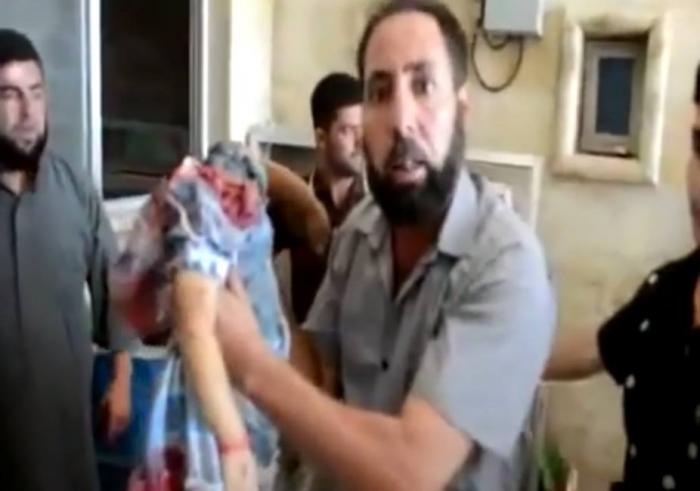
It is an experience known well by anyone who has ever suffered. The best way to understand someone who is grieving is for us to see ourselves as walking in the shoes of the Other. Ergo, the  feelings of restlessness, disorientation, incoherence, shock, and terror often reduces us to silence. Extreme suffering often destroys our ability to communicate for the weight of our suffering leaves us feeling verbally incapacitated. We feel stone-like and lifeless. Trauma makes us feel overwhelmed, terrified and distressed. When we suffer, we must find a language that will lead us out of our bondage of muteness and through the wilderness of silence. We seek a language of redemption. We have felt wronged, we have cried, and we have felt outraged.

All the subtle nuances of Aaron’s and Job’s silence are familiar experiences to most Holocaust survivors and to a lesser extent to their children who grew up in the captivity of silence.  Many survivors like my father, whose family was murdered in Auschwitz, lost their capacity to speak about the horror of the camps. Many second-generation children of survivors grew up never hearing our parents speak about the atrocities that they experienced. Frightened and confused, we never encouraged our parents to tell us their stories.

Several years ago, a refined woman in my congregation lost her father and husband to cancer within the same year. On the anniversary of her husband’s death, her son hosted a golfing tournament. He was a very well-fit young man, age 26, who exercised every day and was the apple of his mother’s eye. After personally winning the tournament, he dropped dead from a heart attack. After the autopsy, they discovered he had ephedrine in his blood, which caused him to have his heart attack. His mother faced a sorrow of Jobian proportions; and for many years, she could not bring herself to pray in the synagogue. Who could honestly blame her?

Another young woman I once knew, had worked at a bar and went to bring a hot beverage from a large coffee maker, which exploded and burned over 90% of her body. Accidents like this occur every day, and it is in these painful epiphanies of the diabolic, the human soul often gets mangled and disfigured along with the body.

Any close brush with the diabolic makes it exceedingly difficult to even talk about faith. Martin Buber asked poignantly:

In this our time, one asks again and again: how is a Jewish life still possible after Auschwitz? I would like to frame this question more correctly: how is a life with God still possible in a time in which there is an Auschwitz?

The estrangement has become too cruel, the hiddenness too deep. One can still “believe” in a God who allowed those things to happen, but how can one still speak to Him? Can one still hear His word? Can one still, as an individual and a people, enter at all in a dialogical relationship with Him? Can one still call on Him? Dare we recommend to the survivors of Auschwitz, the Jobs of the gas chambers: “Call on Him, for He is kind, for His mercy endureth forever?”[1] There is a place in Judaism for religious skepticism. When the wisdom literature of the Bible included Job into the Canon, the ancient Sages revolutionized Judaism forever. You could say that today’s skeptic serves an almost prophetical role in keeping professional rabbis and theologians honest. There is a place in Judaism for questioning and doubting. Skeptical feelings should never be silenced but welcomed into any discussion about faith.

When we suffer we hunger for a restoration of God’s Presence (theophany), and a settling of the records. Like Aaron and Job, not only do we wait for consolation—we expect it; we demand justice. The Psalmist was not unaware of this kind of evil, “For God alone my soul waits in silence; from Him comes my salvation” (Psa. 62:1).

The Righteous Shepherd of Theresienstadt

Among the non‑Orthodox rabbis who were placed in the concentration camps, Rabbi Leo Baeck provides one of the most outstanding examples of shepherding of that era. Baeck’s saintly conduct served as an inspiration to all who were with him in the camp. In the years prior to the war, Baeck did his utmost to encourage the Jews of Germany to leave the hostile climate of Germany. Baeck refused offers from the Jewish communities in England and the United States to offer him asylum. He was determined to remain in Germany until he was the last remaining Jew. Like the shepherd, he was determined to look after the flock regardless of personal danger. Baeck succeeded in getting out one third of the German Jewish population. He used his pulpit to challenge the atrocities of Hitler and the Gestapo When he was summoned to appear before the Gestapo on the Shabbat, he openly refused and defied them.

In 1941, Baeck was deported to the Theresienstadt concentration camp. The Nazis used  Theresienstadt as a model camp where the Jews were supposedly “treated well.” Prior to his 70th birthday, Baeck volunteered to be responsible for the camp’s welfare program. He was determined to keep up the morale of his fellow inmates. Baeck recognized the importance of keeping his people’s spirit as strong as possible. He taught Torah and philosophy in the camp while arranging for theatrical and musical performances for the camp’s children. Rabbi Baeck recalled after the war:

  • It was dangerous for us to meet at night. There was an additional danger as well. During the day these men were involved in terrible, back‑breaking work. And after such work, when they needed rest, they came together at night to listen to lessons and lectures, which could have weakened their bodies further. I shall never forget those meetings. We would assemble in darkness. To light a candle there, or even a match, would have brought immediate disaster upon us. We spoke about matters of the spirit and eternal questions, about God, about Jews in the world, about the eternity of Israel. In the midst of darkness, I sensed light in the dark room, the light of Torah…More than once I could not see their faces, but I did see great spiritual light.[1]

Leo Baeck also personified the best qualities of shepherding by refusing to abandon his flock when they needed him most.  In fact, when the Church attempted to work out a prisoner swap for Baeck, the Church official replied: “Your mission is in vain; if the man is such as you have described him, he will never desert his flock.”[2] Indeed, the Church official’s words proved true for in 1945, the Nazis released 1200 Jews from Theresienstadt, but Leo Baeck refused to be one of the rescued numbers. When an American officer came to personally look after his release, Baeck insisted on staying for an additional two months, until the typhus epidemic had been properly controlled. While he was there, Baeck wrote many letters for inmates who had no identity papers; these letters ensured that the inmates would be well-received by the international community.[3]

The heroism of men like Rabbis Eliezer Silver and Leo Baeck deserved to be remembered until the end of time. The Jewish people were blessed to have such outstanding leaders.


Notes:

[1] Cited in Siddur Sim Shalom (New York: The Rabbinical Assembly & The United Synagogue of America,1985), 832.

[2] Leonard Baker, Days of Sorrow and Pain: Leo Baeck and the Berlin Jews (New York: Macmillan, 1978), 62.

[3] Naomi E. Pasachoff, Great Jewish Thinkers: Their Lives and Work (Springfield, NJ: Behrman House, Inc, 1992), 154.

The Candle of Faith

Nothing challenges the belief in a benevolent God like the ubiquity of evil in the world.  For the Jewish people, the experience of the Holocaust revealed the inadequacy of traditional theology. The God of the Exodus seemed “to be out for lunch.”  Asked in more simple and straight-forward terms, we wonder: So, God, what have you done lately since the Exodus?

Actually, our discomfort with theological platitudes is nothing new. The book of Job is famous for challenging the theological vision set out in the biblical theology of Deuteronomy. Good people often suffer, while the wicked prosper. In Late Antiquity, the philosopher Epicurus fleshes out the cognitive dissonance people experience when contemplating the problem of theodicy:

1. Is God unable to prevent evil?

2. Is God unwilling to prevent evil?

3. If God is able and willing to prevent evil, then where does evil come from?

4. If God is neither able nor willing to prevent evil, then why do we call him “god”?

The cynics of religion often play a prophetical role in confronting our superficiality as “religious” people. We would be wise to ponder their searing words.

Martin Luther King appears to have anticipated this genre of theological questioning. In his Where Do We Go from Here: Chaos or Community, King asserts, “Structures of evil do not crumble by passive waiting. If history teaches anything, it is that evil is recalcitrant and determined, and never voluntarily relinquishes its hold short of an almost fanatical resistance. Evil must be attacked by a counteracting persistence, by the day-to-day assault of the battering rams of justice the forces of light cautiously wait, patiently pray and timidly act. So we end up with a double destruction: the destructive violence of the bad people and the destructive silence of the good people.” [1]

I believe King’s provocative words offers the only realistic solution to the theological problems posed by Holocaust and other genocides we have witnessed in the 20th and 21st centuries.  I believe God’s will is manifested in our will to actively thwart the forces of chaos and inspired fanaticism, which perpetuate human suffering. How we respond to crisis speaks volumes about the depth of our religious convictions and ethical sensibilities.

Some rabbinic leaders demonstrated great acuity in responding to the challenges of rescuing endangered Jewish lives. Others reacted with passivity and waited for a miraculous Divine intervention to occur. In a manner of speaking, redemption came—but not in the form that the theocrats and Hassidic rebbes imagined.

Let us focus on the life of one incredible human being and rabbinical leader. Rabbi Eliezer Silver (1882-1968) was not a physically tall person; he stood about 5ft tall and wore a top hat that made him seem taller. To those who knew this man, Rabbi Silver walked the earth like a Colossus. Jewish leaders, politicians—and even the President—respected Rabbi Silver because of his humanity and concern for others.

For the record, Rabbi Silver proved to be one the greatest rescuers of European Jewry during the Holocaust. He is credited with saving many thousands of Jewish lives. Early on in 1939, Silver was one of the founding fathers of the Vaad Hatzalah (Rescue Committee), where Silver was appointed as its president. He was instrumental in rescuing the cream of European rabbinic leaders, who along with Rabbis Aaron Kotler, Abraham Kalmanowitz marched up Pennsylvanian Avenue on October 6, 1943.

While standing in front of the White House, the large Jewish entourage of over two hundred rabbis recited the Psalms and announced, “We pray and appeal to the Lord, blessed be He, that our most gracious President, Franklin Delano Roosevelt, recognizing this momentous hour of history and responsibility that the Divine Presence has laid upon him, that he may save the remnant of the People of the Book, the People of Israel.”

Shortly afterward, the Jewish delegation met with Vice President Henry Wallace and a congressional delegation to make their case for European Jewry. Later, at the Lincoln Memorial, a special memorial prayer was said on behalf of the martyred Jews. Finally, the five rabbis went to the White House to meet with the President, where the President made his famous backdoor exit rather than meeting with them. Although they did not meet with the President, the publicity of the march led to the eventual formulation of the War Refugees Board that opened the doorway to over 100,000 Jews. When one considers how many of these survivors went on to have children–not to mention grandchildren–Rabbi Silver really saved millions of lives!

After the event, Rabbi Silver succeeded and raised over $5,000,000 for the new immigrants and secured over 2,000 emergency visas for the Jewish refugees. Like Rabbi Michael Weissmandl, Rabbi Eliezer Silver utilized every means available to bribe officials in Europe and in Latin America, to help settle Jews in the United States, Canada, Mexico, and Palestine. Foreign diplomats provided the fake visas to help facilitate the rescue. He even attempted to trade concentration camp prisoners for cash and tractors, resulting in the release of hundreds of Jews from the Bergen Belsen concentration camps along with several others.

Rabbi Silver, driven by the biblical admonition against standing idly by a brother’s blood, made no apologies for violating the Trading with the Enemy Act. In one of his most famous letters, he writes:

  • We are ready to pay ransom for Jews and deliver them from concentration camps with the help of forged passports. We are prepared to violate many laws in order to save lives. We do not hesitate to deal with counterfeiters and passport thieves. We are ready to smuggle Jewish children over the borders, and to engage expert smugglers for this purpose, rogues whose profession this is. We are ready to smuggle money illegally into enemy territory in order to bribe those dregs of humanity, the killers of the Jewish people![2]

Even after the war was over, Rabbi Silver continued to help bring over refugees from more than eight European nations. In the end, he died penniless after using all of his monies to help pave the way for Jewish immigration to the United States and Israel, including those who were trying to flee from Communism.

As mentioned above, Rabbi Silver’s life speaks volumes about the kind of biblical faith that is transforming and spiritually real.

It is significant to note that there is no redemption anywhere in the Bible where God acts unilaterally when it comes to the redemption of His people. For an Exodus to occur, God requires human partners, e.g., a Moses, an Aaron, a Miriam and so on. For the miracle of Purim to occur, there must be a Mordechai and an Esther. This theme runs like a stream of conscious throughout the Tanakh; the only question remains: What will we do as God’s junior partner in eradicating human evil that we—and  we alone—have either created or allowed to flourish in this world?

Faith in God needs to inspire in us a willingness to step up to the plate and make a difference. Sermonizing might be fine for Christian pastors, but our tradition demands that “we walk our theological talk.” Continue Reading

The Man with the Golden Smile … (Revised)

Our tradition is a tapestry of stories. Every generation weaves its own unique color and threads as we make a mosaic about our history and family memories.

Whenever our family of survivors told us about their experiences in the concentration camps, I used to marvel at their courage and moral fortitude. Despite their experiences, they continued to live positive lives and raised children with a strong Jewish identity; they taught us what it meant to have an indomitable spirit that refused to give in to despair and hopelessness.

Martin Gilbert in his book, The Holocaust, tells the story about a young sixteen year-old named Zvi Michalowski. On September 27, 1941, Zvi was supposed to be executed with 3,000 other Lithuanian Jews. He had fallen into the pit a fraction of a second before the Nazis shot their guns. That night, he crept out of the pit, and fled to the closest village. He knocked on a door of a peasant, who saw this naked man, covered with blood.

  • He begged the elderly widow and said: “I am Lord Jesus Christ. I came down from the cross. Look at me—the blood, the pain, the suffering of the innocent. Let me in.” The widow threw herself at his feet and begged for forgiveness and she hid him for three days. The young man managed to survive as a partisan.[1]

One cannot help but compare this anecdote to the passage one of the most famous of the pastoral parables:

  • “You may remember, I was hungry and you gave me food, I was thirsty and you gave me something to drink, I was a stranger and you welcomed me, I was naked and you gave me clothing, I was sick and you took care of me, I was in prison and you visited me.” Then the righteous will answer him, “Lord, when was it that we saw you hungry and gave you food, or thirsty and gave you something to drink? And when was it that we saw you a stranger and welcomed you, or naked and gave you clothing? And when was it that we saw you sick or in prison and visited you?” And the king will answer them, “Truly I tell you, just as you did it to one of the least of these who are members of my family, you did it to me” (Matthew 25:35‑40).

What does the human face say to me when no words are ever verbally said? The human face says, “Look at me; treat me with humanity; I am like you.” In the parable of Jesus, the 1st century rabbi gently reminds his disciples that kindness and compassion must find tangible expression in the language of good deeds.

It is amazing how the stories of our past continue to resurface in the collective unconscious of the human race. Reverberations of history continue to manifest their presence and the memories of our wise forbearers.

When we look at the children who Hitler killed in the millions, what do their faces say to us from their pictures? The human face, as you know, is capable of almost infinite expressions; the face is the mirror to the soul. According to the French philosopher and Holocaust survivor Emmanuel Levinas, the human face always challenges us to respond ethically toward others. No commandment even need be given, when I see the human face looking back at me, I cannot deny his humanity without destroying my own in the process.  In the age of push-button warfare, it is so easy to kill millions without ever having to look at the human face that commands us to be aware of our mutual humanity.

Remembering the victims of the Holocaust must be more than a sentimental recollection of lives that were lost. The act of memory in the Bible is always dynamic as it is transformative. How we remember the death of the six million is important, for as the philosopher George Santayana said, “He who forgets the past is condemned to repeat it.”

All human beings have basic needs that must be met. All of us are fed with the same food, hurt with the same weapons, subject to the same diseases, healed by the same means, warmed and cooled by the same winter and summer, as William Shakespeare wrote in The Merchant of Venice, “If you prick us, do we not bleed? If you tickle us, do we not laugh? If you poison us, do we not die?” continues Shakespeare’s famous passage. “And if you wrong us, shall we not revenge? If we are like you in the rest, we will resemble you in that.”

The most important lesson the school of history has to offer goes back to the dawn of humanity. It is the golden rule, karma, the principle of reciprocity: Treat others as you would be treated. Yet, we struggle still to internalize this message, even though the future of the human race depends upon realizing the simple ethic of consideration.

Yet, as we listen to the voices of the survivors, we have learned that it is possible to find friends among our enemies if we take the risk of looking. Gazing into each other’s faces — the eyes, mouth, nose, ears—the common humanity that we all share.

M father Leo Israel Samuel’s experiences in Majdanek and Auschwitz did not scar his buoyant spirit like it with other survivors. No, father’s face always had a smile; he exuded a sunny disposition.

It has been about 16 years since my father passed away. Although my father told us many stories about the Holocaust and his experiences in the concentration camps, there was one story he never told us. Fifty years later, my Aunt Miriam (who recently celebrated her 87 birthday) told us a dramatic story that almost died in silence.

Here’s what happened . . .

One day, after backbreaking work, young Leo received 40 lashes for insubordination. Throughout the beating, he did not cry out in pain. The Nazis found my father’s stoic demeanor amusing, and so they gave him another 40 lashes. At the end of his beating, the commandant went up to him and punched out his front teeth.

Like Jacob’s nocturnal battle with the angelic assailant, father also walked away alive but injured. I will never know how he found the inner strength and will to survive.

I am thankful he wasn’t killed; otherwise, you would not be reading this story.

After hearing Aunt Miriam’s story, I decided to write a new poem in honor of Father’s memory. I realize poetry is not one of my strengths, but the words came to me in a moment of inspiration.

THE GOLDEN SMILE

When I was a young boy
Father possessed the beauty of the golden smile
He had grace, laughter, and style.

I will never know the degree of his pain,
Even as tears from Heaven, dripped like rain.
When the Nazis whipped him while he stood immobile,
His character intact and with dignity remained ennobled.

Wincing in pain they gave another forty lashes,
He felt the lashes cut into his body, but not into his soul,
Father stood strong and defiant, determined to survive
He felt his breath, he was still alive!

Afterward, the commandant punched him in the mouth,
Knocking his front teeth, from north to south.

So after the war, he had his teeth capped with gold
Demonstrating strength and a spirit bold!

Father, I miss your strength and wisdom,
But memory of your smile etched in my soul,
Will forever remain beautiful and winsome.


Notes:[1] Martin Gilbert The Holocaust, (London  and New York: Holt Paperbacks, 1986)) 200f.

Across the River of Time: “Purim Fest 1946″

During the Holocaust years, Purim celebrations were forbidden to the Jews. Christians and Jews could not even own the book of Esther. Such decrees did not stop the Nazis from poking fun at the Jews on this Jewish holiday. With diabolical glee, the Nazis frequently orchestrated special killings with the Jewish festivals. On Purim in 1942, the Nazis hanged ten Jews in Zdunka Wola to avenge the hanging of Haman’s sons. Similar incidents occurred in the Piotrkow ghetto and in Czestochowa and Radom.

One of Hitler’s leading Nazis was a man named Julius Streicher. The following day after the Kristallnacht attack on November 10th, 1938, Striecher gave a speech and proclaimed, “Just as the Jews butchered 75,000 Persians in one night, the same fate would have befallen the German people had the Jews succeeded in inciting a war against Germany . . . the Jews would have instituted a new Purim festival in Germany.”

Although Streicher’s execution did not occur on the Purim holiday itself, he perceived an irony here that nobody else noticed at the time. Ten Nazi leaders had been condemned and executed for their crimes against the Jewish people and humanity; their mode of execution was hanging, much like the ten sons of Haman were executed by hanging in the Purim story.

Nearly eight years later, Streicher never forgot the words he uttered about Purim. For him and his associates, Purim came early that year.  Streicher and his fellow Nazis’ hangings took place on October 16, 1946. On the Jewish calendar, October 16, 1946, corresponded to 21 Tishri, 5707. This date was the seventh day of the Jewish feast of Sukkot, the day called Hoshana Rabba. The Jews believe that this day represents the coming time when God’s verdicts of judgment upon mortals is sealed.

That is why his last dying words were, ‘Purim Fest 1946.” The words seemed like  the mad ranting of a condemned man, but Streicher could not deny the poetic justice he was witnessing. However, in Streicher’s twisted imagination, he assumed that the Jews would celebrate his death and the death of his Nazi colleagues as a new Purim holiday. That didn’t happen. The old Purim celebration will suffice.

One last note: The book of Esther recorded that the ten had been hanged on a tree (Esther 9:14). The Hebrew word for a tree is eitz, which is also “wood” in English. The hangman at Nuremberg was named John C. Woods, an American army officer. After the executions, Woods burned the hoods and ropes. He refused to profit from the $2,500 offered from people who wanted these items as souvenirs. John Wood’s revulsion for pecuniary gain also corresponds to another passage found in the book of Esther, “The Jews of Shushan mustered again on the fourteenth day of Adar and slew three hundred men in Shushan. But they did not lay hands on the spoil” (Esther 9:15).

How does one make sense of these uncanny coincidences? According to the psychologist C.G. Jung, a synchronicity refers to simultaneous events or coincidences that are not seemingly causally related. Jung regarded synchronicity as predicated upon an acausal connection between two or more -physic phenomena that seem mysteriously interrelated, e.g., such as thinking of an old friend and having that person arrive unexpectedly, or anticipating a telephone call from a long lost friend or relative. Jung’s synchronicity implies there is a web that connects many events together in ways that are necessarily obvious to the eye–but are clear only to the eye of spirit and intuition.

Although Striecher was not completely correct, for the Jews did not celebrate a new Purim holiday like Striecher imagined, but the Jewish people would within two years recreate the arguably the greatest miracle of modern times—the Jewish State of Israel, which would survive many genocidal attempts to destroy her.

While we may breathe a sigh of relief that men like Streicher finally received justice, but it is a pity that so many Nazis didn’t. It is even more disconcerting that Persian descendants of Haman wish to succeed where their ancestor Haman failed.

May we be privileged to out survive men like Ahmadinejad and others like him in the future. May each of them meet the fate of Haman and Julius Streicher.

The Carnivalesque Quality of Purim

Purim has a “carnivalesque”  quality both in terms of its original narrative, as well as how the holiday is celebrated. Despite its joyous display of festivities and mardi gras, the holiday masks a very serious reality—the precarious nature of Jewish survival.

One of my favorite literary critics, the 20th century Russian literary critic Mikhail Bakhtin, defined the carnivalesque as a literary mode that subverts and liberates the  assumptions of the dominant style or atmosphere through humor, chaos, and paradox.

The carnivalesque vision is utopian in that it exposes the hierarchical distinctions of our social order as arbitrary, relative–a matter of social convention.  Hans Christian Andersen’s famous short story, The Emperor’s New Clothes, illustrates the carnivalesque spirit that ridicules monarchs who believe that their social position makes them inherently superior to the common person is altogether ridiculous–even illusory.

The experience of the carnival–with all the social niceties, hierarchies within a given social order, perceptions of truth, the concepts of reverence or piety and etiquettes–are profaned and overturned by normally suppressed voices and energies. A fool may suddenly appear wise, kings may transform into beggars, worlds of opposites co-mingle as if reality itself has turned upside down upon its head.

Many of Bahktin’s ideas can be seen in the story of how Esther and Mordechai thwarted a genocide that was being planned against the Jewish people.

In the book of Esther, the King’s penchant for partying, immediately displays to the reader a surreal world where the beautiful Queen Vashti is suddenly treated as  though she were a common stripper at a bachelor party.

Vashti’s transformation as a well-respected woman to someone who is banished from the kingdom is contrasted by an equally far-fetched scenario–Esther’s ascent to the royal throne. No sooner does Esther become queen, a deadly threat  emerges that threatens the people of Esther–Haman.

Haman’s rise to power is mysterious and rapid. No sooner had the Jews started to feel comfortable in their new Persian home, then suddenly–they are about to be annihilated by a foe who hates them for merely being religiously different.

As with Vashti and Esther, Haman’s ending is equally unpredictable as it is topsy-turvy. The man who obviously aspires to become King, ends up getting hung or impaled because of his hubris. Normalcy returns to the kingdom and the Jews live to see another day–and then some.

Even God undergoes a carnivalesque transformation in Esther. Far from being the revealed Deity of the Exodus, God is invisible throughout the Esther narrative. Yet, it is when God is most hidden, His Presence can still be felt through the downfall of the Jews’ archetypal enemy–Haman. Continue Reading

“Purim Torah” or Purim Synchronicity?

Of all the different types of Jewish literary expression, “Purim Torah” is a unique and remarkable genre. It is rabbinic satire at its best that centers on the festivities, customs, and traditions of Purim. Individuals writing Purim Torah display remarkable wit in weaving Talmudic logic in fabricating conclusions that border somewhere between the ridiculous and sublime.

A couple of years ago, I received a delightful section of a fabricated Talmud–replete with all the Aramaic expressions one would expect to find in a Talmudic debate. The selection contains a discussion written in Aramaic and Medieval Hebrew involving President Obama, Al Gore having a debate about global warming. Even the commentaries of Rashi and Tosfot that explained the make-believe text looked pretty authentic. The name of the tractate is Mesechect Obama Metzia (a pun on the Talmudic tractate Bava Metzia). The article proved to be quite novel and ingenious.

Here is another example of “Purim Torah” that almost sounds like a Rod Serling story from the Twilight Zone. The story is well-known. Haman’s plot to destroy the Jews of the Persian Empire ended in disaster for Haman and his family. Queen Esther and Ahashverus have a conversation.

  • And the king said to Esther the queen: The Jews have slain and destroyed five hundred men in Shushan the capital, and the ten sons of Haman…Now whatever your petition, it shall be granted; whatever your request further, it shall be done. Then said Esther: If it please the king, let it be granted to the Jews that are in Shushan to do tomorrow also as this day, and  have the bodies of Haman’s ten sons hanged in public display on the gallows.” (Esther 9:12-14)

One might ask: Esther’s request seems somewhat strange. The ten sons of Haman had already been killed, why did the King bother hanging them? The simple approach suggests she made this request so that everyone would know the consequences that would befall them,  just in case anyone else might attempt to harm the Jews. However, rabbinic commentaries offer a different spin. Commenting on the word “tomorrow” in Esther’s request, the ancient rabbis comment, “There is a tomorrow that is now, and a tomorrow which is later” (Tanchuma Bo 13 and Rashi on Exodus 13:14).

From this interpretation, some 20th century rabbis claim that  the hanging of Haman’s ten sons is not an isolated episode in history. Esther unconsciously prophesied a time when the Jewish people would reenact the hanging of Haman’s ten sons! While this sounds preposterous, there is something to this story that you may not know.

And now you are going to hear–the rest of the story …

Rabbi Moshe Katz writes about one of the most remarkable “Torah Codes” of all time. The subject of the Torah Codes (a.k.a. Bible Codes) is widely debated and any student who understands textual criticism realizes the dubious validity of the Torah Codes as an interpretive enterprise. Advocates of the Torah Codes  (Hebrew: צפנים בתנ”ך‎) allege that the Torah contains set of secret messages encoded within the text Hebrew Bible and describing prophesies. This hidden code has been described as a technique by which specific letters from the text can be selected to reveal an otherwise obscured message. Torah Code expositors essentially view the Torah as a gigantic anagram. The subject has been popularized in modern times by Michael Drosnin’s book The Bible Code. However, this particular Bible Code in the book of Esther is too striking to ignore. If nothing else, the author presents an incredible synchronicity [1]

  • During World War II, the Nazis in Germany tried to wipe the Jewish race from the face of the earth. Six million Jews were killed by the Germans. After the end of the war, the surviving Nazi leaders were tried at Nuremberg for this and other war crimes. These trials began on November 20, 1945, for 22 German Nazi leaders. On October 1, 1946, twelve of the German defendants were sentenced to death by hanging for their part in the atrocities committed against the Jews and others. One of those convicted was Martin Bormann, who was sentenced in absentia. A second was Hermann Goering, who committed suicide in his cell just hours before the executions by taking cyanide poison. The remaining ten Germans were hanged to death on October 16, 1946.
  • The Massorah prescribes that the names of the ten sons of Haman be written in a perpendicular column on the right-hand side of the page, with the vav, i.e., and, on the left-hand side. This is probably derived from the tradition that the ten sons were hanged on a tall gallows, one above the other. . . . (The Five Megilloth, p. 179) However, there may be another reason why these names are listed one above the other. As you can see by looking at the list of names, four letters (the tav in the first name, the shin and tav in the seventh name, and the zayin in the tenth name) appear smaller than the other letters. Starting at the top of the passage, I’ve highlighted three of these four small letters in red. In the Hebrew language, letters can also represent numbers. Tav has a numerical value of 400, shin a numerical value of 300, and zayin a numerical value of 7. The tav, shin, and zayin, totaled from top to bottom, represent the number 707. . . [2]


  • In Esther 9:7-9, we find a list of the ten sons of Haman who were killed by the Jews. Below is the Hebrew text of these verses as it appears in the Tanakh. Remember, Hebrew reads from right to left. The three letters together form taf-shin-zayin, the Jewish year 5707 (1946 C.E.), the year that the ten Nazi criminals were executed. Of the 23 Nazi war criminals on trial in Nuremberg, 11 were in fact sentenced to execution by hanging. Two hours before the sentence was due to be carried out, Goering committed suicide–so that only 10 descendents of Amalek were hung, thus fulfilling the request of Esther: “let Haman’s ten sons be hanged.” Furthermore, since the trial was conducted by a military tribunal, the sentence handed down should have been death by firing squad, or by electric chair as practiced in the U.S.A. However, the court specifically prescribed hanging, exactly as in Esther’s original request: “let Haman’s ten sons be hanged.”Though doubts may linger about the connection between the Book of Esther and the Nazi war criminals, the condemned Julius Streicher certainly had none….[as The New York Herald Tribune of October 16, 1946 reported after he ascended to the gallows] “With burning hatred in his eyes, Streicher looked down at the witnesses and shouted: “Purim Fest 1946!”…  If these “coincidences” are not enough, examine the calendar for that month. The date of the execution (October 16, 1946) fell on the Jewish festival of “Hoshana Rabba” (21 Tishrei), a day when God’s verdicts are sealed. This was the very day they were hanged, as we have said, all is hinted at in the Torah! [3]

We’ll add one more detail Moshe Katz left out: The Book of Esther recorded that the ten had been hanged on a tree. The Hebrew word for tree is eytz, which is also “wood” in English. The hangman at Nuremberg was named John C. Woods, an American army officer. (After the executions Woods burned the hoods and ropes even though he had been offered $2,500 for them as souvenirs. John Wood’s revulsion for pecuniary gain also corresponds to another passage found in the book of Esther, “The Jews of Shushan mustered again on the fourteenth day of Adar and slew three hundred men in Shushan. But they did not lay hands on the spoil” (Esther 9:15).

Could Rabbi Moshe Katz’s exposition qualify as “Purim Torah” according to the criteria we mentioned above? Maybe. Nevertheless, connection between the death of Haman’s sons and the ten Nazis, combined with Streicher’s realization that he and his fellow murderers were reliving the conclusion of the ancient Purim story. However, this time it was, as Streicher said,  “Purim Fest 1946.” This unexpected synchronicity ought to give us pause to think that history sometimes follows a trajectory of archetypal patterns. Actually, one would be hard-pressed to find a better example of Purim Torah than the story of the ten Nazis and its alleged connection to the ten sons of Haman.[4] Continue Reading

Thoughts on Cremation and Jewish Tradition

People often ask: Why do Jews not practice cremation? Why did the ancient Israelites not cremate the remains like other cultures in the ancient world?

Cremation is mentioned as one of four forms of capital punishment for a variety of religious and social offenses, e.g., Gen. 19:24; Lev. 20:14, 21:9; Num. 16:35; cf. Josh. 7:15, 25. There is an interesting passage in 2 Chronicles 16:13-14 that reads:

  • Then in the forty-first year of his reign Asa died and rested with his fathers. They buried him in the tomb that he had cut out for himself in the City of David. They laid him on a bier covered with spices and various blended perfumes, and they made a huge fire in his honor.

This passage does not refer to cremation, because cremation was reserved only for villainous people, but it was customary to make a large bonfire in honor of the ancient kings of Israel. There is no indication that corpses were cremated in ancient Israel, except in days long before the Israelites’ arrival to Canaan, or among groups of foreigners; the Israelites never practiced it. [1]

In the spirit of speculation, cremation might have been frowned upon because of its association with Molech-worship. The book of Deuteronomy refers to, “passing a son or a daughter pass through the fire” (Deut. 12:31). Scholars since the time of Abraham Geiger (1810–1874), argue that some ancient Israelites clans believed YHWH worship involved some form of human sacrifice (cf. Isa. 30:33).[2] The prophets condemned the practice (cf. Gen. 22:1–14; Exod. 13:2, 12–13, 15; Mic. 6:6–7) precisely because of the syncretism between paganism and the worship of YHWH.

Some theorists take a different position because the lack of archaeological evidence suggests that the Canaanites of Phoenicia did not practice human sacrifice.  It has been argued that the Deuteronomy passages represent a rhetorical polemic intended to “Canaanize” what was originally an Israelite practice of human sacrifice.

It is interesting to note that the Phoenicians introduced cremation to the ANE (Ancient Near East). The Israelites, much like the other indigenous peoples of the ANE, e.g., the Amorites, Egyptians, and Assyrians, buried their dead in caves, or in bench tombs. One might wonder whether the Canaanite practice of cremation gave rise to the biblical polemic that the Canaanites cremated their children as a funerary rite. In other words, the Canaanites cremated their children—but only after they were already dead!

One could reply, “Not necessarily!” As with any scholarly debate within the archaeological community, there are counter-arguments. For example, in the ancient Phoenician city of Carthage, thousands of urns have been found that bear witness to the ubiquity of child sacrifice. Cremated bones of young children ranging between 2 and 12 show how common this pagan rite once was. Other Phoenician sanctuaries or sacrificial precincts discovered on Sicily and Sardinia also bear witness to this practice.[3]

In any event, the practice probably horrified Israelites so intensely, they decided to not to have anything to do with even the appearance of this dreadful pagan custom. In his commentary to Jeremiah 7:31, Rashi describes what he believed the resembled the ancient Molech ritual. Although his perspective may be somewhat Midrashic in tone, he captures the essence of the ritual, “Tophet is Moloch, was made of brass; and they heated him from his lower parts; and his outstretched hands were made red hot. The priests would place the child between his hands, and it was burnt; when it vehemently cried out; but the priests loudly beat a drum, that his father might not hear his son’s cries, and so that  his heart might not be moved . . .” Incidentally, Rashi’s exposition comes indirectly from ancient Greek traditions.

In the Punic city of Carthage, a Phoenician colony, Cleitarchus, Diodorus Siculus and Plutarch all mention burning of children as an offering to Cronus or Saturn, known also as Ba‘al Hammon, the chief god of Carthage. However, a number of scholars think the Romans demonized the people of Carthrage, and exaggerated cruel and barbaric customs. Paul G. Mosca, for example, in his thesis described below, translates Cleitarchus’ paraphrase of a scholium to Plato’s Republic as:

  • There stands in their midst a bronze statue of Kronos, its hands extended over a bronze brazier, the flames of which engulf the child. When the flames fall upon the body, the limbs contract and the open mouth seems almost to be laughing until the contracted body slips quietly into the brazier. Thus it is that the ‘grin’ is known as ‘sardonic laughter,’ since they die laughing.
  • Diodorus Siculus (20.14) wrote: “There was in their city a bronze image of Kronos extending its hands, palms up and sloping toward the ground, so that each of the children when placed thereon rolled down and fell into a sort of gaping pit filled with fire.”[5]

* Back to the Present

The crematoria of the Nazis has left a similar feeling of disgust among most traditional Jews, and for this reason, cremation has still never found acceptance among Jews as a burial rite. In a sardonic sense, the Nazis were much like Molech worshipers of old in their contempt of human life–much like the Islamic suicide bombers epitomize the Molech archetype today.

To this day, most Orthodox rabbis refuse to bury the ashes of someone who opted for cremation; moreover, anyone who has his body cremated is not mourned for by the next of kin. According to The Compendium on Medical Ethics, summarizes the Jewish view of procedures after death:

  • The inviolate right of a person to life, which differentiates mankind from all other animal species, extends an aura of holiness over the body even after the Divine soul leaves it. The body, like the soul, is the property of the One who created it. It is therefore not permitted to injure or mutilate the body except when overriding consideration for the preservation of life and health make such action necessary…. Reverent treatment of the body and speedy interment are biblically-ordained precepts. Cremation, freeze-storage of the body, and above-ground burial crypts, are all in violation of Jewish law and practice. The duty to bury in the ground applies to all parts of the body and is the obligation of the next of kin. Even where testamentary direction to be cremated has been given, Jewish law requires that it be ignored as an unwarranted desecration of the body.[4]

However, Chief Rabbi Marcus Nathan Adler of Britain, though opposed to cremation, permitted the ashes of a person who had been cremated to be interred in a Jewish cemetery in 1887. The decision was sustained by his successor, Herman Adler (1891), who quoted the authority of Rabbi Isaac Elhanan Spector. It was also the attitude of Chief Rabbi Zadoc Kahn of France. (EJ 2010 ed.). Conservative and Reform rabbis generally take a more lenient position on this issue.

* One Famous Cremation in the Bible

Yet, there is one well-known biblical exception to this rule–King Saul. After the citizens of Jabesh-gilead retrieved the bodies Saul and Jonathan, we read that “they cremated their remains” (1 Sam. 31:12). Why was it practiced with respect to Saul? Among the Aegean and Anatolians, cremations were used especially to honor fallen warriors and royalty ( reminiscent of Mel Gibson’s film, Braveheart). It seems that the townsfolk wanted to show respect to the first king in a comparable like manner. It is also possible the townspeople feared that the more powerful Philistine townspeople would return and look to further inflict further desecration.

Some scholars think that the burning of the bodies of Saul and his sons by the inhabitants of Jabesh-gilead (1 Sam. 31:12-13) may have been to prevent further desecration by the Philistines. On the other hand, this practice occurred when the bodies were in a mutilated state.

It is interesting to note that in Israel and Judah, it was the custom to light a large bonfire as a tribute to a dead king (cf. 2 Chron. 16:14; 21:19). This fire does not refer to cremation because Israel and Judah buried dead bodies rather than cremating them. Talmudic tradition says that the kings of Israel used to have their bed and other personal items burnt together with them (BT Avodah Zara 11a).

* Comparative Religious Perspectives

When one examines the Judaic view of cremation, it is interesting to contrast it with other perspectives, particularly with the Hindu tradition, which takes an altogether different approach to cremation.

For example, in ancient India, Hindu and Buddhist faiths thought that cremation provided the transition to immortality. The earthly fire symbolizes the celestial fire, which purges the earthly shell of the body, releasing the soul to achieve an immortal existence, conferring upon it a celestial identity. The sacred fire sublimates and extracts the soul, leaving it as a distilled spiritual essence, ready for the next incarnation into this world at some future time.

However, in Hindu and Buddhist cultures, ascetics and quite often—widows—will subject their bodies to the fire to achieve a higher incarnation in the next life time. Muslim suicide bombers likewise regard their deaths as a symbolic sacrifice to Allah, who will in turn grant them seventy virgins in Paradise.

On account of Judaism’s belief in the inherent sanctity of life, our ancestors rejected cremation as a Judaic form of mourning. Into your hands I entrust my spirit; you will redeem me, LORD,  faithful God” (Psa. 31:6).

Decision at the Twilight Hour

Scholars generally define the law of self-preservation as the instinct for individual preservation. The men who wrote the Geneva rules of war never anticipated a time when streets and malls would become battlefields. For thousands of year, warring nations generally realized that citizens are not soldiers. Soldiers must fight other soldiers. The reality of asymmetrical war has altered the way peoples across the world now fight. Fanatical religious regimes are making people rethink about the effectiveness of traditional deterrents (e.g., MAD). Today’s forces of Radical Islam revel in the apocalyptic destruction of a sworn enemy–regardless of the casualties and deaths they cause. Radical Islam poses exponentially greater problems today than the forces of Nazism presented to the pre-WII world.

Unlike Nazis, the forces of Radical Islam have no moral problem transforming their own children into human bombs. Try to remember that simple fact.

Had the European community taken a proactive position against Hitler’s Germany, the world might have been spared WWII; the death of over 25 million people might have been profoundly avoided.

Today’s efforts to prevent war include racial profiling, detention of those suspected of having terrorist connections, expansive surveillance through wire-tapping, computer hacking, cyber-warfare, assassinating known terrorists and their masters, pre-emptive attacks on known terrorist training camps, not to mention—outright pre-emptive war.

Without a re-visioning of these principles, Western civilization may not be able to withstand the force of an amoral enemy, who has no regard or respect for Western values—but holds these values we consider sacred as, “worthless.”

Does Israel have the moral right to unleash a pre-emptive attack on the Iranian nuclear reactors? The risks are obvious: Iranian population centers will suffer the brunt of nuclear fallout, but should Israel rather put the safety of its own people at risk and allow Iran or its affiliates to, “wipe Israel off the map”?

Israel has often used pre-emptive attacks in the past. When the Egyptian army crossed the Suez and blocked international waterways, Israel justly viewed these bold actions as a provocation for war. But again, Israel did bomb the Iraqi nuclear reactor in 1981, and the one Al Kabir nuclear reactor that Syria was trying to build in 2007.

Will the world condemn Israel once again? Of course, but what else would you expect? Will Obama chastise Israel? You can count on it! In 1981, the United States ambassador Jeane Kirkpatrick, described the attack as “shocking” and likening it to the Soviet invasion of Afghanistan.

Given the fact that Iran has supported Al Qaeda attacks on the United States military facilities and civilian targets, through their Hezbollah proxies, Israel would be wise to take Mahmoud Ahmadinejad at his word.

The spiritual leader of the Palestinian Authority, the Mufti Muhammad Hussein, went on record declaring, “The killing of Jews by Muslims is a religious, Islamic goal. The hour of Resurrection will not come until you fight the Jews. The Jew will hide behind stones or trees. Then the stones or trees will call out, ‘Oh Muslim, faithful servant of Allah–there is a Jew behind me, come and kill him!’” Continue Reading

Expanding Upon Martin Luther King’s Dream for Ethiopian Jews in Israel

As we give pause to the memory of Martin Luther King and his profound ethical message concerning the evils of racial intolerance, it behooves us to ask ourselves: Have we, as a religious community, fully embraced the principles that cost this great man his life? Most American Jews have taken valuable steps in combating racism in our great country. However, some of us have yet to take a meaningful first step.

The Lubavitcher Rebbe spent many years preaching about the importance of ahavat Yisrael—on how, “we should love our fellow Jews.” However, the Rebbe and his Hasidic followers were careful never to admit that this great commandment does not apply to Ethiopian Jews. Since the famous rescue of the Ethiopian Jews (Beta Israel) in the 1980s, Chabad schools have adopted a policy that openly discriminates against Ethiopian Jews—despite the fact they have undergone Orthodox conversions in Israel and have been accepted in many Haredi yeshivas!!

Ethiopian parents often hear from Chabad principals, “We don’t take in Ethiopian children. We don’t think you match our lifestyle and we’re not sure about your Jewishness either.” This is exactly what five young girls of Ethiopian descent heard when they arrived with their parents at the “Or Chaya” school in Petah Tikva. By the way, Or Chaya is a Chabad school. Moshe Ashgara, the father of another girl, experienced the same treatment. “My daughter is a diligent student. Why won’t they take her?” That is a good question and the Principal of Or Chaya was unavailable for questioning.

The answer is simple: Chabad endorses racial discrimination against people it does not feel are “real Jews.” The late Lubavitcher Rebbe expressed doubts over the Jewish origins of Ethiopian immigrants to Israel and instructed that they be excluded from Chabad institutions—regardless whether they went through the most rigorous conversions.

Mind you, they have no problem accepting Jews from Ashkenazi and Sephardi backgrounds, not to mention, Jewish immigrants from the former Soviet Union. But not a single Ethiopian Jew is enrolled in the educational network. This policy applies not only to the Israeli secondary schools—it applies to every Chabad Heder and yeshiva all over the world.

Menachem Brod, spokesman for Chabad, confirms that Ethiopian children are not accepted in the Hasidic movement’s institutions. “This is an instruction from the Lubavitcher Rebbe and also a ruling by our rabbis,” he said. He also reiterated that the “Ethiopians are not being singled out, since Chabad policy applies to anyone whose Jewishness is in question.”[1]

When the Ethiopian Jews began their immigration from Ethiopia, the Chief Rabbinate obliged all immigrants to undergo giyur lehumra (pro forma conversion) because of doubts raised about their Jewishness by Ashkenazi ultra-Orthodox rabbis. However, in 1984 the rabbinate adopted as its official policy the well-known halakhic ruling that Rabbi Ovadia Yosef – the spiritual leader of Shas – issued a decade earlier, which held that there was no doubt about the Jewishness of the Falasha, the Beta Israel (Ethiopian Jews ). From this point on, instead of the demand to undergo conversion, members of Beta Israel wishing to marry had to undergo a “clarification of Jewishness.”

Rabbi Moshe Feinstein wrote to his son-in-law, Rabbi Moshe Tendler concerning the Ethiopian Jews:

  • As you mentioned, they should not be brought to the Land of Israel, unless they have undergone a conversion, in order to not increase the concern for assimilation [i.e., intermarriage with Jews who do not have a doubt regarding their Jewish status and also a weakening of the faith of Ethiopian Jews themselves]. But if they have legally converted, and as I have heard they are doing, we shall consider them like all Jews, and one must assist them and support them for all needs of livelihood, both physically and spiritually. And I suffered great anguish because I have heard there are those in Israel who are not drawing them close in spiritual matters and are causing, G-d forbid, that they might be lost from Judaism. And it seems to me these people are behaving so only because the color of the Falashas’ skin is black. It is obvious that one must draw them close, not only because they are no worse than the rest of the Jews – and because there is no distinction in practical application of the law because they are black – but also because one can say perhaps they are gerim [converts], and are therefore included in the mitzva “and you shall love the convert.”[2]

For the record, the Lubavitcher Rebbe never endorsed the rescue of Ethiopian Jews in their most critical time of their history.  Every other major Halachic scholar accepted the Ethiopian Jews as Jews, but many did insist upon a pro-forma conversion in the event of marriage.[3] This is all the more amazing when one considers that the Lubavitcher Rebbe always stressed the importance of saving lives superseded even the laws of the Shabbat!

Last week,  Channel 2 in Jerusalem exposed an agreement signed by residents of an apartment complex in Kiryat Malachi that forbade the sale or rental of apartments to Ethiopian Jews – even if the potential renter was an exemplary Israeli citizen, and their decision was extensively backed by a Chabad neighbor who wrote an essay defending the racism. Such behavior embarrasses Jews everywhere, and our enemies use these stories to tarnish Israel’s reputation to the world.

If the Haredim in Israel are willing to accept the Ethiopian Jews, one must wonder: Why won’t the Chabad also accept the Beta Israel? Why should the Chabad institutions receive a free pass to continue their racial discrimination? In fairness to the Chabad public, it is doubtful whether most of their supporters are even aware of this problem. However, the organization leaders may want to rethink the Rebbe’s position because it goes against the vast majority of Haredi rabbis, who have for the most part, openly embraced the Ethiopians in Israel. Clearly, Rabbi Schnersohn has been overruled by the vast majority of Torah scholars of his time, and it is foolish to continue a policy that is so morally offensive, not to mention—contrary to Halacha.

About 2,000 people gathered on Tuesday to demonstrate against racism in Kiryat Malakhi, after members of the Ethiopian immigrant community there said that local homeowners’ committees refuse to rent them apartments. They were joined by hundreds of people who came from around the country to support them.

What a shanda!

A pig with lipstick is still a pig, and racism–even–with a smiley face is still racism.

The Israeli government is outraged about this shabby treatment of Israel’s beloved Ethiopian Jewish community and promises to strike hard at the racist policies that are harming the Jewish people of Israel. President Shimon Peres expressed our sentiments with eloquence, “The racists should be ashamed of their actions and their words,” Peres said on Thursday. “When we established the state, our dream was that Ethiopian Jews would immigrate to Israel, along with Libyan Jews, Russian Jews and Jews from all over the world.”


Notes:

[1] “Chabad School Refuses to Accept Ethiopian Students,” Chabad News on September 08 2011, http://www.crownheights.info/index.php?itemid=37556.

[2] Cited in Igrot Moshe Vol. 9 (I have personally ordered the book, and I promise to cite the response when I receive it in the mail.

[3] R. Eliezer Yehudah Waldenberg, Ziz [i.e, Tzitz] Eli’ezer, 10:25,ch. 3, sec. 10; Tzitz Eli’ezer, X, no,. 25, chap. 3, sec. 19.