Book Review — Very Near to You: Human Readings of the Torah

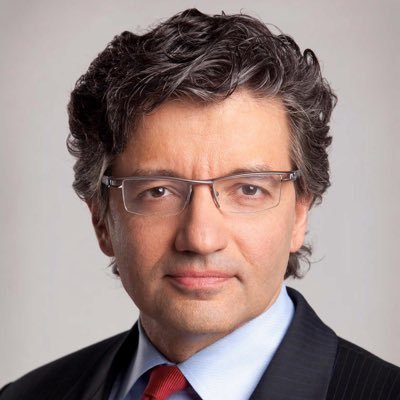
Avraham Burg is an interesting personality. He challenges the religious and sensibilities of the Orthodox and Jewish world. Burg is also a leader in the Israeli peace movement. He served two terms in the Israeli Knesset. Over the years, he has emerged as one of Israel’s most articulate advocates for religious pluralism, women’s rights, ecological issues—not to mention—Israeli and Palestinian peace. At times, Avraham Burg almost sounds like a modern day biblical prophet.

His newest book, “Very Near To You: Human Readings of the Torah,” (Jerusalem: Gefen, 2012) captures many of his seminal ideas on the weekly Torah portion. Burg calls it the way he sees it. His philosophical insights expose a part of the text that towers above his competition. Whereas many of today’s rabbinical scholars extol the virtues of midrashic expositions, Burg challenges the reader to question everything—including the sacred text itself. He does not slavishly accept traditional sources simply because they are canonized as “traditional.”

You will not find Rabbi Joseph B. Soloveitchik or Nechama Leibowitz engage in the type of postmodern deconstructions of the biblical text that Burg does in “Very Near To You.” Burg’s honesty is refreshing. He is not afraid to say that certain biblical stories strike today’s readers as morally problematic for a contemporary sensibility.

So, in the interest of brevity, let us examine one well-known biblical story Burg examines that characterizes his original thought: The story of Noah. Burg admits in the beginning, that he really didn’t care that much for Noah. Rabbinical wisdom teaches that Noah pales in comparison to other biblical personalities who, “spoke to God, fought with him, complemented Him…compared to them, Noah would not have been ‘considered at all’” (p. 12). However, Burg comes up with a wonderful novelty, “Noah is neither a lawgiver or a prophetical voice. Noah belongs among people who build and do. Noah is a pioneer, not an intellectual a manual worker rather than a noted philosopher…”

Ditto. Noah’s greatness is precisely because of his humanity. The Torah describes Noah as a “righteous man,” which happens to be an awful translation. The Hebrew term ish tsadik really means, “a man of integrity,”  or simply, “a just man.” Since the time of Webster’s  Dictionary,  the term “righteous” implies piety, but it really connotes someone who acts with total and complete integrity. Hassidic and Haredi tend to focus on Noah’s religious piety, and overlook the significance of Noah as a “a man of integrity.” As Jewish ethical literature teaches, the acquisition of personal integrity must come before one attains piety.[1] When you consider the violent and unjust times Noah lived in, his moral achievement was no small accomplishment. To use a modern example of Noahide integrity, imagine a Palestinian standing up for Israel in the streets of Gaza–that’s the kind of moral fortitude Noah possesses. He may not be a prophet, but his dignity and personal integrity stand out in a crowd.

Noah’s realism and love for the earth enables him to save it from destruction. “Without Noah,” contends Burg, “there can be no Abraham.” Burg cites the well-known Mishnah, ‘If there is no flour, there can be no Torah—that is, learning and culture cannot survive without the bare essentials of life. By this measure, Noah was the flour; only in his wake could Abraham come with his Torah, his message of revealed truth” (p. 14).

The best part of Burg’s exposition of Noah is how he compares the Flood narrative to the Holocaust. Personally, I have always found this part of the narrative most disturbing. Let’s be honest: Noah probably thought God was a mass-murderer! How can anyone relate to a Deity, Who is deeply out of control with His emotions? Burg is certainly aware of the moral problems posed by the ancient biblical text. As to be expected,  Burg totally rejects any effort to view the Flood story as historical truth. For him, it is all about metaphor that depicts God’s relationship with Creation. Burg makes a stunning observation and claims that God behaves “childishly” by creating man to be an automaton, who obediently responds to God’s every command:

  • When man deviated from his assigned path, God became enraged and banished him. He took the ball back and didn’t want to play anymore, so to speak. In this week’s portion that process repeats itself on a global scale. The creator rebukes himself, regrets the creation and, saddened to his core, lashes out murderously: I will blot out man whom I have created from the face of the earth’ (Gen. 6:7). Only much later does God mature, change, relax, and become the God who is patient with his world and his faithful. At this stage every solution that occurs to him is violent, homicidal, and vengeful: the expulsion from the Garden of Eden, the Flood, the destruction of Sodom and Gomorrah, the killing of the firstborn sons, and so on.”

Burg goes on to mention how some (actually many!) rabbinical scholars liken the Holocaust to the Flood. However, Burg contends that the scholars are mistaken for, “In the Flood, humankind had nothing to say because God wasn’t listening. By contrast, the Holocaust was not an act of God, but a destructive act of man who did not hear a thing. How is the God who once utterly destroyed the world by flood different from the God who didn’t intervene in Hitler’s flood?”

The questions he raises are wonderful. In my new volume on Genesis 4-11, I raise similar questions. There is a theological message that might have made Burg’s exposition of the Flood narrative that much more compelling. Simply put, “The Torah speaks in the language of humankind.” Why is this relevant? When the Torah says, “And the LORD was sorry that he had made humankind on the earth,” this is an example of how the human mind imagines the workings of the Divine Mind. The biblical statement really says more about our flawed image of God.

The 18th century Italian commentator and thinker, Shmuel David Luzzato offers a remarkable perspective that deals with Burg’s straightforward questions. Luzzato contends that when the prophet wrote this narrative down, he spoke in an idiom that the people of his generation could understand.” This is a bold statement, for Maimonides, Ibn Ezra, and Philo of Alexandria arrived at the same conclusion. Moses evokes the imagery of curses and calamity because he wants the Israelites to walk the straight and narrow path.

Remember: our ancestors were not philosophers, nor were they theologians. The carrot and the stick theology  found in Deuteronomy’s list of  biblical curses were written for an unsophisticated generation. When you hear religious leaders evoke the “wrath of God” theology when speaking about the Holocaust, Katrina, the Tsunami, or whatever–you get the impression we have not evolved very much since the days of Noah and Moses.

As people evolve, so too does the concept of God also evolve. As the Sages say, “The Torah speaks in the language of man.” Language is never static; it is dynamic, communicative, alive and capable of eternal expression.

Abraham Isaac Kook’s insight about the nature of God language says much about the evolutionary direction that differentiates the God of the Flood vis-à-vis the God of Psalm 23, who is described as a shepherd and companion. Kook notes, “All the ideological arguments among people and all the inner conflicts that every individual suffers in his own world outlook are caused by a confused conception of God . . . .One must always cleanse one’s thoughts about God to make sure they are free of the dross of deceptive fantasies, of groundless fear, of evil inclinations, of wants and inadequacies. Faith in God must enhance human happiness . . . . When the duty to honor God is conceived of in an enlightened manner, it raises human worth and the worth of all creatures, filling them with largeness of spirit, combined with genuine humility. But a crude conception of God tends toward the idolatrous, and degrades the dignity of man and of other beings  . . .” [2]

Does this mean that the God of the Flood is hopelessly incompatible with the God of Psalm 23, Abraham Isaac Kook, or for that matter Maimonides and the mystics? Well, sort of . . . As Burg intimates, the story of the Flood is really a parable. Although Burg does not always make it crystal clear what the parable represents, this ancient story really says a lot the human conception of God. and how it has evolved. By the end of the story (Gen. 9), God rescinds much of his authority to accommodate human freedom.

Erich Fromm has often said, the story of Noah reveals how an impetuous God becomes a constitutional monarch, who learns to rule by law. In his pericope on the Flood, Burg mentions nothing about the covenant God makes with Noah after the Flood. This is an unfortunate omission on Burg’s part. God enters into a covenant with humankind that obligates both parties to work out their differences. Human responsibility represents the new standard for justice. Human beings– from this point forward–are and will forever be responsible for human generated evil that exists in the world—and not God.

Burg’s concluding remarks presents a vision that I wholeheartedly endorse; he writes,

  • The new Torahs that emerge from the Holocaust must point the way toward the shaping of a better humanity, toward teachings that do not give rise to victimizers like the Nazis nor permit victims to be destroyed as were—as the Gypsies, gays who were there with us, as the Armenians before us and the slaughtered of Rwanda and Cambodia after us. The new theology, particularly, the Jewish one, must break through the boundaries of the old faith . . . The time has come for the faith of Noah and his commitment to repairing the world; the time of beliefs in destruction, whether divine or human, is over (p. 17).

Burg’s treatment of the Akedah (“Binding of Isaac,” see Gen. 22) is also interesting; he names that sub-chapter, “Abraham’s Great Failure.” This section did not reveal anything new that I did not hear before. Burg accuses Abraham of failing the test, and he uses an old but familiar approach championed by Kant, the Sefat Emet, Emil Fackenheim, and more recently—Rabbi Shlomo Riskin. Like the others, Burg claims that after the Akedah, God never spoke to Abraham again. I often wonder: How can modern scholars claim to understand the mind of a biblical narrator, or for that matter–God? The Torah only contains a partial disclosure of Abraham and God’s relationship–and nothing more.

As one who has also written extensively on this topic, I believe there is much more to the story of the Akedah than what the postmodernists are willing to admit. Unfortunately, due to time constraints, we will have to tackle this topic at some future date.

Many of Burg’s expositions are wonderful and the way he engages the biblical stories will challenge and renew your spirit. There is a great prophetic and ethical message he brings to the sacred text. What more could you possibly want from such an outstanding book?

==== Continue Reading

The War Against Prudence and Common Sense (Update!)

Men since the beginning of historical and mythical memory (as seen in Genesis 3) have been blaming women for the problems of the world. Sexism is arguably the Original Sin of Western civilization, and the modern permutations continue to haunt our country even today.

As we watch women’s rights being slashed in the Middle East, we seem to be witnessing a similar phenomenon in the United States. The Susan G. Komen for the Cure, also known as Komen, chose not to renew a grant to Planned Parenthood to fund breast exams. Komen’s new president, Karen Handel, has taken an aggressive anti-abortion and anti-Planned Parenthood position. Together with support from Sarah Palin, Handel promised during her failed run for governor of Georgia that she would restrict a woman’s reproductive rights.

She said, “During my time as Chairman of Fulton County, there were federal and state pass-through grants that were awarded to Planned Parenthood for breast and cervical cancer screening, as well as a ‘Healthy Babies Initiative. Since grants like these are from the state I’ll eliminate them as your next Governor.”[1]

Handel also wrote she opposes cell research and supports crisis pregnancy centers, which are unregulated, Christian-run operations whose main mission is to convince pregnant women not to have abortions. The Christian right do not care whether a young woman becomes pregnant from a family member that raped her, and wishes to terminate her pregnancy.

To date, low-income and uninsured women have received over 170,000 clinical breast exams, but now, these tests are effectively being terminated until a committee decides whether public moneys were improperly spent on abortions.

As someone who is proud to be an Independent, I must say that the freedom of being an Independent affords me the ability to be critical of both the Democratic and Republican Parties. While I have been critical of the President’s Middle East policies, which I believe are incredibly myopic, today I must take aim at the Republican Party.

Jewish tradition teaches that a woman’s reproductive rights a privacy issue. The rabbis predicated this decision because of infant mortality and women dying in childbirth that has existed up to modern times. Preventing unwanted pregnancies are a privacy matter. The State has no right to dictate matters of personal conscience. Not everyone subscribes to the Catholic/Protestant belief that life begins with conception.

The evangelical attempt to defund and ultimately destroy Planned Parenthood is a bad idea that will only cause more heartache—not to mention—a greater burden on our already struggling hospital system. The bottom line is simple: we, the consumers, will inevitably have to shoulder the financial burden. In the end, we will all pay for the mushrooming medical costs with higher premiums.

Yes, as Benjamin Franklin correctly observed, “An ounce of prevention is worth a pound of cure.” While the advocates for defunding Planned Parenthood claim they are concerned with cutting our national and state debt, the tonality of the conservative politicians I have listened to in the news are clearly concerned with preventing abortions any way they can–regardless of the many non-abortion services Planned Parenthood provides.

Jewish tradition wisely teaches that women are not obligated to become pregnant since pregnancy poses many health risks that men do not have to face–but women do. But if she agrees, then it’s a mitzvah! However, when her life is endangered, her life takes precedence over the fetus–contra Catholicism.

In addition, there are other important ethical concerns such as not placing a “stumbling block before the blind” (Lev. 19:14). Young women, who are forced because of economic reasons, will find that their lives could be dramatically affected if they are forced to bear unwanted children. Preventing cancer is a benefit that all of society reaps. Preventing pregnancy in the first place–without having to resort to abortions–via providing birth control is both sensible and wise.

Many years ago, I recall when there was a debate in San Francisco about providing needles and syringes to drug users. Cities that have aggressively provided its drug users with these instruments have helped stop the spread of HIV and AIDS related infections. As of 2010, about one-fifth of the more than 36,000 AIDS cases in New York has involved intravenous drugs. An accurate estimate is probably doubled that, since many addicts’ deaths from tuberculosis, pneumonia and other illnesses are now being recognized as AIDS-related.

Many lives have been saved despite the fact that the city enabled some very bad behavior. Yet, when considering the greater social problems posed by a society that ignores how this disease is spread, distributing needles works.

Providing young women with the means to prevent getting pregnant are analogous in some ways to the example mentioned above because young people since the time of the sexual revolution–if not earlier–are going to continue exploring their sexuality whether parents or clergy approve or not. Teaching them how to take responsibility benefits all of society, and it could prevent greater problems down the road.

As a side note, I want to add that the question as to when does life begin is an important ethical, theological, and social problem. Contrary to the Sarah Palin’s Christian consortium, Jewish tradition takes umbrage with the view that life begins at conception.

There are two Talmudic passages in particular that point this out. In the Gemora, Rav Hisda explains that the daughter of a priest who was widowed shortly after married to an Israelite may still partake of the priestly tithes during the first forty days after she has consummated her marriage—despite the fact she had become a widow in the interim. One might wonder: Should she not eat the priestly foods as a widow? What if she already became pregnant from her first husband? The Talmud explains that even if she discovers that she was pregnant, the fetus does not have the status of a “person.” This rule remains a constant in subsequent rabbinical literature: the fetus does not have an independent standing during the first forty days of gestation.[2]

Another Talmudic source says that if a woman experienced an abortion or miscarriage less than forty days, she does not become ritually impure for all matters pertaining to Temple purity. Neither can a fetus acquire property during the first forty days.[3]

Since the State has no authority to legislate what is essentially a theological and philosophical problem, it must remain neutral.

Jewish law also insists that each question pertaining to abortion must be weighed on a case by case basis. Abortion is permissible and is occasionally mandated only where the pregnancy, simple or multiple, poses a danger to the mother’s physical or mental health or constitutes a threat to her life. Because multiple pregnancies are associated with a high rate of serious maternal complications, such as preeclampsia, eclampsia, bleeding, uterine atony, and urinary tract infections, it might be permissible to destroy one or more fetuses in a multiple gestation situation to reduce or eliminate these serious risks to the mother.

Preventing people from harming themselves ought to be the ethical concern of all religious-minded and Bible believing people. Continue Reading

Abortion as an Ethical Dilemma 2/3

Although the Torah does not directly speak about willful destruction of the fetus as a “right,” nevertheless, the sanctity ancient Israel attributed to human life probably made abortion unimaginable.

The reason for this is simple: Infant mortality in biblical times was close to 50% and it is only natural that attitudes about voluntary abortion probably met with horror and disapproval. Arguments drawn from Scriptures seem inconclusive at best. The lone Pentateuchal source dealing with the legal status of the fetus comes from a section of Exodus dealing with the problem of miscarriage:

  • When men have a fight and hurt a pregnant woman, so that she suffers a miscarriage, but no further injury, the guilty one shall be fined as much as the woman’s husband demands of him, and he shall pay in the presence of the judges. But if injury ensues, you shall give life for life” (Exod. 21:22–23).

The verse may be interpreted in a two ways:

It would seem that the Mosaic legislation considered the fetus property, and should not be viewed as living person, like its mother.  Financial compensation to the woman’s husband is determined by the judges, based on the development of the fetus. Such an interpretation has a parallel in the Hittite Laws, 17, in its treatment of the miscarriage. Most biblical translations regard verse 22 as referring to a miscarriage:

  • Some scholars[1] translate v. 22-23 differently, “If men fight and hit a pregnant woman and her child is born prematurely, but there is no serious injury, he will surely be punished in accordance with what the woman’s husband demands of him, and he will pay what the court decides” (NET). The term אָסוֹן (˒āsôn) does not mean “death,” as interpreted in the Mechilta, but ought to be rendered as, “health complications,” or, “serious harm,” to the child. Accordingly, if the v. 23 may be speaking of the death of the fetus as well, and the assailant is subject to the death penalty.

Based on the latter deconstructive reading, the death of a well-developed fetus could be viewed as a capital offense. Moreover even v. 22 may not necessarily be speaking about miscarriage as such, but a pre-mature birth and would involve lesser injuries to the mother and the baby—depending upon its physical development. Thus, according to this view, the fetus could be viewed as having a status similar or identical to that of human beings.

Other ancient codes of the ancient Near East (ANE) viewed voluntary abortion in grave terms. According to the Middle Assyrian Laws dating back to 1600 B.C.E., observes that if a woman died as a result of having induced her own abortion, her body was publicly impaled and denied a proper burial.[2] Assyrians viewed this act of impaling as a form of tallionic justice on account of the mother’s murdering of her fetus. According to the laws of Lipit-ištar, as well as the Middle Assyrian Laws, if the woman dies, the man himself will be put to death.[3] The Code of Hammurabi also includes laws regarding miscarriages and determines a monetary settlement based upon the mother’s social status.[4] The Hittite laws do not deal with the cases where the mother dies. Continue Reading

Abortion as an Ethical Dilemma 1/3

* This is an older article I wrote back in 2009. So, if there is any overlap of ideas, please forgive me.

Abortion, as such, is not discussed in the Tanakh. Explanations  as to why it is not legislated or commented are at best speculative. The biblical world was much more concerned with the survival of its members, rather than with the willful termination of its unborn. Archaeological evidence suggests that in ancient Israel the infant mortality rate was about 50%.

Discussions concerning abortion are ancient indeed. The Torah imposes a fine on the assailant for causing abortion of a woman’s fetus in the course of a quarrel, and the penalty of death if the woman’s dies as a result of the assailant’s attack. “When two people who are fighting injure a pregnant woman so that there is a miscarriage, and yet no further harm follows, the one responsible shall be fined what the woman’s husband demands, paying as much as the judges determine. If any harm follows, then you shall give life for life, eye for eye, tooth for tooth, hand for hand, foot for foot, burn for burn, wound for wound, stripe for stripe” (Exod. 21:22-23).

Ancient Discussions

If the Code of Hammurabi is of any indication, the Torah had in mind only financial damages but did not advocate the death penalty for the death of the fetus—regardless how premature or maturely it was. In Section 209: Hammurabi writes, “If a man strike a free woman and cause her fruit to depart, he shall pay ten shekels of silver for her fruit.”

Perceptions regarding the status of the embryo changed centuries later during the days of Greek culture. A new interpretation was introduced that radically transformed our understanding of the biblical text. According to the ancient Greek translation of the Scriptures, the Septuagint, the Torah decreed that under certain circumstances, the death of the fetus could be imposed for causing an abortion:

ἐὰν δὲ ἐξεικονισμένον ἦν δώσει ψυχὴν ἀντὶ ψυχῆς

[And if two men strive and smite a woman with child; and her child be born imperfectly formed, he shall be forced to pay a penalty: as the woman's husband may lay upon him, he shall pay with a valuation.] But if it be perfectly formed, he shall give life for life . . . (Exod. 21:22)

Philo of Alexandria comments on this passage of the Septuagint, “But if anyone has a contest with a woman who is pregnant, and strike her a blow on her belly, and she miscarry, if the child which was conceived within her is still unfashioned and unformed, he shall be punished by a fine, both for the assault which he committed and also because he has prevented nature, who was fashioning and preparing that most excellent of all creatures, a human being, from bringing him into existence. But if the child which was conceived had assumed a distinct shape in all its parts, having received all its proper connective and distinctive qualities, he shall die; for such a creature as that is a man, whom he has slain while still in the workshop of nature, who had not thought it as yet a proper time to produce him to the light, but had kept him like a statue lying in a sculptor’s workshop, requiring nothing more than to be released and sent out into the world.[1]

Philo juxtaposes abortion with the ancient practice of exposure. He writes: “On account of this commandment he also adds another proposition of greater importance, in which the exposure of infants is forbidden, which has become a very ordinary piece of wickedness among other nations by reason of their natural inhumanity . . .”

Josephus also regards abortion as morally akin to murder.[2] Nevertheless, in practice, he followed rabbinical tradition, “He that kicks a woman with a child, so that the woman miscarry, let him pay a fine in money, as the judges shall  determine, as having diminishing the multitude by the destruction of what was in her womb.”[3]

Josephus and Philo may have been of the opinion that the assailant had to pay two fines, one to the husband, and the second fine to charity for depriving the human race of one less person. It is also possible the Hellenistic understanding did run contrary to what later became Talmudic Halacha. Nevertheless, it does reflect the disdain Jews have had throughout history concerning abortion—at least as a method of birth-control. Given the high degree of infant-mortality, this reaction was quite understandable.

Unlike the Septuagint, Talmudic scholars maintained that the word אָסוֹן (´äsôn) “harm” refers to the woman and not to the fetus, since the scriptural injunction, “He who fatally strikes a man shall be put to death” (Exo. 21:12), did not apply to the killing of a fetus.[4] Ancient rabbis did not consider abortion a sin unless the fetus was viable בן קיימא  (ben keyama)—still and all, if the infant was so much as only  one day old , his killer is guilty of murder (Niddah. 5:3).[5]

According to the view of R. Ishmael, only a Gentile, to whom some of the basic transgressions applied with greater stringency, incurred the death penalty for causing the loss of the fetus (Sanhedrin 57b). Though abortion was frowned upon in the ancient world, it did not constitute murder.[6] In one well known Responsa of R. Yosef Trani (14th century), the author argued against a Jew assisting in an abortion, because it “places a stumbling block before the blind (Lev. 19:14).” This Halachic attitude did not apply to therapeutic abortion.

All this doesn’t necessarily mean that the rabbis had a permissive attitude concerning abortion. Clearly, it wasn’t. Thus we find in one medieval Midrashic work that Israel is praised because in spite of Pharaoh’s genocidal decree, in Egypt, “Every boy that is born you shall throw into the Nile,  (Exod. 1:22), “Not one Israelite woman so much as harmed her foetus, much less after its birth. By virtue of their reverence for life, Israel merited the exodus” (Zohar II 3b).

Abortion is permitted if the fetus endangers the mother’s life. The Mishnah reads: “When a woman travails to give birth [and it is feared she may die], one may sever the fetus from her womb and extract it, member by member, for her life takes precedence over his”[7 This is the case only as long as the foetus has not emerged into the world, when it is not a life at all and “it may be killed and the mother saved.”[8] Once the birthing process has begun,  if the greater part of the fetus has emerged into the world-either its head only, or its breach—it may not be touched, even if it endangers the mother’s life  אין דוחין נפש מפני נפש (ein dohin nefesh mi-penei nefesh) “one may not discard one life to save another.”

In another passage of the Talmud, a newborn child is not considered to be viable, until it has lived for 30 days![9] How do we reconcile this passage with the above?

Back to the Future: Contemporary Perspectives

Rav Ben Tsion Uziel, the late Chief Sephardic Rabbi, observes in his Responsa, “When a child dies within 30 days, it is considered as if it was a stillborn and is not mourned for like a person who has died. It becomes evident only in retrospect, that it was stillborn [nofale] and that the period of its life was only a continuation of the mother’s vitality. Since there was no way to ascertain whether the foetus was indeed stillborn or not, it is not a crime one can be executed for because of doubt. Nevertheless, it is certainly prohibited to kill it because of doubt.”[10] This passage of Ben Uziel does have ramifications to another area of Halacha pertaining to discontinuing life-support mechanisms for a  seriously impaired newborn baby. A more contemporary  scholar, Rav Abraham Steinberg, notes “when in doubt, it is better to error in favor of life.”

Just to digress, it is interesting to note  that in a similar way, Christian theologian Augustine raised a key question in his own time, as it is now, was “at what time the infant begins to live in the womb; whether life exists in a latent form before it manifests itself in the motions of the living being.” Augustine admits that he cannot assuredly say at exactly what point human life begins. He seriously questions whether any human has the power to decisively say. Nevertheless, he asserts that anyone who looked at the cut-up remains of an aborted baby would have to recognize that this had been a human life. Although Augustine apparently had a firm belief that a developing foetus participates in human life, he argues equally strongly here that a conclusive proof is outside our human ability. There is some leniency if for example, the abortion will save the mother from an  illness deriving from an inflammation not connected with the pregnancy, or a poisonous fever . . . in these cases the fetus is not [per se] the cause of her illness.”[11]

Among modern Halachic authorities, psychological reasons are also a factor to allow abortions. The great 18th century Halachic giant,  Rabbi Yaakov  Emden, permitted abortion “as long as the foetus has not emerged from the womb, even if not in order to save the mother’s life, but only to save her from the harassment and great pain which the foetus causes her.[12]

One early 20th century scholar, Rav Ben Tsion Uziel, rules in favor of allowing an abortion in order to save the mother’s hearing, even though her life was not endangered. Disgrace and the quality of life are a very important factor to take into consideration when deciding whether one is undergo an abortion.[13] In the case of pregnancy resulting from incest, or any adulterous union, the 18th century savant, R. Yaakov Emden, permitted abortion so that the stigma of bastardy be attached to her offspring.[14]

With regard to the dreaded Tay-Sachs disease, Rav Eliezer Waldenberg permits the abortion, since as he writes in his Responsa: “One should permit abortion as soon as it becomes obvious from the results of the test that the child is indeed, a Tay-Sach’s baby will be born—even until the seventh month of pregnancy. If we are able to permit abortion according to the Halacha because of great need and because of pain and anguish, it seems reasonable that this is the classic case for extending such permission. And it is irrelevant in what way pain and suffering is expressed; whether it be physical or psychological—It is all the same. Indeed, psychological suffering in many ways in greater than the bodily suffering.”[15]

R. Eliezer Waldenberg also notes that whenever possible, all such abortions should be performed within the first forty days of the pregnancy or at least within the first three months.[16] Pope Gregory XIII [1572-85) expresses a similar view, and wrote that an embryo less than forty days was not yet considered human. Incidentally,  it was only in 1869, Pope Pius IX who along with this doctrine of infallibility, decreed that the destruction of an embryo—even to save the mother’s life — was a mortal sin that merited excommunication from the Church.[17]

Many Orthodox scholars differ and are of the view that Jewish law prohibits abortion when its sole justification is to prevent the birth of a physically deformed or retarded baby. Likewise, abortion—on demand—purely for the convenience of the mother or even society is considered morally repugnant.”[18]

Suffice it to say as in any Halachic matter, there is no carte blanche answer for every conceivable case in Halacha—especially with regard to abortion.  Every case must be determined by its own unique circumstances. A competent rabbi should be able to help guide any person who is wrestling with this important decision. There is no one answer for such a complex issue as abortion. Continue Reading

The House of Cards

Haredi family

Religious societies probably grapple with the problem of shame more so than your typical secular community. Rigors of ordinary Orthodox Jewish life are daunting enough. When compared to the members of the Haredi community, Orthodox Jews might just as well consider themselves, “Reform,” or even Unitarian. The Haredi live as though they belong in the 18th century. The modern world with all of its technological wizardly threatens to unravel the foundations of their society. Bombarded by an endless stream of Internet images, they feel as though their world is collapsing—and it is.

Technology is only part of the problem. The world has changed; feminism has redefined the role of a woman in society.  In premodern times, Jewish women  usually spent their days cooking and cleaning the house. She was wholly devoted to raising her family. Today’s Haredi woman often finds herself forced to find work in order to support her family. She does it without fanfare. Today’s Haredi woman behaves like a classical “woman of valor,” mentioned in the book of Proverbs.

  • She is like the ships of the merchant, she brings her food from far away . . . She considers a field and buys it; with the fruit of her hands she plants a vineyard. She girds herself with strength, and makes her arms strong. She perceives that her merchandise is profitable. Her lamp does not go out at night (Proverbs 31:14-18).

What does the Haredi husband do? He sharpens his mind through the study of Talmud. He asserts his position as the man of the house, while everyone cringes in fear. Behind the bravado of the Haredi male is a person who suffers from low self-esteem. On some level, he feels ashamed he cannot provide for his family like other Haredim in the United States or in Europe. Most Haredi men lack the most basic skills to hold a job down; they are barely literate. Most of what they study in yeshiva is impractical. Their wives, on the other hand, interact with the modern world. These women have proven to be capable, personable, and successful. Haredi women are their family’s primary breadwinners and they are proud of their accomplishments! The men are jealous of their wives–and for good reason.

So what do these men do? They marginalize and bully the woman—not just their wives, but all women and girls. When they see a young and confidant Orthodox woman, they cringe with pain. They fear such women might actually inspire their wives to choose strength over weakness. They emphasize the “inferiority” of women by excluding them from aspects of public life, and segregating them in the back of the bus.

Why are the Haredi men doing this? The answer is simple: in their hierarchical society, they feel as though the walls of tradition are crashing down upon them from the force of modernity–and indeed they are!

Are the Haredi men completely responsible for this dilemma?

Not entirely.

Their rabbis enabled this kind of behavior for decades.

Prominent Hassidic (and Haredi) rabbis insist that none of their followers study in colleges for an education. As a result, their followers remained trapped in limbo between two opposite worlds: the pre-modern and the postmodern. Karl Marx warned us about the dangers of religious corruption when he said, “Religion is the opium of the masses.” The Haredi structure has a very strong Hassidic constituency,[1] but the Lithuanian and Sephardic components also support this mindset, howbeit to a lesser degree.

Hassidic rebbes, like Rabbi Israel of Ruzhin (1796-1850), developed a new trend that continues today. According to the Israeli scholar David Assaf, this Rebbe unabashedly demanded enormous sums of money from his Hasidim (presumably without offering kickbacks or illegally inflated tax-receipts). His garments consisted of outrageously lavish, silver and gold-laced outfits, favored royally and decorative walking-sticks. The Rebbe even had an orchestra to serenade him to sleep. He traveled in gilded chariot drawn by dozen white stallions (some say six Arabians, while others argue three Rumanian nags). And he infamously was fond of declaring, as a kind of personal motto, “All the money in the world belongs to me.”

You probably heard the old song, “Oy, diamonds are a Rebbe’s best friend!”

Rabbi Yisrael of Ruzhin was not the only one to behave this way. Many of today’s Rebbes have sometimes resorted to crime, money-laundering, and other terrible crimes in order to maintain their lavish lifestyle.

Although scholars like Martin Buber love to write stories about a Rebbe’s piety, not all of them were pious. In fact, many weren’t. Today’s successors in Jerusalem have no financial difficulty providing for their own families. Yet, they begrudge their followers to go out and get a college education. Contact with the outside world remains taboo. Their gullible followers live in squalor, and they take out their angst on their poor women, who are too fearful of the consequences if they fail to comply. An educated person knows how to think for oneself. Knowledge is power; it also creates an opportunity to succeed.

Christopher Hitchens once said, “Shepherds don’t look after sheep because they love them—although I do think some shepherds like their sheep too much. They look after their sheep so they can, first, fleece them and second, turn them into meat. That’s much more like the priesthood as I know it.”

Hitchens’ remarks especially apply to the Hassidic and Haredi rabbis, as well.

All the Halachic prohibitions and stringencies cannot prevent their world from imploding. What the Haredim really need are genuine leaders who deeply care for the flock God has entrusted them. They need leaders to encourage them to take responsibilities for their families; they need to encourage them to become givers, and not mere takers of society’s dole.

Freud’s Great Intuition: Religion as Neurosis . . .

Not all Pharisees of the Talmud are worthy of our admiration. No, this statement is not one I personally originated; this idea actually comes from the Talmud itself.

Two thousand years ago, the Jewish community had an entire class of people who delighted in such feats of piety. The Talmud heaps scorn on the religious pretentiousness of these “foolish Pharisees.”

The Jerusalem Talmud writes, “Who is a man of piety that is a fool? “He, for example, who, if a woman is drowning, says, ‘It is unseemly for me to look at her, and therefore, I cannot rescue her. . . . Who is the pious fool? He who sees a child struggling in the water, and says, ‘When I have taken off my phylacteries, I will go and save him.’ By the time he arrives to rescue him, the child has already expired. Who is the crafty scoundrel? R. Huna says, ‘He is the man who behaves leniently toward himself, while teaching others only the strictest rules.’”[1]

“Our Rabbis have taught: There are seven types of Pharisees: the ostentatious Pharisee[2], the Pharisee who knocks his feet together and walks with exaggerated humility[3], the Pharisee is one who knocks his face against the wall rather than gaze at a woman[4] The Pharisee who feigns religious piety while constantly exclaiming, ‘What is my duty that I may perform it?’”[5]

You have just returned from Memory Lane.

Imagine a Haredi convention where the great rabbis come up with their latest technological and religious innovations designed to keep men and women apart. Wait until you see the latest fashions the Haredi rabbis decreed upon their enthusiastic followers. Mind you, I am not saying that all Haredi are lunatics–however, the Belzer, Satmar, Gerer Hassidim have hundreds of thousands of lunatics following some very shady religious leaders. I did not include the Lubavitch or the Bratzlav, for both of these movements operate on a principle of ahavat Yisrael–for the most part (but not always). This is obviously a topic nobody in the Haredi world want to talk about. Like most dysfunctional families, family “secrets” are necessary to allow the dysfunction to continue.

Now, back to our subject . . .

Last year’s innovations included:

  • A  ban on mannequins.
  • The Personal Mechitza, which is a small partition Haredi Jews wear around their heads when travelling on El Al Airlines. The PM prevents Haredim from gazing at the lovely El Al Stewardesses. It comes in only one color: black.
  • Women must sit at the back of the bus!
  • How to attack Modern Orthodox girls walking to elementary school.
  • How to attack wheelchair bound children on Shabbat!
  • Rock concerts for Haredim during the Shabbat, where non-Haredim get stoned!
  • Separate sidewalks!

This year’s innovations include:

  • Use only “BLACK” rabbinically certified baby carriages!
  • Using gangs to intimidate other Haredi Jews.
  • Living like the Coneheads—special headgear for women designed to out-Taliban the Taliban burka!
  • Separate elevators for women as of 1/18/2012![6]

The Taliban are probably experiencing envy as you read this article. “Why can’t we become more religious, more fanatical like the Haredim?” asks a child to her mother.

Most of you have probably heard of OCD—Obsessive Compulsive Disorder. I personally prefer identifying this acronym as, “Orthodox Compulsive Disorder.” Hey, if the shoe fits, wear it!

OCD is a very common kind of anxiety disorder. Haredi behavior makes sense when you realize that all these new “halachic” acts of piety involves ways of coping with underlying anxiety, tension, anger, and guilt.

Most modern psychologists and therapists probably are not deeply in love with Freudian psychology, but I have a pretty healthy respect for Freud’s view of religion as an obsessional type of neurosis. Unlike Jung, Frankl, Rodgers, Fromm, and others who saw religions as serving a potentially positive function in society and in the life of the individual, Freud only concerned himself with the pathological aspects of religion that constricts rather than liberates the human spirit from its shackles.

When Freud wrote “Religion as Obsessional Neurosis” in 1907, he observed how religious people suffered from an overwhelming feeling of guilt:

  • We may say that the sufferer from compulsions and prohibitions behaves as if he were dominated by a sense of guilt, of which, however, he knows nothing so that we must call it an unconscious consciousness of guilt, in spite of the apparent contradiction in terms. This sense of guilt has its source in certain early mental events, but it is constantly being revived by renewed temptations which arise whenever there is a contemporary provocation. Moreover, it occasions a lurking sense of expectant anxiety, an expectation of misfortune, which is linked, through the idea of punishment, with the internal perception of the temptation. . . [7]

Freud was right. Religion for many people is a mental disorder. Continue Reading

Expanding Upon Martin Luther King’s Dream for Ethiopian Jews in Israel

As we give pause to the memory of Martin Luther King and his profound ethical message concerning the evils of racial intolerance, it behooves us to ask ourselves: Have we, as a religious community, fully embraced the principles that cost this great man his life? Most American Jews have taken valuable steps in combating racism in our great country. However, some of us have yet to take a meaningful first step.

The Lubavitcher Rebbe spent many years preaching about the importance of ahavat Yisrael—on how, “we should love our fellow Jews.” However, the Rebbe and his Hasidic followers were careful never to admit that this great commandment does not apply to Ethiopian Jews. Since the famous rescue of the Ethiopian Jews (Beta Israel) in the 1980s, Chabad schools have adopted a policy that openly discriminates against Ethiopian Jews—despite the fact they have undergone Orthodox conversions in Israel and have been accepted in many Haredi yeshivas!!

Ethiopian parents often hear from Chabad principals, “We don’t take in Ethiopian children. We don’t think you match our lifestyle and we’re not sure about your Jewishness either.” This is exactly what five young girls of Ethiopian descent heard when they arrived with their parents at the “Or Chaya” school in Petah Tikva. By the way, Or Chaya is a Chabad school. Moshe Ashgara, the father of another girl, experienced the same treatment. “My daughter is a diligent student. Why won’t they take her?” That is a good question and the Principal of Or Chaya was unavailable for questioning.

The answer is simple: Chabad endorses racial discrimination against people it does not feel are “real Jews.” The late Lubavitcher Rebbe expressed doubts over the Jewish origins of Ethiopian immigrants to Israel and instructed that they be excluded from Chabad institutions—regardless whether they went through the most rigorous conversions.

Mind you, they have no problem accepting Jews from Ashkenazi and Sephardi backgrounds, not to mention, Jewish immigrants from the former Soviet Union. But not a single Ethiopian Jew is enrolled in the educational network. This policy applies not only to the Israeli secondary schools—it applies to every Chabad Heder and yeshiva all over the world.

Menachem Brod, spokesman for Chabad, confirms that Ethiopian children are not accepted in the Hasidic movement’s institutions. “This is an instruction from the Lubavitcher Rebbe and also a ruling by our rabbis,” he said. He also reiterated that the “Ethiopians are not being singled out, since Chabad policy applies to anyone whose Jewishness is in question.”[1]

When the Ethiopian Jews began their immigration from Ethiopia, the Chief Rabbinate obliged all immigrants to undergo giyur lehumra (pro forma conversion) because of doubts raised about their Jewishness by Ashkenazi ultra-Orthodox rabbis. However, in 1984 the rabbinate adopted as its official policy the well-known halakhic ruling that Rabbi Ovadia Yosef – the spiritual leader of Shas – issued a decade earlier, which held that there was no doubt about the Jewishness of the Falasha, the Beta Israel (Ethiopian Jews ). From this point on, instead of the demand to undergo conversion, members of Beta Israel wishing to marry had to undergo a “clarification of Jewishness.”

Rabbi Moshe Feinstein wrote to his son-in-law, Rabbi Moshe Tendler concerning the Ethiopian Jews:

  • As you mentioned, they should not be brought to the Land of Israel, unless they have undergone a conversion, in order to not increase the concern for assimilation [i.e., intermarriage with Jews who do not have a doubt regarding their Jewish status and also a weakening of the faith of Ethiopian Jews themselves]. But if they have legally converted, and as I have heard they are doing, we shall consider them like all Jews, and one must assist them and support them for all needs of livelihood, both physically and spiritually. And I suffered great anguish because I have heard there are those in Israel who are not drawing them close in spiritual matters and are causing, G-d forbid, that they might be lost from Judaism. And it seems to me these people are behaving so only because the color of the Falashas’ skin is black. It is obvious that one must draw them close, not only because they are no worse than the rest of the Jews – and because there is no distinction in practical application of the law because they are black – but also because one can say perhaps they are gerim [converts], and are therefore included in the mitzva “and you shall love the convert.”[2]

For the record, the Lubavitcher Rebbe never endorsed the rescue of Ethiopian Jews in their most critical time of their history.  Every other major Halachic scholar accepted the Ethiopian Jews as Jews, but many did insist upon a pro-forma conversion in the event of marriage.[3] This is all the more amazing when one considers that the Lubavitcher Rebbe always stressed the importance of saving lives superseded even the laws of the Shabbat!

Last week,  Channel 2 in Jerusalem exposed an agreement signed by residents of an apartment complex in Kiryat Malachi that forbade the sale or rental of apartments to Ethiopian Jews – even if the potential renter was an exemplary Israeli citizen, and their decision was extensively backed by a Chabad neighbor who wrote an essay defending the racism. Such behavior embarrasses Jews everywhere, and our enemies use these stories to tarnish Israel’s reputation to the world.

If the Haredim in Israel are willing to accept the Ethiopian Jews, one must wonder: Why won’t the Chabad also accept the Beta Israel? Why should the Chabad institutions receive a free pass to continue their racial discrimination? In fairness to the Chabad public, it is doubtful whether most of their supporters are even aware of this problem. However, the organization leaders may want to rethink the Rebbe’s position because it goes against the vast majority of Haredi rabbis, who have for the most part, openly embraced the Ethiopians in Israel. Clearly, Rabbi Schnersohn has been overruled by the vast majority of Torah scholars of his time, and it is foolish to continue a policy that is so morally offensive, not to mention—contrary to Halacha.

About 2,000 people gathered on Tuesday to demonstrate against racism in Kiryat Malakhi, after members of the Ethiopian immigrant community there said that local homeowners’ committees refuse to rent them apartments. They were joined by hundreds of people who came from around the country to support them.

What a shanda!

A pig with lipstick is still a pig, and racism–even–with a smiley face is still racism.

The Israeli government is outraged about this shabby treatment of Israel’s beloved Ethiopian Jewish community and promises to strike hard at the racist policies that are harming the Jewish people of Israel. President Shimon Peres expressed our sentiments with eloquence, “The racists should be ashamed of their actions and their words,” Peres said on Thursday. “When we established the state, our dream was that Ethiopian Jews would immigrate to Israel, along with Libyan Jews, Russian Jews and Jews from all over the world.”


Notes:

[1] “Chabad School Refuses to Accept Ethiopian Students,” Chabad News on September 08 2011, http://www.crownheights.info/index.php?itemid=37556.

[2] Cited in Igrot Moshe Vol. 9 (I have personally ordered the book, and I promise to cite the response when I receive it in the mail.

[3] R. Eliezer Yehudah Waldenberg, Ziz [i.e, Tzitz] Eli’ezer, 10:25,ch. 3, sec. 10; Tzitz Eli’ezer, X, no,. 25, chap. 3, sec. 19.

A Maimonidean Prescription for Haredi Behavior

Badatz Yerushalayim logo

One of my congregants asked a recent synagogue class, “How can we try to be respectful and understanding of the ultra-Orthodox when they are at the forefront of hostile activities like rioting at places which are open on Shabbat and more recently, vandalizing a girls’ school in Bet Shemesh because it bordered their neighborhood?”

The short answer is simple: Everybody deserves respect, provided one acts in a manner that is respectful. Since the Haredim do not behave in a manner that is respectful, they need to change and improve their behavior to win our respect back.

They may want to start the process of healing  by following Maimonides’ prescription for repentance. The first step is an acknowledgement of responsibility and fault. The second step involves a change in behavior for the better–no more attacks on innocents. The third step requires restitution to the city and school property, which were damaged. Arresting and incarcerating those responsible for the violence might also be included in this step. Forgiveness comes only in the end when all the other steps have been carried out to fruition.

Platitudes and empty promises mean nothing. Without a change in behavior, they are analogous to Maimonides’s example of the individual who immerses himself in the mikveh, while holding on to a rat–the symbol of ritual defilement. Immersion means nothing so long as the individual is still holding on to dysfunctional attitudes and deeds. [2]

Some law-abiding Haredim in Israel find their cohorts’ religious behavior embarrassing. Yet, despite the condemnations we have heard from the leading Chief Rabbis of Israel, we have yet to hear a universal condemnation from all of the Haredi scholars and leaders—and this attitude is most disturbing. Some have even done the opposite!

Eidah Haredit [the Haredi ecclesiastical authority of Jerusalem]released a  letter earlier this week, “The arrests of violent Haredim who attacked police, women and girls is yet another chapter in the worst of all the exiles, the one imposed by the evil State of Israel . . . they harbor a deep jealousy for those who fear God . . .who serve God in truth and purity . . .”

Houston, we’ve got a problem . . .

How can constructive change occur if the leaders of the Haredi deny all responsibility? Not only do they enable poor behavior by saying nothing, many of them have even actively encouraged violent behavior.

How can constructive change occur if the leaders of the Haredi deny all responsibility? Not only do they enable poor behavior by saying nothing, many of them have even actively encouraged violent behavior. The ancient Chinese philosopher Confucius said, “When a man in his own person is guilty of doing evil, a superior man will not associate with him” (Analects 7:1). Jewish tradition has similar teachings, “You shall not join hands with the wicked to act as a malicious witness” (Exod. 23:1); “I hate the company of evildoers, and will not sit with the wicked” (Ps 26:5).  The Sages sum up this idea well, “‘Woe to the wicked and woe to his neighbor!’  (Numbers Rabbah 3:12). A person is judged by the company one keeps.

We seem to be reliving a chaotic period of Jewish history, “In those days there was no king in Israel; everyone did what he thought best” (Judges 21:25).

======

[1] MT Hilchot Teshuvah 1:1

[2] Ibid., 2:3.

What inspired the Rabbis to say, “Thank God for not making me a woman!”? (Part 2 of 3)

As we have pointed out in other postings, a strong case can be made that one of the most serious  “deadly sins” of history is the sin of misogyny. Every faith grapples with this problem in one form or another. In Judaism, there is a well known blessing men say every day upon getting up in the morning:

“Blessed are you, Lord, our God, ruler the universe who has not created me a woman.”

The Original Rabbinical Source of the Blessing

The origin of this prayer is found in the Tosefta to Berakhot 6:16 that reads:

R. Judah says: “A man is bound to say the following three blessings daily: (1) ‘[Blessed are You . . .] Who has not made me a heathen’, ‘. . . . (2) Who has not made me a woman’; and  (3) ‘ . . . who has not made me an uncouth person.’”

The Tosefta then explains its rational:  (1)    “. . . a heathen,” because it is written: Before him all the nations are as nought, as nothing and void he accounts them,’” (Isa. 40:17). (2)   “. . . an uncouth person,” because it is said, “an uncouth person cannot be pious” (Avot 2:5). (3)   “. . . a woman,” for women are not legally required to observe all the precepts.

To what is this matter (i.e., gentile, uncouth people, women who perform the precepts) analogous to? A mortal king once said to his servant, ‘Go cook a meal for me.’ However, unbeknownst to the king, the servant had never cooked a meal in his life! After cooking a meal, the king got upset with him. Another analogy: A king once asked his servant to hem a garment for him, but having never hemmed a garment before, the servant ruined the garment, thus angering the king. [The moral of the story: Let those who are unfamiliar with the observance of the commandments be exempt from observing them, lest they be an affront to their Maker.]

It is interesting to note that unlike the canned apologetic responses seen in subsequent rabbinic literature, which purports that women are essentially exempt from the performance of certain time-bound precepts because of her family obligations, the Tosefta dismisses such a perspective. Her legal exemption from the commandments is because of incompetence and not because of the lack of opportunity.

Re-interpreting the Tosefta

The Talmud discusses part of the Tosefta in BT Menachot 43b:

A learned discussion began: “ R. Judah [1] used to say, ‘A man is bound to say the following three blessings daily: ‘[Blessed are You . . .] who has not made me a heathen’, ‘. . . . who hast not made me a woman’; and ‘ . . . who hast not made me a brutish man.’

One of the Sages, R. Aha b. Jacob, once overhead his son saying ‘[Blessed are You. . .] who has not made me a brutish man’, when he immediately said to him, ‘Isn’t this blessing a tad bit presumptuous?’ (Who says the rabbis didn’t have a wry sense of humor?) His son retorted, ‘OK, what would you have me say instead?’ Surely it is better to say, ‘. . . Who has not made me a slave.’ Once again his son retorted, “ How is this blessing different from that of a woman (seeing that neither one is fully obligated to carry out the precepts of the Torah; in fact they are on equal footing in terms of their obligations)?  His father rejoined, “A slave is more contemptible” (since his character is generally prone to licentious behavior, which is not the case with women). Continue Reading

What inspired the Rabbis to say, “Thank God for not making me a woman!”? (Part 1 of 3)

As we have pointed out in other postings, a strong case can be made that one of the most serious  “deadly sins” of history is the sin of misogyny. Men have been blaming women for everything wrong in their lives since the Garden of Eden. Much has not changed. Every faith grapples with misogyny in one form or another. In Judaism, there is a well known blessing men say every day upon getting up in the morning:

“Blessed are you, Lord, our God, ruler the universe who has not created me a woman.”

The Original Rabbinical Source of the Blessing

The origin of this prayer is found in the Tosefta to Berakhot 6:16 that reads:

R. Judah says: “A man is bound to say the following three blessings daily: (1) ‘[Blessed are You . . .] Who has not made me a heathen’, ‘. . . . (2) Who has not made me a woman’; and  (3) ‘ . . . who has not made me an uncouth person.’”

The Tosefta then explains its rational:  (1)    “. . . a heathen,” because it is written: Before him all the nations are as nought, as nothing and void he accounts them,’” (Isa. 40:17). (2)   “. . . an uncouth person,” because it is said, “an uncouth person cannot be pious” (Avot 2:5). (3)   “. . . a woman,” for women are not legally required to observe all the precepts.

To what is this matter (i.e., gentile, uncouth people, women who perform the precepts) analogous to? A mortal king once said to his servant, ‘Go cook a meal for me.’ However, unbeknownst to the king, the servant had never cooked a meal in his life! After cooking a meal, the king got upset with him. Another analogy: A king once asked his servant to hem a garment for him, but having never hemmed a garment before, the servant ruined the garment, thus angering the king. [The moral of the story: Let those who are unfamiliar with the observance of the commandments be exempt from observing them, lest they be an affront to their Maker.]

It is interesting to note that unlike the canned apologetic responses seen in subsequent rabbinic literature, which purports that women are essentially exempt from the performance of certain time-bound precepts because of her family obligations, the Tosefta dismisses such a perspective. Her legal exemption from the commandments is because of incompetence and not because of the lack of opportunity.

Re-interpreting the Tosefta

The Talmud discusses part of the Tosefta in BT Menachot 43b:

A learned discussion began: “ R. Judah [1] used to say, ‘A man is bound to say the following three blessings daily: ‘[Blessed are You . . .] who has not made me a heathen’, ‘. . . . who hast not made me a woman’; and ‘ . . . who hast not made me a brutish man.’

One of the Sages, R. Aha b. Jacob, once overhead his son saying ‘[Blessed are You. . .] who has not made me a brutish man’, when he immediately said to him, ‘Isn’t this blessing a tad bit presumptuous?’ (Who says the rabbis didn’t have a wry sense of humor?) His son retorted, ‘OK, what would you have me say instead?’ Surely it is better to say, ‘. . . Who has not made me a slave.’ Once again his son retorted, “ How is this blessing different from that of a woman (seeing that neither one is fully obligated to carry out the precepts of the Torah; in fact they are on equal footing in terms of their obligations)?  His father rejoined, “A slave is more contemptible” (since his character is generally prone to licentious behavior, which is not the case with women). Continue Reading