Names and Personal Identity

Names in the mythic imagination of humankind has always conveyed something symbolic–even mystical–about the human drama. In the Garden of Eden, Adam is unique among the entities–both physical and spiritual–in his ability to name the animal kingdom (Gen. 2:19). Even the angels are said to be jealous of this power.

To be human, is to possess a name, be named, which serves as our bridge to the external world around us. When somebody forgets our name, we instinctively feel marginalized and unimportant. Yes, the name is our passport to interpersonal recognition. Throughout history, people died to preserve their names in history. In Babel (Gen. 10), humankind went to extreme measures to preserve their name, so they would not disappear from memory.

Many of us will even write a book or a diary on the hope that some ethereal part of ourselves will remain despite our mortality.  Memorial funds operate also on the same principle. Most people are pretty conscious about preserving a sacred memory of a loved one.

In all human communities there is thought to be a close relationship between the name of a person or other phenomenon and its character, status, and very being.

Because of their mysterious nature, names serve to define the external world we live in. They help to navigate the stream of consciousness and even conscience. In the Nazi death-camps, the German henchmen did their best to strip the Jewish prisoners of their names by giving them a number instead. To have a name means that someone will have to deal with you as a concrete person. We name even our pets, much for the same reason.

Since there is power in names, they both participate both in the reality named and give definition and identity to that reality. Both the named and the name exist share an ontological mutuality.

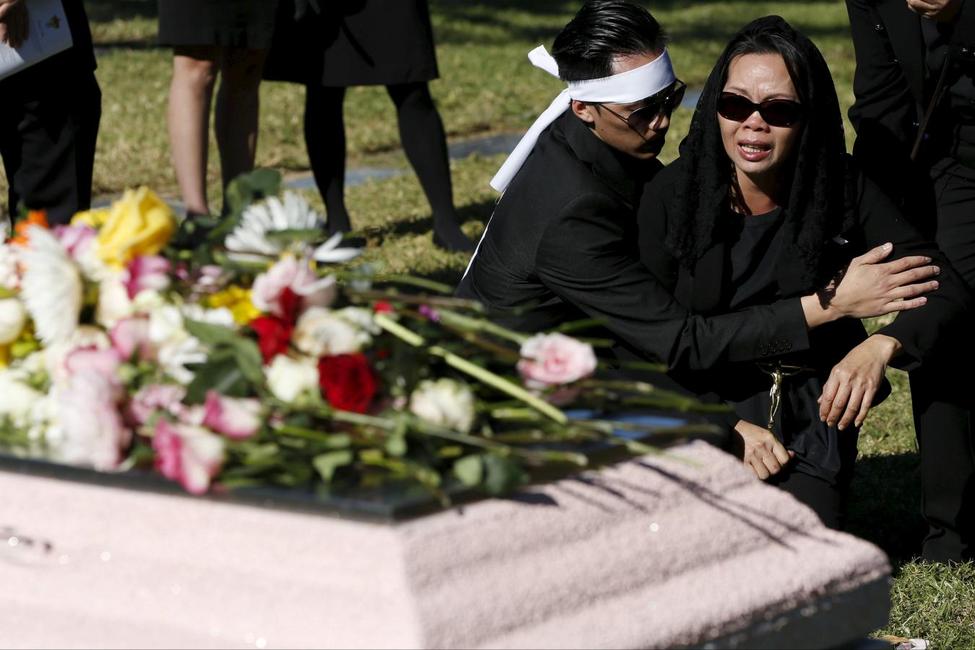
In both Jewish and Christian tradition, the infant child who dies, cannot be buried without first receiving a name. The name defines status; in conversion ceremonies, they symbolize the birth of a new person, in a manner of speaking.

Even in primal societies where female infants are considered expendable,  as we see with the Eskimo communities, once the infant has received a name, she must be dealt with as a living being.

In many faiths, naming an infant in honor of a deceased relative is a way of preserving identity in a transcendental way. Continue Reading

Remembering a Local Jewish-American Hero

In Memory of Bill Sax

An anonymous poet and vet wrote about his experience in the famous battle of Okinawa.

Okinawa was to be our last stop
Before we invaded Japan.
The largest landing of the Pacific war
As our soldiers ran across the sand.

At first our marines were scarcely opposed
But on the fifth day hell they found.
A solid wall of human resistance
Firing their weapons from caves in the ground.

Air power and big guns had little affect
On their cliff forts carved deep in the limestone.
It took man against man to root them out
As flying bullets pierced flesh and bone.

Kamikaze pilots crashed their planes
Knocking out transports and war ships.
As the Imperial air force struck our fleet
Cries of fear and hate spewed from lips.

One hundred, ten thousand Japanese
By the end of the battle were killed.
Over twelve thousand Americans died,
Before, just our flag flew over the field.

Let me tell you about Bill’s remarkable life.

What I would like to do now is tell you about Bill. I want you to walk away from here with a better understanding and appreciation of his life and who he was. And I am going to acquaint you with some aspects of his life with which you may not be familiar –a father, a son, a brother, a husband, friend and soldier,  a gardener, and car aficionado.

Bill Sax was born on December 7, 1921 in Moline, the son of Jacob and Fannie (Cohn) Sax.  Some of you may not know that Bill was a decorated war hero, who received numerous medals for his bravery and valor during WWII.

Young Bill was drafted on Oct. 15, 1942 (before his 21st birthday) and  went from St. Louis to Camp Adair, Oregon, near Salem, OR.,  zig  zagging across the country for a week.  He was put in a heavy weapons company, Company D.  This was the first Thanksgiving and first holiday he would spend away from home.

As Dad put it:

“I don’t know how I got so lucky. Abbie was drafted  into the Air Corps, Bernie in Anti-Aircraft Artillery, and I got the  Infantry.”  Well, after training in Oregon and CA, the army sent him to Hawaii and then to several islands in the Pacific. He was on Leyte in the  Phillipines for about 10 days when General MacArthur made his famous return to the Philippines.  He ended up in Okinawa on April 1, 1945,  and  Bill was in  the last battle of WW II—although they didn’t know it at the time.

For those of you unfamiliar with the Battle of Okinawa, it was considered to be one of the bloodiest battles of WWII; the American invasion of this island made it possible for the Americans to invade the Japanese industrial heartland.

The attack on Okinawa had taken a heavy toll on both sides. The Americans lost 7,373 men killed and 32,056 wounded on land. At sea, the Americans lost 5,000 killed and 4,600 wounded. The Japanese lost 107,000 killed and 7,400 men taken prisoner. The Americans also lost 36 ships. 368 ships were also damaged. 763 aircraft were destroyed. The Japanese lost 16 ships sunk and over 4,000 aircraft were lost.

Bill’s section got hit while there, and several of them got hit by shrapnel.  Dad’s helmet saved his life! There was still a bit of shrapnel lodged in his shoulder that he never had removed. He was taken to the hospital in Guam, then to Hawaii, then back to the States. He got his discharge just before Thanksgiving 1945, almost 3 years after being drafted. He walked into the poultry business at 8am and by 9am he was dressing turkeys for Thanksgiving!

Longfellow said it best in his famous poem, “The Psalm of Life.” These poetic words capture the essence of Bill’s soul:

In the world’s broad field of battle,
In the bivouac of Life,
Be not like dumb, driven cattle!
Be a hero in the strife!

AFTER THE WAR

Within three years,  he married the former Arlene Schaider in 1948. He met Arlene Arlene Schaider in 1948, the love of his life and they were married for 62 happy years. She was in every sense, the love of his life. Throughout his life, Arlene proved to be a loving and loyal spouse and together they created a lifetime of dreams and memories.

THE GOOD SON

Many years before he worked at Montgomery Wards, he worked at the family poultry business, Sax’s Poultry, and he routinely extended kindness to people who could not afford food; he provided them with a running tab, and if they could not afford to pay their debts, he forgave the debts. As a human being, Bill lived a life of tsedakah—the Hebrew  word for “charity” and “integrity.” Bill proved to be an excellent son to his parents, and took care of their every need. Continue Reading

In Memory of Esther Avruch, Holocaust Survivor

  1. Esther Avruch

A Parable of Two Ships

Rabbinic wisdom speaks of a well known parable about two ships were sailing near the shore; one headed toward the open sea, while the other headed toward the harbor. Everyone was cheering the outgoing ship. But very few cheered for the incoming vessel. A sage observed, there is something paradoxical about all this. The outgoing ship should not be cheered, for nobody knows what lies ahead in wait for it. Nobody knows what stormy seas it may encounter; what dangers might lie ahead of the person as she continues her voyage.  But everyone ought to be cheering the incoming ship, for it has clearly reached the port safely. The ship concluded its journey in peace. Loved ones were now united; life begins anew once more. . . .

We are here to pay tribute to a most remarkable woman, Esther Avruch,  whose voyage through life was full of danger, loss, joy and triumph.  survived the horrors of the Holocaust and made a wonderful life.

Esther’s Life

Let me tell you a little bit about Esther’s life. She was born July 15, 1929, in Sochaczew, Poland, the daughter of Avrum-Scholum  and Miriam Fleischman.  She was the third youngest of ten children, Esther, and one of her sisters were the only family members to survive the Warsaw Ghetto and the Holocaust.

Like many children in Eastern Europe, religious families sent their children to Catholic schools to learn secular studies, while spending the rest of the day learning about Judaism. (My father also attended Catholic school with all of his siblings–despite the fact that they were Hasidic Jews; this was quite common in Eastern Europe because there were no public schools.) Esther learned at the one of the first Beth Ya’akob schools for Jewish girls. Esther could still remember the songs she learned in school. She dressed up like a Jewish princess whenever she attended services, which she always loved doing. Esther also learned to speak several languages that included, Yiddish, Polish, and Hebrew.

Every week, she used to clean her home for the Sabbath; she had a very happy childhood. Esther especially loved dressing up for the Sabbath in her finest clothes.

The Beginning of the War Years

As Hitler approached Poland, anti-Semites used to say, “Just wait till Hitler comes to Poland . . .” The situation grew worst in Sochaczew, and the family decided to leave for Warsaw, where they thought life would be safer.

In one of the buildings they were hiding, a German bomb exploded the building but miraculously nothing happened. This happened on September 3rd of 1939.

One of the worst experiences occurred on Yom Kippur when all the Jews were huddled at the synagogue, when the Nazis started bombing it.  Esther’s sister Raisel, was injured in the attack; they ran away to their home where they hid in the cellar.

For now, everything was ok—or so it seemed. There was no water, and little Esther had to shlep miles  to bring just a few buckets of water. Warsaw was conquered by the Nazis, and the family had no choice but to go back to their home town. After the Nazis took over, every Jewish home was burned to the ground; the Jews had to wear armbands with the Mogen David insignia on it. As if the Nazis were bad enough, many Poles proved that they could be  just as cruel, and would beat the Jews, and seize their food and water.

Miracles

After a while, Esther and her family were reunited with their father and brothers in Warsaw. Despite the theft of their food and water, Esther did her best to survive and survive she did. When typhus broke out, it was the wisdom of their mother, who protected her children. Anyone going to a hospital, simply never returned.

Starving for food and drink, simple Polish peasants, like a miracle from God, shared their food with the family. They were friends of Esther’s father’s business partners. They acted morally and with compassion. As the war continued, the Germans threatened to kill any Pole who would dare save a Jew. The pious Polish Christian family was gunned down, one by one, for daring to save the Jews.

Esther’s mother, Miriam, always shared with what little food with others who were starving as well.

Throughout the ordeal, Esther did her best to maintain contact with her brother Scharma, who was working at a Polish factory in Warsaw. During that time, she managed to smuggle bread to her brother. At one point, she was caught and beaten by the Nazis for helping the Jews.

Another kind Polish family got her a fake birth certificate, and she then assumed the name Marsia Rakowsa. Because the Nazis never suspected that Esther was Jewish because she had blond features. This act of kindness enabled Esther to survive the war. With this birth certificate, she was able to obtain a ration card, which also helped her escaped getting arrested. On more than one occasion, Esther had to face the German officers and tell them she was an orphan, after her parents were killed in a bombing raid. She attended Church services,  sung Christian songs and nobody suspected that she was Jewish.

Just prior to the what was to be the famous Warsaw Ghetto Uprising, she found out about the plan of the Jews to fight back, and that she needed to prepare herself a special bunker where she would remain safe.  Instead, she decided to take her chances on the Polish side rather than remain in the bunker.  Esther said to herself, “If I am to die, I would rather die in the open air, than die in a bunker.”

Esther’s intuition saved her once more, for after the Germans came in and crushed the revolt, there were no more survivors in any of the bunkers. If people were not killed immediately with their families, they were shipped to the Treblinka concentration camp. She recalls that while her brothers Scharma, Yitzchak, and Benjamin were in the trains, they jumped from the train as the Germans began shooting at them, killing Isaac in the process.  Scharma was knocked out for a while, only to be robbed and attacked by the Poles in a forest nearby. That was the last time she saw her brother Scharma.  Eventually, he was captured and killed by the Nazis. Continue Reading

Tags