When a Hassidic Rebbe visits the Israeli Museum, heads turn!

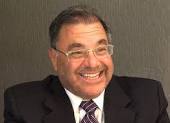
Karlin-Stolin Rebbe Rabbi Baruch Shochat

Haredim and archaeologists in the Holy Land have never been especially fond of each other. Traditionally, they are a little bit like meat and milk. By themselves, each is fine. However, when they get together, they create a combustive chemistry. Whenever an archeological excavation takes place, they chime in unison:

  • May God erase their names . . .The heads of the Antiquities Authority and the chief archaeologists are sub-human, may their hands be cut off, for committing this terrible crime. In broad daylight they remove graves, disturbing the eternal rest of the dead and remove the bones of our ancestors from their graves…They are responsible for desecrating the graves of our forefathers throughout the Holy Land. Please call them and disturb them, at all hours of the day.”

Yes, the Haredi rhetoric has been intensely vitriolic at times. Therefore, when the head of the Karlin-Stolin Hassidic dynasty went on a museum tour of the Israel Museum, shock-waves were felt all over Israel.

The Karlin-Stolin Rebbe, Rabbi Baruch Shochat, made history that day. He is the first ultra-Orthodox leader to visit the Israel Museum.

Most Hassidic rebbes are not known for their love of art and culture, but Rabbi Shochat is a patron of the arts. In fact, he even encourages his followers to take an interest in the arts–-and especially archaeology. The tour-guide made it a point to show him the Shrine of the Book, where the famous Dead Sea Scrolls are kept along with other significant archaeological findings.

Some Haredi leaders are finally starting to show some interest in a field of study, which for many decades had been off-limits.

Several months ago, the First Haredi conference on “Torah archaeology” held in Jerusalem on September 9th, 2o11 and the event drew a packed audience. The sponsors of the event wanted to demonstrate how archaeology can provide answers to longstanding rabbinical debates that have never been resolved for hundreds of years.

Rabbi Shaul Shimon Deutsch runs a museum that displays artifacts dating back to the time of the Mishnah. Among the items he had recently obtained, was a scale. He poses a question, “How much did the litra (a Talmudic measure) actually weigh? The answer: 354 grams—just as Rashi claimed, but contrary to Maimonides!” That figure comes to about 12.5 ounces.

Metrology has never been my field of expertise, so I decided to check out Rabbi Deutch’s claim that the litra weighed only 354 grams. Actually, there is some debate as how much a litra weighs. Some archaeologists think it weighed 340 grams—contrary to Rashi’s opinion. This figure is based on Josephus’ calculation. [1] Other scholars contend that the Greek λίτρα (lítra) represents both a unit of weight and a unit of capacity equivalent to about 0.5, which correspond to 11.5 oz. or 326 or 327.45 grams (cf. John 12:3).

R. Isadore Epstein, who writes in his notes to the Soncino Talmud that the litra is identical with the Roman libra, which weighed one pound.[2] Steinzaltz in his notes to the Talmud writes that the litra weighed 327 grams. The Artscroll commentary abstains from providing any information; it says a litra is “a measure” and adds no further comment. Upon further research I found that the Alexandrian litra weighed about 363.83g, which actually exceeds Rashi’s figure![3]

This is the main problem of the Haredi attitude regarding archaeological research. All the speakers at this event agree “using ancient artifacts to shed light on religious texts – as long as they don’t undermine the traditional reading of the texts, of course.” Such a reaction only begs the real issue: What if archaeology contradicts the Talmud? What then? Judging by the archeological evidence, Rashi’s position is still questionable. Does this mean Rashi is not infallible?

No, dear reader, no rabbi is infallible–not even Rashi or Maimonides.

It is wonderful to see a change in attitude taking place among certain Haredi groups. When I look back, I think about a famous Hassidic rabbi who refused to accept archeological evidence in solving a classical halachic dispute. Once someone asked the Lubavitcher Rebbe about the shape of the menorah, which existed in the Temple. The man thought that based upon the ancient pictures of the menorah seen in Israel–the menorah should be depicted as U-shaped. “Not so, not so,” insisted the Rebbe. To the surprise of everyone in the room, the Rebbe dismissed the archaeological sources that indicated the menorah was round. Instead, he followed Maimonides’ view who taught the menorah was angular in shape.

Even if Maimonides personally subscribed to such a peculiar view of the menorah, there is no archeological support from the last 2300 years that would even indicate that the Temple menorah ever had a V-shaped geometrical design. All the numerous artifacts unearthed from the time of the Maccabees (e.g., gravestones, coins, amulets etc.) suggests that the branches were U-shaped rather than V-shaped. In one recent archaeological discovery, an ancient synagogue dating back to the Second Temple (50-100 B.C.E.), the walls of the synagogue show  pictures of a seven-branched menorah.

Incidentally, the famous Arch of Titus portrays the menorah as being U-shaped.

Some people do not wish to be confused with the facts. But again, Rabbi Schnersohn was the only rabbinic authority of the modern era who believed that the sun still revolves around the earth—contra Copernicus![4] Rabbi Schnersohn is hardly alone on the matter of science vs. the wisdom of the Torah  Sages. There are still many Haredi rabbis who reject Darwin’s theory of evolution. By the same token, many of these Haredi and Hassidic rabbis believe God actually created the world in six literal days, despite the physical evidence that refutes this antiquated notion.

One of the recent event’s main sponsors, Rabbi Eliahu Soloveitchik, offered some positive words strongly suggest that the Haredi community is gradually moving toward a new orientation regarding the use of science and archaeology in the study of Judaism. When asked what he and his colleagues would do with findings that appear to contradict the Torah, R. Soloveitchik said, “If there are findings that contradict my fundamental beliefs, we’ll let the experts resolve it. The message is that we aren’t afraid of science and can digest it.” R. Soloveitchik is also the founder of Matmonei Eretz, an organization that promotes Haredi study of archaeology and history.

Rabbi Soloveitchik’s approach is commendable. We can only hope that more Haredi Jews and their rabbis will learn to see science and archaeology as an ally instead of a foe.

——-

Notes:

[1] Josephus (Ant 3.6.7 §144 on Exod 25:39) translates Heb kkr as “100 minas” and adds “kinchares is the Hebrew word that means talanton in Greek,” where he is probably thinking about the Roman centarius of 100 “pounds,” but elsewhere (Ant 14.7.1 §106) he relates that Crassus took a bar of gold “of three hundred minas,” noting that “our mina is two and a half litrai.” This litra, usually interpreted as a Roman pound, is probably the “mina” of 100 denarii (≈ 340 g), and 125 such “minas” would be the mass of a Tyrian talent (≈ 42.5 kg), suggesting that the Tyrian talent may have been divided in Josephus’ time into 50 “minas” (340 g × 2.5 × 50 = 42.5 kg). Thus, the “shekel” of NT times probably refers to the Tyrian tetradrachma (so Ben-David 1966). This seems to be based on a “mina” of 100 denarii (100 × 3.4 g), corresponding to the Roman pound plus 4 denarii, divided into 24 parts, yielding a “shekel” of ca. 14.1666 g and a 3,000-shekel talent of ca. 42.5 kg. Thus, Josephus was probably speaking only in approximate terms in identifying the “shekel” with 4 drachmai-denarii (Ant 3.8.2 §195, 18.9.1 §312, JW 7.6.6 §218; likewise Matt 17:24). Anchor Bible Dictionary Vol. 6, (New York: Doubleday, 1996), 907.

[2] BT Nedarim 57b.

[3] Atti dell’Accademia Romanistica Costantiniana, Volume 12 p. 190. Others think it ranged from 322.3 g,-323g.

[4] R. Menachem Mendel Schnersohn, advocated just such a position. Here is an extraordinary letter the Rebbe wrote (September 16, 1968):

  • I am in receipt of your letter of September 10th, in which you touch upon the question of whether the sun revolves around the earth or vice versa, in view of the fact that you heard from a college student that the truth is that the earth revolves around the sun. It greatly surprises me that, according to your letter, the student declared that science has resolved that the earth revolves around the sun. The surprising thing is that a person making such a declaration would be about one half century behind the times insofar as the position of modern science is concerned. This belief is completely refuted by the theory of Relativity, which has been accepted by all scientists as the basis for all the branches of science. One of the basic elements of this theory is that when two bodies in space are in motion relative to one another (actually the theory was initiated on the basis of the movements of stars, planets, the earth, etc.), science declares with absolute certainty that from the scientific point of view both possibilities are equally valid, namely that the earth revolves around the sun, or the sun revolves around the earth. Herman Branover, Joseph Ginsburg, and Menachem Mendel Schnersohn (trans. Arnie Gotfryd) Mind over Matter: The Lubavitcher Rebbe on Science, Technology and Medicine (Jerusalem: Shamir 2003),

Aaron’s Silence vs. Job’s Protest

In this week’s parsha we read about the death of Aaron’s two sons, who died from an accidental explosion in the Tabernacle. Aaron’s reaction is quite telling–despite the absence of scriptural detail from the narrator. As is often the case with biblical narrative, more is said by what isn’t stated, than by what is actually mentioned. In the book of Leviticus, the biblical narrator says in but a couple of words the reaction of Aaron:  וַיִּדֹּם אַהֲרֹן (wayyidöm ´ahárön) “And Aaron was silent” (Lev. 10:3).

Nowhere does the biblical narrator provide us with a sense of what Aaron must have been feeling. Did he blame himself? Was this God’s pay-back for when he made the Golden Calf? Did he neglect to tell his sons how to carry out their duties in a safe and careful manner? To decipher Aaron’s response, we must read in between the lines and look for clues.

Among the Hebrew words for “silence” dumah stands out as a term associated with grief and loss.

Another bereaved father in the Bible, Job, does not accept his children’s death silently or stoically–much to the surprise of his community. The differences between these two men’s emotional response certainly ought to pique our curiosity. Job’s community criticizes Job for questioning God’s justice. He refuses to play the role of the quiescent victim, resigned to his misery. Perhaps the men of Job’s community expected him to react like Aaron did after he lost his two sons Nadab and Abihu, who died in the prime of their youth.

In both the narratives of Job and the death of Aaron’s two sons Nadab and Abihu, there are a number of nuances that define the shape and pathos of a grieving silence.

Unlike Aaron, who is forced to hold his feelings within because his priestly office demands no less, Job refuses to accept his loss in stoic silence. He is determined to confront his feelings of torment and anger by directing these toxic feelings to God. Job deeply resents the theological attitude espoused by his “friends” that since his sons were obviously “sinners,” they ultimately received what was coming to them–death. Job’s friends assert that  the social order is maintained whenever God exacts vengeance against His enemies. Job cannot accept such theological nonsense.

Whereas Aaron’s silence was pierced with a divine visitation by God, Job was not as fortunate as Aaron; he is denied an immediate revelation. God seems to be reluctant in responding to Job’s plea for justice. Job’s own silence–and especially the silence of God–threatens to destroy him.

It is an experience known well by anyone who has ever suffered. The best way to understand someone who is grieving is for us to see ourselves as walking in the shoes of the Other. Ergo, the  feelings of restlessness, disorientation, incoherence, shock, and terror often reduces us to silence. Extreme suffering often destroys our ability to communicate for the weight of our suffering leaves us feeling verbally incapacitated. We feel stone-like and lifeless. Trauma makes us feel overwhelmed, terrified and distressed. When we suffer, we must find a language that will lead us out of our bondage of muteness and through the wilderness of silence. We seek a language of redemption. We have felt wronged, we have cried, and we have felt outraged.

All the subtle nuances of Aaron’s and Job’s silence are familiar experiences to most Holocaust survivors and to a lesser extent to their children who grew up in the captivity of silence.  Many survivors like my father, whose family was murdered in Auschwitz, lost their capacity to speak about the horror of the camps. Many second-generation children of survivors grew up never hearing our parents speak about the atrocities that they experienced. Frightened and confused, we never encouraged our parents to tell us their stories.

Several years ago, a refined woman in my congregation lost her father and husband to cancer within the same year. On the anniversary of her husband’s death, her son hosted a golfing tournament. He was a very well-fit young man, age 26, who exercised every day and was the apple of his mother’s eye. After personally winning the tournament, he dropped dead from a heart attack. After the autopsy, they discovered he had ephedrine in his blood, which caused him to have his heart attack. His mother faced a sorrow of Jobian proportions; and for many years, she could not bring herself to pray in the synagogue. Who could honestly blame her?

Another young woman I once knew, had worked at a bar and went to bring a hot beverage from a large coffee maker, which exploded and burned over 90% of her body. Accidents like this occur every day, and it is in these painful epiphanies of the diabolic, the human soul often gets mangled and disfigured along with the body.

Any close brush with the diabolic makes it exceedingly difficult to even talk about faith. Martin Buber asked poignantly:

In this our time, one asks again and again: how is a Jewish life still possible after Auschwitz? I would like to frame this question more correctly: how is a life with God still possible in a time in which there is an Auschwitz?

The estrangement has become too cruel, the hiddenness too deep. One can still “believe” in a God who allowed those things to happen, but how can one still speak to Him? Can one still hear His word? Can one still, as an individual and a people, enter at all in a dialogical relationship with Him? Can one still call on Him? Dare we recommend to the survivors of Auschwitz, the Jobs of the gas chambers: “Call on Him, for He is kind, for His mercy endureth forever?”[1] There is a place in Judaism for religious skepticism. When the wisdom literature of the Bible included Job into the Canon, the ancient Sages revolutionized Judaism forever. You could say that today’s skeptic serves an almost prophetical role in keeping professional rabbis and theologians honest. There is a place in Judaism for questioning and doubting. Skeptical feelings should never be silenced but welcomed into any discussion about faith.

When we suffer we hunger for a restoration of God’s Presence (theophany), and a settling of the records. Like Aaron and Job, not only do we wait for consolation—we expect it; we demand justice. The Psalmist was not unaware of this kind of evil, “For God alone my soul waits in silence; from Him comes my salvation” (Psa. 62:1).

The Disparity between Image and Reality

The well-known phrase, “Let them eat cake . . .” has often but incorrectly attributed to Queen Marie Antoinette. According to French philosopher, Jean-Jacques Rousseau, these words were supposedly said by a great princess who wondered why the French peasants couldn’t eat cake, instead of bread. The quote suggests that the princess was oblivious to the people’s state of poverty. This expression has become the perfect metaphor for leaders who are out of touch with the working class. (I should add that almost in Congress can really and truly honestly identify with the “Average Joe,” since everyone in Congress is a millionaire! Ergo, whenever politicians talk about “power to the people!” always ask yourself, “Which people are they referring to? The Communists have killed scores of millions to bring “power to the people”).

Among the Chinese, there is a similar quote.  When a Chinese Emperor was informed that his subjects didn’t have enough rice to eat, the Emperor replied, “So, why don’t they eat meat instead?”  In both the French and the Chinese tradition, the point is exactly the same: leaders can ill-afford to act as though everyone else in their country is privy to excellent food. In rabbinic tradition, R. Eleazar ben Azariah said , “If there is no bread, there can be no Torah” (Avoth 3:17). In other words, when people are hungry, they cannot occupy themselves with the higher pursuit of knowledge.

Hungry stomachs yearn for a more basic gastronomical truth.

In my last article, I pointed out the types of excesses we have come to expect from the White House and Congress. Mind you, I really don’t view this as a Democratic issue per se. There has been lots of waste in Congress and the Republicans must take their share of the responsibility in allowing Social Security to become insolvent and potentially bankrupt.

That being said, I expect—no I demand—that Michelle Obama cease going on these lavish vacations at our expense. She is no Marie Antoinette, but she sure acts as though she were the French queen. Ten million dollar vacations are an embarrassment.

If you have trouble accepting that fact, then remember: Denial ain’t just a river in Egypt!

Several months ago, I wrote about the President’s attempt to emulate the Republicans by going on his personal bus tour around the country. Evidently, the President wants everyone to think that he is “one of the people,” and that because of his economic background, “he really ‘understands’ their problems.” Does he really? Had the President decided to go in a Greyhound bus (with the appropriate security), he would at least make his point a little bit more persuasively. However, President Obama decided to go on one very expensive bus—along with many of his staff—on two buses that cost over 2.2 million dollars!

Welcome to President Obama’s new age of austerity.

I forgot to mention that the bus was made in Canada and not in the United States. Well, look at the bright side: At least it wasn’t made in China!  How can the President drive around in a bus that was made in Canada and talk about creating more jobs for American? My liberal Jewish friends, I ask you one simple question: Where is the cognitive dissonance here?  Is the hypocrisy too painful to admit—much  less acknowledge? If I was the Republican candidate, I would tell the government, “Keep your bus, Greyhound is good enough for me . . .”

Now, Talmudically speaking, if President Obama decided to go on an electric bus that used no gas, one that was completely fuel efficient—the President could have made an important point about energy conservation. No, not Mr. Obama! The buses he decided to ride on, only gets 2 miles to the gallon.

Way to go Mr. Obama! You, the French queen and the Chinese Emperor have a lot in common!

I am mentioning this incident to show that regardless who happens to be in the White House, I expect that leader to epitomize austerity and prudence. If after he is elected, Romney decides to act this way—I will be on his case too like white on rice.

The President cannot act like he is a “champion of the people,” while living the lifestyle of the rich and opulent.

I will conclude with a piece of timeless wisdom I wish to draw from the great Hellenistic Age, when Jewish thinkers first began articulating the symbiosis of Greek and Judaic thought. In a famous work known as, “The Letter of Aristeas,” this fictional account portrays an imaginary dialogue between King Ptolemy II Philadelphus (285–246 B.C.E.) and the Sages of Alexandria. In one memorable passage, we find:

  • The King asked another Sage, “Who is the most suitable person to be made king—a private citizen, or a member of the royal family?  The Sage replied, “He who has the most superior moral nature, for kings who come of royal lineage often act harshly and treat their subjects with cruelty. However, private citizens too are not immune to the abuse of power. Despite having experienced evil and borne their share of poverty, these private citizens often rule over the masses with even greater meanness than the godless tyrants. But, as I have said, a good nature which has been properly trained is capable of ruling, and you are a great king, not so much because you excel in the glory of your rule and your wealth but rather because you have surpassed all men in clemency and philanthropy, thanks to God who has endowed you with these qualities.”[1] Continue Reading

The fat cows of Bashan have returned! [revised]

  • Are there any biblical analogies to today’s contemporary economic problems?

Well, sort of . . .

Today’s economic times may be compared to one of the more turbulent periods of the early monarchy, to the time of King Solomon and his son Rehoboam. Most of us know that King Solomon was famous for his wisdom and his love life. Despite purportedly being the “wisest man” of all time, when it came to women—King Solomon proved to be quite foolish. Having one wife to love and cherish wasn’t good enough for the old Testosterum-driven monarch—he had to have a thousand wives. By doing so, he violated a number of biblical prohibitions designed to keep monarchial power in check:

  • But he shall not have a great number of horses; nor shall he make his people go back again to Egypt to acquire them, against the LORD’S warning that you must never go back that way again.Neither shall he have a great number of wives, lest his heart be estranged, nor shall he accumulate a vast amount of silver and gold (Deut 17:16-17)

King Solomon lived the good life, while conscripting the male population to a life of slavery. He used the proceeds to build extravagant palaces for his lovers–all at the public dole. In fact, the biblical narrator writes:

  • King Solomon conscripted thirty thousand workmen from all Israel. He sent them to the Lebanon each month in relays of ten thousand, so that they spent one month in the Lebanon and two months at home. Adoniram was in charge of the draft. Solomon had seventy thousand carriers and eighty thousand stone-cutters in the mountain, in addition to three thousand three hundred overseers, answerable to Solomon’s prefects for the work, oppressing  the people who engaged in the work (1 Kgs. 5:27-28)

King Solomon even recreated an Israelite form of slavery that was reminiscent of the Egyptian bondage. The noun מַס (mas) is usually translated as “levy” but it is sometimes used to denote “taskmaster,” or “forced labor” in Biblical Hebrew. Solomon instituted corvee labor,  which involves involuntary, unpaid labor or other service for a superior power—a feudal lord, a king, or a foreign ruler (cf. Exod. 1:11; Est 10:1; Lam 1:1). One cannot have high expectations of a pagan Pharaoh, who could scarcely recognize or pronounce the God of Israel’s Name.

But Solomon is different.  Surely the “wisest man” of the earth ought to have stronger moral scruples, but he chose to emulate the potentates of the ancient world who ruled by force and despotism.

Solomon’s brutal reign  reminded the Israelites of their historical experiences in Egypt (Exod. 1:11). When the Pharaoh who introduced slavery died, the Israelites hoped that a new Pharaoh would take pity upon them. Instead, the next Pharaoh ruled with even greater vindictiveness. (Exod.2:23). A similar development occurs after the death of Solomon. Seeking to curry favor with Rehoboam, the son of Solomon, the people said to King Rehoboam,“Your father put on us a heavy yoke. If you now lighten the harsh service and the heavy yoke your father imposed on us, we will serve you” (1 Kgs.12:1). The King then takes counsel with his advisers and later proclaims, “My father put on you a heavy yoke, but I will make it heavier. My father beat you with whips, but I will beat you with scorpions” (1 Kgs. 12:14).

Solomon’s reckless economic policies bankrupted the nation and Rehoboam’s foolishness led to the secession of the ten tribes under the leadership of Jeroboam.

Are there modern day parallels to this biblical story?

You betcha!

The real issue that clergy across the religious and political spectrum ought to be critiquing the degree of excess, misappropriation, and willful theft of the American consumer by our governmental leaders—from the President down to the typical bureaucrat. Here are several examples that come to mind.

By now, most of you probably heard about the GSA Las Vegas scandal. The GSA stands for the General Services Administration. Several top executives decided to spend over $800,000 of taxpayer dollars on an extravagant “conference” off of the Las Vegas Strip. What made this story so controversial? Well, the General Services Administration (GSA) was created to, in their words, “streamline the administrative work of the federal government” and it “oversees the business of the U.S. federal government.”

Oh really?

  • $31,000 on a “networking reception” that featured $19-per-person “American artisanal cheese display” and $7,000 in sushi
  • $3,200 on a session with a mind reader
  • $5,600 for in-room parties
  • $100,405.37 in employee travel costs to scout the event–meaning, these people returned to the Las Vegas area multiple times to visit hotels before settling on the fancy M Resort and Casino.
  • $3,700 for T-shirts and $2,800 in water bottles
  • $1,500 for “Boursin scalloped potato with Barolo wine-braised short ribs” and a $525 bartender fee for a cash bar.
  • Three officials spent almost $400 for rented tuxedos
  • $1,840 for vests for the 19 “regional ambassadors” and other employees
  • $146,527.05 was spent on catered food during the entire conference
  • $75,000 for a “team-building” exercise — the goal was to build bicycles (which would later be donated to a Boys & Girls Clubs)

Had it not been for an honest reporter, nobody would have known the difference. Think for a minute: Have you ever wondered how many extravagant parties our elected officials have thrown that we have never heard about? But all of these parties are nothing but chump change—when you compare the amount of billions that President Obama’s green energy corporations have squandered with our “stimulus” money. Obviously somebody is getting a lot of stimulation, but not the kind we have expected.

Consider:

  • Last April, Solar Trusts of America received a $2.1 billion grant from the Department of Energy to build the world’s largest solar plant in California.
  • On 31 August 2011 Solyndra announced it was filing for Chapter 11 bankruptcy protection, laying off 1100 employees, and shutting down all operations and manufacturing, while providing no severance for the fired employees, or even providing back due vacation day credit.[1]

(NaturalNews) Just a few months ago, FBI agents raided the headquarters of now-bankrupt solar panel company Solyndra, which received more than half-a-billion dollars in federal stimulus funds as part of the federal government’s green energy stimulus initiative.

According to a new investigation by CBS News, the Solyndra scandal is just the tip of the iceberg, as at least 11 other green energy companies have either already failed, or are on the verge of failing, taking with them more than $6.5 billion in taxpayer money.

Lastly, I must say that I have always been a Democrat but I am a Scoop-Jackson Democrat, one who believes that our elected officials must exemplify integrity and fairness to all—regardless of race, religion, or economic background.

Judging by her behavior, Mrs. Obama has aspirations of becoming the next Imelda Marcus  of the Philippines.  Imelda Marcus’s  extravagant lifestyle reportedly included five-million-dollar shopping tours in New York, Rome and Copenhagen in 1983, and sending a plane to pick up Australian white sand for a new beach resort.

White House sources today claimed that the First Lady has spent $10 million of U.S. taxpayers’ money on vacations alone in the past year. Not bad for just 42 days of vacation, or a little more than one  million out of every nine days, according to a White House Dossier analysis of her travel.

Her vacations, the cost of which are mostly borne by taxpayers, include trips to Panama City, Fla., Martha’s Vineyard, Hawaii, South Africa, Latin America, Vail, Colo., and her visit this week to her brother in Corvallis, Ore.

One can only conclude that, “It’s good to be President!”

Amos the prophet once said, “Hear this word, women of the mountain of Samaria, you cows of Bashan, You who oppress the weak and abuse the needy; Who say to your lords, ‘Bring drink for us!’” (Amos 4:1). It seems that the fat cows of Bashan have invaded and conquered the White House.

So ask my fellow clergy: Where is your sense of outrage? When you consider how many people can barely fill their cars up with gas, Michelle Obama’s spending habits seem obscene.

If I were the President, I would make it a point to be more circumspect with my personal conduct. The appearance of impropriety undermines the confidence the President is trying to establish for his presidency. Continue Reading

Today’s Economic Problems and the Bible

I find it amusing whenever I see Christians argue about Jesus and the virtues of liberalism vs. conservatism. NPR featured a story dealing with the question: Would Jesus promote a political philosophy endorsing small-government, or whether he would act as the advocate of the poor?

Politicians love to pontificate almost as much as clergy!  After the House passed its budget last month, liberal religious leaders claimed that the Republican plan, which lowered taxes and cut services to the poor, was an affront to the Gospel — and particularly Jesus’ command to care for the poor.

Not so, says Wisconsin Republican Rep. Paul Ryan, who chairs the House Budget Committee. He told Christian Broadcasting Network last week that it was his Catholic faith that helped shape the budget plan. In his view, the Catholic principle of subsidiarity suggests the government should have little role in helping the poor. He adds, “Through our civic organizations, through our churches, through our charities — through all of our different groups where we interact with people as a community — that’s how we advance the common good.”

The debate is an interesting one and I have heard some rabbis make similar claims that the Exodus proves that God and Moses are great examples of biblical liberals, while the evil Pharaoh and his supporters would have been an excellent Republican. To some extent, the Democrats are also correct in asserting that Moses and Jesus were liberals—and by the way, so is God.

Historically, Ryan’s position has been correct. One of the great philosophers and evolutionary theorists of the 19th century, Peter Kropotkin (1842-1921), took issue with Darwin’s concept of the “survival of the fittest,” and believed that the species of the world survived because of a concept known as “mutual aid.”   Continue Reading

The Righteous Shepherd of Theresienstadt

Among the non‑Orthodox rabbis who were placed in the concentration camps, Rabbi Leo Baeck provides one of the most outstanding examples of shepherding of that era. Baeck’s saintly conduct served as an inspiration to all who were with him in the camp. In the years prior to the war, Baeck did his utmost to encourage the Jews of Germany to leave the hostile climate of Germany. Baeck refused offers from the Jewish communities in England and the United States to offer him asylum. He was determined to remain in Germany until he was the last remaining Jew. Like the shepherd, he was determined to look after the flock regardless of personal danger. Baeck succeeded in getting out one third of the German Jewish population. He used his pulpit to challenge the atrocities of Hitler and the Gestapo When he was summoned to appear before the Gestapo on the Shabbat, he openly refused and defied them.

In 1941, Baeck was deported to the Theresienstadt concentration camp. The Nazis used  Theresienstadt as a model camp where the Jews were supposedly “treated well.” Prior to his 70th birthday, Baeck volunteered to be responsible for the camp’s welfare program. He was determined to keep up the morale of his fellow inmates. Baeck recognized the importance of keeping his people’s spirit as strong as possible. He taught Torah and philosophy in the camp while arranging for theatrical and musical performances for the camp’s children. Rabbi Baeck recalled after the war:

  • It was dangerous for us to meet at night. There was an additional danger as well. During the day these men were involved in terrible, back‑breaking work. And after such work, when they needed rest, they came together at night to listen to lessons and lectures, which could have weakened their bodies further. I shall never forget those meetings. We would assemble in darkness. To light a candle there, or even a match, would have brought immediate disaster upon us. We spoke about matters of the spirit and eternal questions, about God, about Jews in the world, about the eternity of Israel. In the midst of darkness, I sensed light in the dark room, the light of Torah…More than once I could not see their faces, but I did see great spiritual light.[1]

Leo Baeck also personified the best qualities of shepherding by refusing to abandon his flock when they needed him most.  In fact, when the Church attempted to work out a prisoner swap for Baeck, the Church official replied: “Your mission is in vain; if the man is such as you have described him, he will never desert his flock.”[2] Indeed, the Church official’s words proved true for in 1945, the Nazis released 1200 Jews from Theresienstadt, but Leo Baeck refused to be one of the rescued numbers. When an American officer came to personally look after his release, Baeck insisted on staying for an additional two months, until the typhus epidemic had been properly controlled. While he was there, Baeck wrote many letters for inmates who had no identity papers; these letters ensured that the inmates would be well-received by the international community.[3]

The heroism of men like Rabbis Eliezer Silver and Leo Baeck deserved to be remembered until the end of time. The Jewish people were blessed to have such outstanding leaders.


Notes:

[1] Cited in Siddur Sim Shalom (New York: The Rabbinical Assembly & The United Synagogue of America,1985), 832.

[2] Leonard Baker, Days of Sorrow and Pain: Leo Baeck and the Berlin Jews (New York: Macmillan, 1978), 62.

[3] Naomi E. Pasachoff, Great Jewish Thinkers: Their Lives and Work (Springfield, NJ: Behrman House, Inc, 1992), 154.

The Man with the Golden Smile … (Revised)

Our tradition is a tapestry of stories. Every generation weaves its own unique color and threads as we make a mosaic about our history and family memories.

Whenever our family of survivors told us about their experiences in the concentration camps, I used to marvel at their courage and moral fortitude. Despite their experiences, they continued to live positive lives and raised children with a strong Jewish identity; they taught us what it meant to have an indomitable spirit that refused to give in to despair and hopelessness.

Martin Gilbert in his book, The Holocaust, tells the story about a young sixteen year-old named Zvi Michalowski. On September 27, 1941, Zvi was supposed to be executed with 3,000 other Lithuanian Jews. He had fallen into the pit a fraction of a second before the Nazis shot their guns. That night, he crept out of the pit, and fled to the closest village. He knocked on a door of a peasant, who saw this naked man, covered with blood.

  • He begged the elderly widow and said: “I am Lord Jesus Christ. I came down from the cross. Look at me—the blood, the pain, the suffering of the innocent. Let me in.” The widow threw herself at his feet and begged for forgiveness and she hid him for three days. The young man managed to survive as a partisan.[1]

One cannot help but compare this anecdote to the passage one of the most famous of the pastoral parables:

  • “You may remember, I was hungry and you gave me food, I was thirsty and you gave me something to drink, I was a stranger and you welcomed me, I was naked and you gave me clothing, I was sick and you took care of me, I was in prison and you visited me.” Then the righteous will answer him, “Lord, when was it that we saw you hungry and gave you food, or thirsty and gave you something to drink? And when was it that we saw you a stranger and welcomed you, or naked and gave you clothing? And when was it that we saw you sick or in prison and visited you?” And the king will answer them, “Truly I tell you, just as you did it to one of the least of these who are members of my family, you did it to me” (Matthew 25:35‑40).

What does the human face say to me when no words are ever verbally said? The human face says, “Look at me; treat me with humanity; I am like you.” In the parable of Jesus, the 1st century rabbi gently reminds his disciples that kindness and compassion must find tangible expression in the language of good deeds.

It is amazing how the stories of our past continue to resurface in the collective unconscious of the human race. Reverberations of history continue to manifest their presence and the memories of our wise forbearers.

When we look at the children who Hitler killed in the millions, what do their faces say to us from their pictures? The human face, as you know, is capable of almost infinite expressions; the face is the mirror to the soul. According to the French philosopher and Holocaust survivor Emmanuel Levinas, the human face always challenges us to respond ethically toward others. No commandment even need be given, when I see the human face looking back at me, I cannot deny his humanity without destroying my own in the process.  In the age of push-button warfare, it is so easy to kill millions without ever having to look at the human face that commands us to be aware of our mutual humanity.

Remembering the victims of the Holocaust must be more than a sentimental recollection of lives that were lost. The act of memory in the Bible is always dynamic as it is transformative. How we remember the death of the six million is important, for as the philosopher George Santayana said, “He who forgets the past is condemned to repeat it.”

All human beings have basic needs that must be met. All of us are fed with the same food, hurt with the same weapons, subject to the same diseases, healed by the same means, warmed and cooled by the same winter and summer, as William Shakespeare wrote in The Merchant of Venice, “If you prick us, do we not bleed? If you tickle us, do we not laugh? If you poison us, do we not die?” continues Shakespeare’s famous passage. “And if you wrong us, shall we not revenge? If we are like you in the rest, we will resemble you in that.”

The most important lesson the school of history has to offer goes back to the dawn of humanity. It is the golden rule, karma, the principle of reciprocity: Treat others as you would be treated. Yet, we struggle still to internalize this message, even though the future of the human race depends upon realizing the simple ethic of consideration.

Yet, as we listen to the voices of the survivors, we have learned that it is possible to find friends among our enemies if we take the risk of looking. Gazing into each other’s faces — the eyes, mouth, nose, ears—the common humanity that we all share.

M father Leo Israel Samuel’s experiences in Majdanek and Auschwitz did not scar his buoyant spirit like it with other survivors. No, father’s face always had a smile; he exuded a sunny disposition.

It has been about 16 years since my father passed away. Although my father told us many stories about the Holocaust and his experiences in the concentration camps, there was one story he never told us. Fifty years later, my Aunt Miriam (who recently celebrated her 87 birthday) told us a dramatic story that almost died in silence.

Here’s what happened . . .

One day, after backbreaking work, young Leo received 40 lashes for insubordination. Throughout the beating, he did not cry out in pain. The Nazis found my father’s stoic demeanor amusing, and so they gave him another 40 lashes. At the end of his beating, the commandant went up to him and punched out his front teeth.

Like Jacob’s nocturnal battle with the angelic assailant, father also walked away alive but injured. I will never know how he found the inner strength and will to survive.

I am thankful he wasn’t killed; otherwise, you would not be reading this story.

After hearing Aunt Miriam’s story, I decided to write a new poem in honor of Father’s memory. I realize poetry is not one of my strengths, but the words came to me in a moment of inspiration.

THE GOLDEN SMILE

When I was a young boy
Father possessed the beauty of the golden smile
He had grace, laughter, and style.

I will never know the degree of his pain,
Even as tears from Heaven, dripped like rain.
When the Nazis whipped him while he stood immobile,
His character intact and with dignity remained ennobled.

Wincing in pain they gave another forty lashes,
He felt the lashes cut into his body, but not into his soul,
Father stood strong and defiant, determined to survive
He felt his breath, he was still alive!

Afterward, the commandant punched him in the mouth,
Knocking his front teeth, from north to south.

So after the war, he had his teeth capped with gold
Demonstrating strength and a spirit bold!

Father, I miss your strength and wisdom,
But memory of your smile etched in my soul,
Will forever remain beautiful and winsome.


Notes:[1] Martin Gilbert The Holocaust, (London  and New York: Holt Paperbacks, 1986)) 200f.

Opening our door for Elijah

As we open our door to welcome Elijah, some of us probably snicker and say “Yeah, right…” The cynicism of our age makes us doubt whether the Messiah will ever really arrive.

People often wonder who the Messiah is going to be. Many faith communities believe it will be Jesus; Chabad Hasidim believe that Rabbi Schnersohn will arise from the dead and save humankind. Personally, when asked, I often like to tell my students, “Here’s the bad news: The Messiah is more metaphor than it is a historical reality–at least with respect to the present or future generations.  Antecedents for this belief appear in BT Sanhedrin 99a:

  • Rabbi Hillel said: There is no messiah for Israel, seeing that they already had him in the time of King Hezekiah. Rav Yosef said: May Rabbi Hillel’s Master forgive him. Hezekiah lived during the First Temple while Zechariah prophesied during the Second Temple.

Rashi notes in his commentary that R. Hillel accepted the concept of a future redemption but merely held that there will be no individual who will bring that redemption. Rather, God will do it without a human messenger. In other words, the human aspect of the Messiah is not that important; what matters is that it is God Who will bring about the final redemption. The 15th century Jewish philosopher, Joseph Albo, contends that the belief in a personal messiah is not essential to Judaism. There is also nothing indicative that R. Hillel rejected the futuristic concept of a messianic age—just a human messiah.

In the Tanakh itself, the term Messiah, simply means, “the anointed one,” originally referred any individual consecrated with sacred oil such as the king of Israel and the high priest. But it  the was also applied to any person for whom God had a special purpose – Cyrus of Persia, for example (Isa. 45:1). This passage in particular is especially intriguing, because the prophet suggests that God can designate anyone–even a gentile–to function in an anointed capacity. One could further suggest that in modern times, President Truman was King Cyrus redux, for he alone made it possible for Israel to be recognized as a Jewish state.

One could even argue that the idea of a Messianic age is another metaphor for Utopia.

But then I tell my students: “Now here’s the good news: You’re it! You must act like a Messiah in redeeming the world around you.” To create the Messianic world, each of us must actualize the goodness p that we possess. Nobody is going to do this task for you. Here is a remarkable Talmudic story that speaks about the importance of getting in touch with the kind of redemptive lives each of us must live–if we are to ultimately midwife the Messianic Era that was envisioned by the prophets.

The Sages often wondered when and where the Messiah would appear, and frequently criticized individuals who claimed or believed in a messiah, e.g., Jesus and Bar Kochba.  Despite their reticence to make messianic predictions, the rabbis nevertheless believed that his coming remains an eternal possibility. As for the time when this consummation was to take place, it was generally held to depend on the degree of progress men will have achieved in their moral development.

This point is well illustrated in the well-known Talmudic parable:

  • Rabbi Joshua ben Levi met Elijah standing at the entrance of Rabbi Simeon ben Yohai’s tomb.… He then said to him, “When will the Messiah come?” “Go and ask him” was the reply. “Where is he sitting?”—”At the entrance of the city.” And how shall I recognize him? — “He is sitting among the poor lepers, untying and re-bandaging their wounds, while thinking, “Should I be needed, I must not delay.” …[1] So he went to him and greeted him, saying, “Peace be upon you, Master and Teacher.” “Peace be upon you, O son of Levi,” he replied. ‘When will you come, Master?’ asked he. “Today” was his answer.” When the Messiah failed to appear that day, a deeply disappointed Rabbi Joshua returned to Elijah with the complaint: “He lied to me, stating that he would come today, but has not!” Elijah then enlightened him that the Messiah had really quoted Scripture (Ps. 95:7): “Today, if ye hearken to His voice” (Sanhedrin 98a).

One might wonder: Why wasn’t the Messiah worried about ritual impurity? One exposition found in the commentaries suggests that the Messiah is among those afflicted with leprosy (cf. Isa. 53:4); while this is a plausible exposition, I prefer the image of the Messiah ministering to the lepers. The answer to the question is even more remarkable when considering how the ancients marginalized the lepers.

In the days of the Temple, lepers lived outside the cities in special huts, where they all congregated for support. People feared any kind of physical contact with them for fear of contagion, or because of the possibility they might become ritually contaminated.

It was not uncommon for children and adults to throw stones at the lepers because they were the outcasts of ancient society.[2] Anytime a person merely approached a leper, the leper had to say, “Unclean!” in order to avoid contact. One could only imagine the havoc this caused in the leper’s family. The mere appearance of a leper on the street or in a neighborhood meant that everyone had to avoid him.[3] No one could even salute him; his bed was to be low, inclining towards the ground.[4] If he even put his head into a home, that home or building became ritually contaminated. No less a distance than four cubits (six feet) must be kept from a leper; or, if the wind came from that direction, a hundred were scarcely sufficient. For all practical purposes, a leper was like a walking dead man.

Yet, the Messiah of our story seems as though he could care less about ritual impurity; for him, caring for the lepers is a supreme ethical demand that transcends ritual laws.

Learning to heal the lepers—just like the Messiah

The Messiah’s response is intriguing. Redemption will not occur tomorrow, but today when we emulate his acts of selfless love; messianic redemption comes when we bandage the wounds of those suffering in the world around us. It seems as though the Talmud is suggesting, we have a personal role to play in redeeming the human condition. Redemption comes by living a redemptive life.

Bandaging the open wounds of the lepers, one open sore at a time, is the only viable human response to preparing the world for ultimate redemption. This process begins with treating the forlorn and abandoned members such as the lepers, or the AIDS victims, or anyone with a terrible disease with prayer, consideration, kindness and compassion— regardless of the disease.

The Talmud relates a story that is consistent with the ethos of the Messiah passage mentioned above. “R. Helbo was once sick. But none visited him. The Sage rebuked the scholars, saying, ‘Did it not once happen that one of R. Akiba’s disciples fell sick and the Sages did not visit him? So R. Akiba personally entered his student’s house to visit him, and upon finding the chamber neglected, Rabbi Akiba instructed his students to clean up the home and the sick student soon recovered. Thankfully, the student exclaimed, ‘My master—you have revived me!’ R. Akiba began his very next lecture with the statement, ‘Anyone who fails to visit the sick is like a shedder of blood’” (Nedarim 40a). The moral of the story stresses the importance of mutual-aid and responsibility. Simply put, we are our “brother’s keeper.

The French Jewish philosopher Emmanuel Lévinas stresses how God’s face is mirrored in the face of the ordinary people we encounter; when we see the beggar on the street asking for us to help, God’s face is present in the face of those struggling just to survive–one day at a time. Kabbalists sometimes describe the Shekhinah (the maternal aspect of the Divine) as always present among those who experience pain and loss. Jewish tradition teaches us that we become most God-like when we outflow compassion to a suffering world.

According to Levinas, God participates in a “divine comedy” in which God makes himself both “knowable” and “unknowable” in the shape of the Other—neighbor, stranger. The way we care for the Other speaks volumes about our faith in God. Isaiah 58 contains a powerful message that still speaks across the chasm of time:

You fast, but at the same time you bicker and fight.

You fast, but you swing a mean fist.

The kind of fasting you do

won’t get your prayers off the ground.

Do you think this is the kind of fast day I’m after:

a day to show off humility?

To put on a pious long face

and parade around solemnly in black?

Do you call that fasting,

a fast day that I, God, would like?

“This is the kind of fast day I’m after:

to break the chains of injustice,

get rid of exploitation in the workplace,

free the oppressed,

cancel debts.

What I’m interested in seeing you do is:

sharing your food with the hungry,

inviting the homeless poor into your homes,

putting clothes on the shivering ill-clad,

being available to your own families.

Do this and the lights will turn on,

and your lives will turn around at once.

Your righteousness will pave your way.

The God of glory will secure your passage.

Then when you pray, God will answer.

You’ll call out for help and I’ll say, ‘Here I am”

(Isaiah 58:5-11).

Continue Reading

The Best Question of the Passover Seder

Children have an unusual ability when it comes to confronting our spiritual hypocrisy as parents and as adults; very often they get to the essence of the problem as they perceive things. Frequently, as parents, we often fail to hear the questions our young people ask of us; often we overreact whenever we feel that our beliefs and values are being questioned or attacked. Rather than listening with an inner ear, as parents, we often react with harshness and anger.

Sometimes we wish our children were more respectful and compliant, or at least, “mind their place” at the Seder table and not misbehave or draw undue attention to themselves. As any Woody Allen fan certainly knows, passionate family discussions always have been a part of Jewish life since ancient times. Unanimity never has been the goal of any kind of discussion wherever you have two or more Jews together engaged in dialogue.

Passover is no exception to this rule.

During Passover, this thought finds expression in the question of the “Rasha” (better known to most of us as the “wicked child”). Without his presence and participation, the entire Seder would be a dull experience. Here is a literal translation of this controversial passage of the Passover Hagadah:

  • The wicked son says, ‘What is this service to you?’ Note the Torah says, to you, but not to him; because he has excluded himself from the community. He has denied a basic teaching of the faith. Therefore, you shall smack his teeth and tell him, It is because of this that God wrought for me in my going out of Egypt (Exod. 13:8)‘For me–but not him. Had he been there, he would not have been redeemed.”

The smack in the mouth in front of an entire family creates a toxic atmosphere that is not conducive for sharing and celebrating the Passover holidays.

As a parent, I often have wondered how anyone could call their child “wicked.” The glaring meaning of “Rasha” is arguably offensive. If we are to choose a less offensive title, let us describe him or her as a “Wayward Child,” or perhaps more accurately a “Rebellious Child.” At any rate, our “Rasha” is a person who is a young person who stands perilously close to the edge of his/her Judaism.

Without a wise pedagogical response, the “Rasha” may grow up to disaffiliate as a Jew. Calling him a “Rasha” could become a self-fulfilling prophecy. So we wonder: Why does the “Rasha” strike such a visceral note? The anger of the father deserves special attention. Why does he get upset? How could a simple question push a parent to act so violently at the family Seder? Clearly, the “Rasha” has touched a raw nerve in his father.

If my conjecture is correct, the “wicked” son’s question now begins to make more sense, for she/he may be a child who is dissatisfied with superficial answers. The father may love tradition, but he lacks the ability to articulate to his rebellious adolescent child what it means to be a Jew, especially in a modern age. Of all the children who are present at the Seder table, the “Rasha” is asking the best question of them all.

On a deeper level, the question, “What does this service mean to YOU?” Put in different terms, the child asks, “If the Seder has no deeper meaning for YOU, why should it have any special meaning for ME? How can I make this Seder a self-authenticating experience if the Seder is nothing more than a mechanical exercise? Until I find out the answer, I will not be subject to you or any tradition until I know for sure what it really means, assuming that it means anything at all.”

Regardless of his son’s attitude, he must respond wisely and compassionately—and not with anger and violence. He might have considered saying, “Son, your question is an excellent question—it is precisely the question of this evening. Although I can only speak for myself, but I think the message of Passover applies to you as well. None of us would be celebrating this festive meal had it not been for this important celebration all of our ancestors’ experience of the Exodus. Had our ancestors opted not to leave, you would not recognize the world of the present. Freedom resonates in our soul precisely because our ancestors chose freedom over slavery. They chose the insecurity of freedom over the security of slavery. That is what the holiday means to me—and it might mean the same to you, if you really think about it.” Wise parenting can bypass the Oedipal  conflict that parents routinely experience with their adolescent children.

As I mentioned in the beginning of this article, children have a way of discerning a parent’s Achilles’ heel. A child intuitively knows when parents are just breezing through the motions of religious life—especially in when it pertains to religious ritual. Maybe the rebellious child has a good reason to rebel, for she/he instinctively knows when a parent is real or unreal. The “Rasha” may well see something hollow about his “religious” father.

As parents, Passover reminds us that we need to reexamine what it means to celebrate freedom. Hassidic mystics speak of Egypt as the place of limitations (as intimated by the name “Mitzraim,” the land of straits. On Passover, it is time for us to break out of our narrow-minded way of looking at the world. Passover reminds us to show compassion toward all who are disenfranchised or marginalized.

In all honesty, a wise and loving response from the father might inspire his rebellious son to rethink his attitude about the holiday. There is obviously more to the Seder than the matza ball soup! Continue Reading

Remember: you were once slaves in Egypt . . .


As we prepare ourselves for the celebration of Passover and give thought to the meaning of freedom. The Passover Hagadah brings us to an important realization: We are not merely the products of the present. In the words of the Hagadah, “And had the Holy Blessed One not taken us out of Egypt, then we, our children and grandchildren would still be slaves to Pharaoh.”

What do these words mean? Think about it . . . The events of the past impact the events of the future. Imagine how history might have changed, were it not for this seminal event of our people? There are turning points of history that forever alter the course of civilization, which creates the stage for the world we now live in.

The question of “What if?” is one of the ancient rabbi’s tools for enhancing our understanding of human history. This simple question may seem counterfactual, but the process of questioning is the vehicle that takes a past event and makes it come alive.

The question of “What if?” reveals the startling stakes that our ancestors faced in a land that disenfranchised and dehumanized them as people. This question is not the only one that the Passover Seder raises. For example, if the Israelites fail to cross the Sea of Reeds, Pharaoh and his hosts would have brought them back to Egypt where they would live out the rest of their lives serving their masters.

One event changes history. Without the Exodus, there is no revelation at Mt. Sinai. By the same token, there would be no “Promised Land,” no prophets, no Kings of Israel, no Temple, no Second Temple, no Maccabees, no Christianity, and no Islam to speak of.

How would the world look today?

Given that the plenitude of dictatorships we see in the world today, it is probably safe to presume that democracy and freedom would be rare. Scholars and rabbis may question the exact historicity of the Exodus, but there can be no question that the entire Torah is predicated upon the memory of the Exodus. For our ancestors, the experience of ill-treatment was real.

If the Israelites choose the security of slavery over the insecurity of freedom, there would never have been an Exodus. Freedom began with a choice.

And so the world changed in the twinkle of an eye . . .

Physicists and meteorologists sometimes speak about a concept known as the “butterfly effect.” According to the meteorologist Ed Lorenz, the earth’s weather systems are perfectly tuned so that even a butterfly’s stirring the air with its wings in the African jungle today will later generate consequences for the storm systems affecting Boston within a few weeks. (By the way, this same kind movement can also be applied with respect to economics, as seen this past year’s gyrations of the stock market.) The effects of the Exodus continue to reverberate over the ages—from ancient times—to the present. The mythos of the Exodus has become embedded in the collective unconscious of all peoples.

The world is still changing as a result of the Exodus. This wonderful holiday beckons all of us to fight for the freedom of all oppressed peoples.

Indeed, God’s glory becomes manifest whenever people free themselves from tyrants. Our sacred stories teach us another important lesson. God does not act unilaterally to free the Israelites from their misery. For freedom to occur there must be a Moses, an Aaron, a Miriam, a Shifra and Puah—good and brave people must take a stand.

Memory in Judaic tradition is never passive. Memory is active, dynamic, and transforming. The Passover Hagadah makes it a point to get the participants imagine themselves as if they were personally present at the original Seder. The Torah makes it a point to reiterate:

  • If your kinsman, a Hebrew man or woman, sells himself to you, he is to serve you for six years, but in the seventh year you shall dismiss him from your service, a free man. When you do so, you shall not send him away empty-handed,but shall weight him down with gifts from your flock and threshing floor and wine press, in proportion to the blessing the LORD, your God, has bestowed on you.For remember that you too were once slaves in the land of Egypt, and the LORD, your God, ransomed you. That is why I am giving you this command today (Deut. 15:12-15).
  • You shall not violate the rights of the alien or of the orphan, nor take the clothing of a widow as a pledge. For, remember, you were once slaves in Egypt, and the LORD, your God, ransomed you from there; that is why I command you to observe this rule (Deut 24:17-18)

This morning on NPR, I heard the news about Egyptian women fighting for their civil rights. After marching in the streets for more freedom (the more you have, the more you want), the military authorities arrested a large number of women. The Egyptian police took these women to a room where they had to strip. These brave young women had to undergo a “virginity test,” in front of their tormentors.

Samira Ibrahim, 25, a victim of a forced virginity test after being detained in Tahrir Square a year ago, decided to take the Egyptian authorities to court. However, a military tribunal cleared the doctor of all charges.

The Muslim Brotherhood is no friend of the Jews; they despise Western values. After listening to other dissidents who complained about being beaten and incarcerated for weeks, I wondered: Why is our government giving 1.3 billion dollars to a government that despises freedom? Our President needs to be more assertive and make it clear to the Muslim Brotherhood: All financial aid is contingent upon democratizing Egypt.

I am certain our ancestors also experienced this type of treatment in Egypt.

For us, we must do our part and fight for the freedom that the Arab peoples deserve—whether they be in Syria, Egypt, or Iran. Continue Reading